
Most people with high uric acid have never thought about their magnesium levels.
That’s a missed opportunity.
Large-scale population data links magnesium deficiency to elevated uric acid. The connection is well documented. And most adults aren’t getting enough magnesium anyway.
Here’s what the research shows, what it means for you, and how to use this information practically.
The NHANES Data
The National Health and Nutrition Examination Survey (NHANES) is one of the largest and most respected health datasets in the world. It tracks the health of tens of thousands of Americans through regular assessments.
Multiple analyses of NHANES data have found a clear inverse relationship between magnesium intake and uric acid levels.
Higher magnesium intake is associated with lower serum uric acid.
Lower magnesium intake is associated with higher serum uric acid.
This isn’t a small finding buried in an obscure journal. This is large-scale population data consistently pointing in the same direction.
A 2015 analysis of NHANES data found that people with the highest magnesium intake had significantly lower uric acid levels compared to those with the lowest intake. The relationship held even after adjusting for age, sex, BMI, and other factors.
That kind of consistency matters.
How Magnesium Affects Uric Acid
There are several mechanisms at play.
Kidney function support.
Your kidneys handle about two-thirds of uric acid excretion. Magnesium plays a critical role in kidney function. It helps regulate the transport systems that move uric acid out of the blood and into the urine.
When magnesium levels are low, these transport systems don’t work as efficiently. Uric acid excretion slows. Levels in the blood rise.
Inflammation reduction.
Magnesium is a natural anti-inflammatory. It helps regulate inflammatory pathways including NF-kB, which is directly involved in the inflammatory response to uric acid crystals.
Low magnesium is associated with higher levels of C-reactive protein (CRP), a key marker of systemic inflammation. Higher inflammation makes the effects of elevated uric acid worse.
Xanthine oxidase regulation.
Early research suggests magnesium may help regulate xanthine oxidase activity. Xanthine oxidase is the enzyme responsible for producing uric acid. This is the same enzyme that medications like allopurinol target.
The evidence here is less robust than the kidney and inflammation mechanisms, but it’s a promising area of research.
Insulin sensitivity.
Magnesium deficiency is linked to insulin resistance. Insulin resistance reduces the kidneys’ ability to excrete uric acid. It’s an indirect but well-documented pathway connecting low magnesium to high uric acid levels.
This also connects to the relationship between uric acid and diabetes.
Most People Are Deficient
This is the part that makes magnesium particularly relevant.
Studies estimate that 50-80% of the population doesn’t meet the recommended daily intake of magnesium. Some researchers call it the most common nutritional deficiency in developed countries.
Modern diets are lower in magnesium than they were generations ago. Soil depletion, food processing, and lower consumption of whole grains, nuts, and leafy greens have all contributed.
Add stress to the equation. Stress depletes magnesium. Magnesium deficiency increases stress response. It’s a cycle that affects millions of people.
Common signs of magnesium deficiency include:
- Muscle cramps and twitching
- Poor sleep quality
- Fatigue
- Anxiety and irritability
- Headaches
Sound familiar? Many people with high uric acid report these symptoms too. The overlap isn’t a coincidence.
The Right Form of Magnesium
Not all magnesium supplements are the same. The form matters enormously for absorption.
Magnesium citrate.
Well absorbed. Good all-round option. May have a mild laxative effect at higher doses, which is actually helpful for some people.
Magnesium glycinate.
Excellent absorption. Gentle on the stomach. The glycine component also supports sleep, making this a good option if you take it in the evening.
Magnesium oxide.
Cheap but poorly absorbed. You’ll find this in most supermarket supplements. Only about 4% bioavailability. Not recommended.
Magnesium taurate.
Good absorption. The taurine may provide additional cardiovascular benefits. Worth considering if heart health is also a priority.
Magnesium L-threonate.
Best for crossing the blood-brain barrier. Primarily used for cognitive support rather than general magnesium repletion. More expensive.
For uric acid support specifically, magnesium citrate or magnesium glycinate are your best options. Choose citrate for daytime use, glycinate for evening use.
Dosage
The recommended daily allowance for magnesium is 400-420mg for adult men and 310-320mg for adult women.
Most people get 200-300mg through diet, even with a reasonably healthy diet.
A supplemental dose of 200-400mg daily is generally appropriate for most adults. Start at the lower end and increase gradually to assess tolerance.
Take it with food for better absorption and less digestive discomfort.
Split the dose if you’re taking more than 200mg. Your body absorbs magnesium better in smaller amounts.
Be patient. It can take 4-6 weeks of consistent supplementation to meaningfully raise your magnesium levels.
Being Honest About URICAH
I want to be straightforward about something.
URICAH doesn’t contain magnesium.
I formulated URICAH with 14 ingredients that specifically target uric acid through xanthine oxidase inhibition, kidney excretion support, and anti-inflammatory pathways. Ingredients like tart cherry extract, celery seed extract, vitamin C, bromelain, turmeric, and chanca piedra.
Magnesium is a foundational mineral that supports overall health and may help create better conditions for uric acid management. But it works at a different level than URICAH’s targeted ingredients.
The two complement each other.
Think of magnesium as filling a nutritional gap that makes everything else work better. URICAH targets uric acid directly. Together, they cover more ground than either one alone.
Food Sources of Magnesium
Supplementation is useful, but don’t ignore food sources.
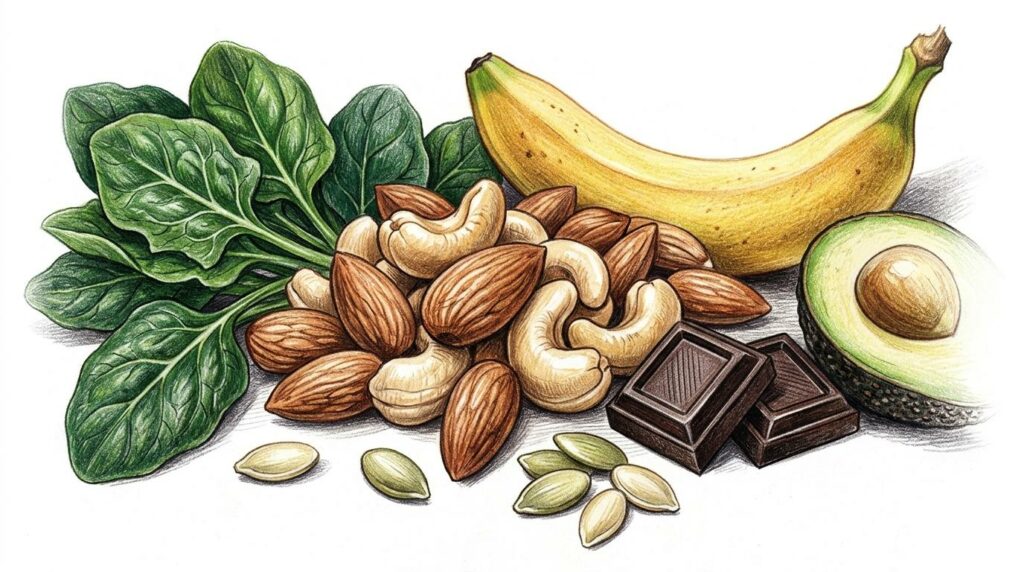
High-magnesium foods:
- Pumpkin seeds (156mg per 30g serve)
- Almonds (80mg per 30g serve)
- Spinach (78mg per 100g cooked)
- Dark chocolate (65mg per 30g)
- Avocado (58mg per whole avocado)
- Black beans (60mg per 100g cooked)
- Bananas (32mg per banana)
Building these foods into your regular diet supports your magnesium levels naturally. They also provide fibre, antioxidants, and other nutrients that support overall health.
Who Should Be Cautious
Magnesium is generally safe, but some people should talk to their doctor first.
Kidney disease. If your kidney function is impaired, you may not excrete magnesium efficiently. Supplementing can cause dangerous build-up.
Certain medications. Magnesium can interact with antibiotics, bisphosphonates, diuretics, and proton pump inhibitors. Check with your pharmacist if you’re on any prescription medications.
Very high doses. Doses above 400mg from supplements alone can cause diarrhoea, nausea, and abdominal cramping. More isn’t better.
The Bottom Line
Magnesium isn’t a magic bullet for uric acid. No single nutrient is.
But the evidence linking magnesium deficiency to higher uric acid levels is consistent and well documented. Most people are deficient. Correcting that deficiency supports kidney function, reduces inflammation, and creates better conditions for uric acid management.
Take 200-400mg daily of magnesium citrate or glycinate. Eat more magnesium-rich foods. Give it 4-6 weeks.
Combine it with a targeted approach to uric acid support and you’re covering your bases properly.
See the full URICAH ingredient list
Try URICAH with a 90-day money-back guarantee
This article is for informational purposes only and is not intended as medical advice. Consult your healthcare provider before making changes to your health routine.

URICAH! Uric Acid Support
4.85 / 5
read 2,294 customer reviews
$39 NZDTHIS IS YOUR URICAH MOMENT
URICAH provides natural support for healthy uric acid levels.
Our 14 potent, natural ingredients support the body’s normal uric acid levels, supporting joint mobility and function.
URICAH!™ features powerful ingredients used over many years to support healthy uric acid levels such as Tart Cherry, Celery Seed and Chanca Piedra.
LEARN MORE