
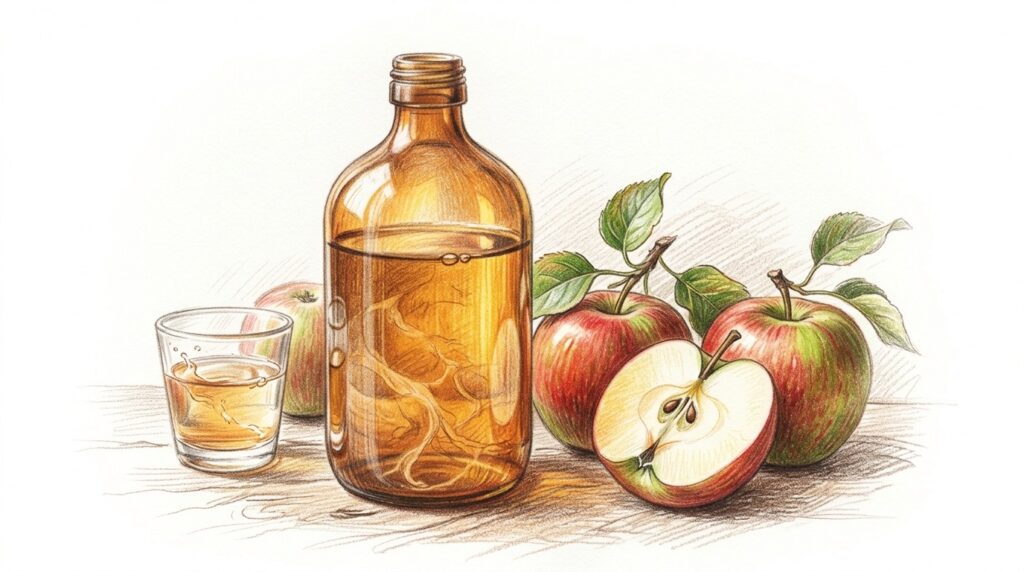
Apple cider vinegar is probably the most recommended home remedy for high uric acid on the internet.
Type “natural remedies for uric acid” into Google and ACV shows up on virtually every list. Your aunt has told you about it. There’s a bloke at work who swears by it.
I’m going to be honest with you: the evidence isn’t there.
That doesn’t mean it’s harmful. It means you need to know what it can and can’t do so you’re not wasting time on something that isn’t moving the needle.
The Theory Behind ACV and Uric Acid
The claim goes something like this:
Apple cider vinegar is alkaline-forming in the body. By alkalising your system, it helps your kidneys excrete more uric acid. The acetic acid and malic acid in ACV help break down uric acid and flush it out.
It sounds plausible. And that’s the problem. Sounding plausible and being supported by evidence are two very different things.
What the Science Actually Says
Here’s the reality.
There are no clinical trials testing apple cider vinegar’s effect on serum uric acid levels. Not one. Despite being recommended everywhere, nobody has actually put it through a proper study.
The alkalising theory doesn’t hold up.
Your body maintains blood pH within an extremely tight range (7.35-7.45) regardless of what you eat or drink. Your lungs and kidneys regulate this constantly. Drinking a tablespoon of apple cider vinegar doesn’t change your blood pH in any meaningful way.
Can ACV change your urine pH? Slightly. But urine pH and blood pH are different things, and the relationship between urine alkalinity and uric acid excretion is more complicated than the internet makes it sound.
The acetic acid claim lacks evidence.
There’s no research demonstrating that acetic acid breaks down uric acid in the body. Uric acid is metabolised through specific enzymatic pathways, primarily xanthine oxidase. Acetic acid doesn’t interact with that pathway.
No medical guidelines recommend it.
The American College of Rheumatology guidelines don’t mention apple cider vinegar. Neither does any major clinical guideline for uric acid management. When something works, it tends to show up in guidelines eventually.
Why It’s So Popular Anyway
I understand why people believe in ACV. And I’m not here to make anyone feel foolish for trying it.
A few reasons it stays popular:
Confirmation bias.
If you start taking ACV and also start drinking more water, eating better, and paying more attention to your health, your uric acid may improve. The water and diet changes did the work, but ACV gets the credit.
It’s cheap and accessible.
A bottle of apple cider vinegar costs a few dollars. That’s appealing when you’re looking for solutions.
Anecdotal reports are everywhere.
When enough people say something works online, it starts to feel like evidence. It isn’t. Anecdotes can’t distinguish between the ACV, the placebo effect, and the other changes people make at the same time.
The “natural remedy” appeal.
People want natural options, and I genuinely respect that. But “natural” needs to be paired with “evidence-based” to be useful.
Is It Harmful?
For most people, no.
A tablespoon of apple cider vinegar diluted in water is unlikely to cause problems. Some things to watch:
- Tooth enamel: ACV is acidic and can erode enamel over time. Always dilute it and don’t sip it slowly.
- Digestive irritation: Some people experience stomach discomfort or heartburn.
- Medication interactions: ACV may lower potassium levels and interact with diuretics, diabetes medications, and digoxin. If you’re on any of these, talk to your doctor.
- Throat irritation: Drinking it undiluted can irritate or even damage your oesophagus.
It’s not dangerous for most people. It’s just not doing what you think it’s doing for uric acid.
What to Try Instead
If you’re reaching for ACV because you want a natural approach to uric acid support, I respect that instinct. Here are options that actually have research behind them:
The most well-researched natural ingredient for uric acid. Inhibits xanthine oxidase and provides anti-inflammatory support. Multiple clinical trials support its use.
Meta-analyses of randomised controlled trials show 500mg daily significantly reduces serum uric acid by increasing kidney excretion.
Supports kidney excretion, has anti-inflammatory properties, and contains compounds that inhibit xanthine oxidase. Centuries of traditional use now backed by modern research.
Strong anti-inflammatory support through NF-kB and COX-2 inhibition. Well studied and widely available.
Proper hydration
Drinking enough water is one of the simplest and most effective things you can do for uric acid excretion. If you’re drinking ACV diluted in water, the water is probably helping more than the ACV.
These aren’t exotic or expensive options. They’re accessible, practical, and backed by evidence.
The Bottom Line
I know this isn’t what a lot of people want to hear.
Apple cider vinegar is not harmful for most people. If you enjoy it, drink it.
But don’t rely on it as your uric acid strategy. The alkalising theory doesn’t hold up to scrutiny, and there are zero clinical trials supporting its use for uric acid.
If it genuinely worked, after decades of popularity, someone would have done the study by now. They haven’t, and that tells you something.
Put your effort into what the research actually supports:
- Evidence-based supplements like tart cherry extract, celery seed, and vitamin C
- Proper hydration, consistently, every day
- Dietary changes that reduce purine intake and cut back on fructose
- A multi-ingredient approach that addresses uric acid from several angles
URICAH contains 14 clearly labelled natural ingredients, each selected based on research. No proprietary blends, no guessing, no rubbish ingredients riding on internet hype.
See the full URICAH ingredient list
Try URICAH with a 90-day money-back guarantee
This article is for informational purposes only and is not intended as medical advice. Consult your healthcare provider before making changes to your health routine.

URICAH! Uric Acid Support
4.85 / 5
read 2,294 customer reviews
$39 NZDTHIS IS YOUR URICAH MOMENT
URICAH provides natural support for healthy uric acid levels.
Our 14 potent, natural ingredients support the body’s normal uric acid levels, supporting joint mobility and function.
URICAH!™ features powerful ingredients used over many years to support healthy uric acid levels such as Tart Cherry, Celery Seed and Chanca Piedra.
LEARN MORE