
You’re reading this because something woke you up at 2am. Or you stood up from your desk and your foot felt like it was on fire. Or your big toe is so swollen you can’t get a shoe on.
I’ve been there. It’s brutal.
Right now, you need answers. Here’s exactly what to do.
Step 1: Stop Moving. Rest the Joint.
This is the time to stop, not push through.
Your joint is inflamed, and every step makes it worse.
If it’s your foot or ankle, get off it. Sit down. Lie down. Whatever you need to do to take all weight and pressure off that joint.
Walking it off is the worst thing you can do during an acute flare-up. Movement drives more blood flow to the area, which increases swelling and pain.
Rest is step one.
Step 2: Ice It
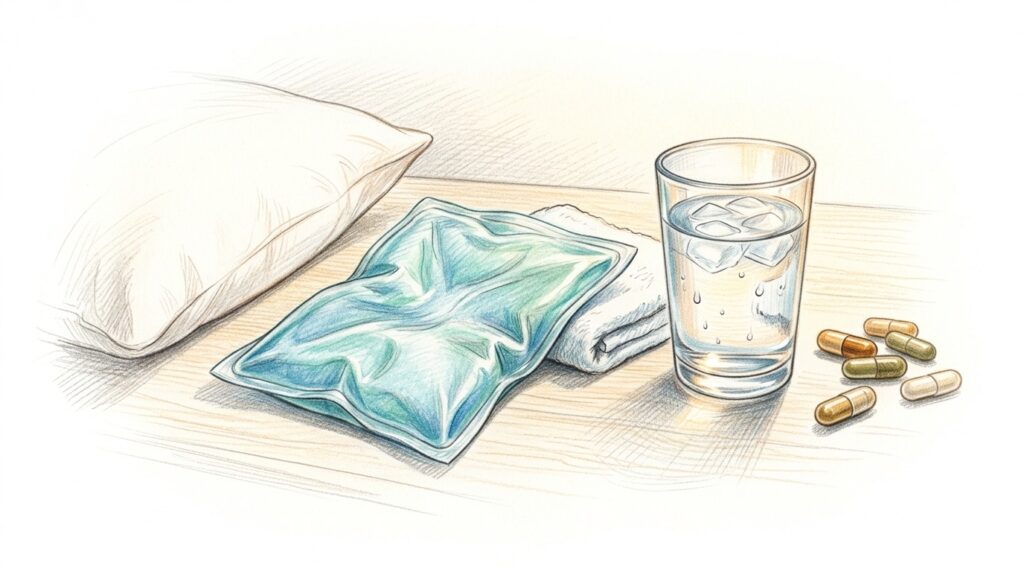
Grab an ice pack, a bag of frozen peas, whatever you’ve got. Wrap it in a thin towel (don’t put ice directly on skin) and apply it to the affected joint.
How long:
15-20 minutes on, 20 minutes off. Repeat as needed.
Ice reduces swelling and numbs the area. It won’t fix the underlying problem, but it takes the edge off the pain.
During a bad flare-up, that edge matters.
If even the weight of the ice pack hurts, try a cold compress instead. Soak a flannel in ice water, wring it out, and drape it over the joint.
Step 3: Elevate
Get the affected joint above your heart if possible.
If it’s your foot, lie on the couch with your foot propped up on pillows. If it’s your knee, same idea.
Elevation helps fluid drain away from the inflamed area. Less fluid means less pressure, which means less pain.
This is especially important at night. Stack a couple of pillows under your foot before you sleep. Even a slight elevation helps.
Step 4: Hydrate Like Your Kidneys Depend on It (They Do)
Drink water. A lot of it.
Your kidneys need water to flush uric acid out of your blood, and during a flare-up, you want them working as hard as possible.
Aim for at least 2-3 litres over the course of the day. Keep a bottle next to you and sip constantly.
Avoid sugary drinks and fruit juices. Fructose actually increases uric acid production, which is the opposite of what you need right now.
Stick to water. Plain, boring, effective water.
What NOT to Do During a Flare-Up
This is just as important as the steps above. Some things people do instinctively actually make it worse.
Don’t drink alcohol.
Not even one. Alcohol blocks your kidneys from excreting uric acid. If you were drinking before the flare-up started, that may well be what triggered it. Read more about alcohol and uric acid levels.
Don’t start new supplements during an acute flare.
This trips people up. They’re in pain, they search for “natural uric acid support,” and they start taking something new right away.
Bad timing. Some supplements can temporarily shift uric acid levels as your body adjusts, which can actually prolong a flare-up. Wait until the acute phase passes (usually 7-10 days), then look at long-term support.
Don’t eat high-purine foods.
Now is the wrong time for a steak, lamb shanks, or shellfish. Your body is already struggling with excess uric acid. See the full list of high-purine foods to avoid.
Don’t apply heat.
No hot water bottles, no warm baths on the affected joint. Heat increases blood flow and inflammation. Ice is your friend.
Don’t wrap it tightly.
Compression bandages might seem logical, but a flare-up involves swelling inside the joint. Wrapping it tight restricts circulation and can increase pain.
When to See a Doctor
You should contact your GP or go to an after-hours clinic if:
- This is your first flare-up and you haven’t been diagnosed. You need a proper assessment and blood work.
- The pain is unbearable and you can’t manage it with ice and rest.
- You develop a fever alongside the joint inflammation. This could indicate infection, which needs urgent attention.
- The flare-up hasn’t improved after 7-10 days.
- You’re getting flare-ups frequently (more than 2-3 times a year). This suggests your baseline uric acid levels need managing, not just the symptoms.
Your doctor can prescribe anti-inflammatory medication to get you through the acute phase. There’s no shame in that. Managing the immediate pain is a priority.
What Causes Flare-Ups in the First Place?
Understanding your triggers is how you prevent the next one. Here are the most common culprits.
Alcohol, especially beer.
Beer is a double hit: it’s high in purines and it blocks uric acid excretion. Here’s the full breakdown on beer and uric acid.
High-purine foods.
A big seafood dinner, a barbecue heavy on red meat, organ meats. These all spike purine intake, which means more uric acid for your body to deal with.
Dehydration.
Insufficient water means your kidneys can’t flush uric acid efficiently. It builds up. Crystals form. Pain follows.
Sudden weight loss or crash diets.
When you lose weight rapidly, your body breaks down cells at a faster rate, releasing purines into your bloodstream. Gradual, steady weight loss is much safer.
Stress and illness.
Surgery, infections, or periods of high physical stress can trigger a flare-up. Your body’s inflammatory response goes into overdrive.
Certain medications.
Diuretics (water pills), low-dose aspirin, and some blood pressure medications can raise uric acid levels. If you’re on any of these, talk to your doctor about alternatives.
Weather changes and temperature drops.
There’s evidence that cooler temperatures encourage uric acid crystallisation, particularly in extremities like toes and fingers.
How to Prevent Future Flare-Ups
Getting through the current flare-up is priority one. Once you’re past the acute phase, this is what actually works long-term.
Stay hydrated, every single day.
This is a daily habit, not a flare-up reaction. 2-3 litres of water, minimum. Your kidneys need the volume to keep uric acid moving out of your body.
Clean up your diet gradually.
You don’t need to go extreme. Cut back on the highest-purine foods, reduce sugar (especially sugary drinks), and eat more of the things that help: cherries, low-fat dairy, vegetables, vitamin C-rich foods. Full guide to foods and uric acid.
Manage your weight steadily.
If you need to lose weight, do it gradually. Crash diets cause more problems than they solve for people with high uric acid.
Cut back on alcohol, especially beer.
I know. Nobody wants to hear it. But the data is clear, and so is every conversation I’ve had with customers over the years. Reducing alcohol makes one of the biggest differences.
Consider targeted natural support.
Once you’re past the acute flare-up and into maintenance mode, natural supplements can help support healthy uric acid levels over time.
Key ingredients to look for include tart cherry extract, celery seed extract, and chanca piedra. These work best as part of a consistent daily routine, not as a rescue remedy.
I created URICAH specifically because I was tired of dealing with this cycle myself. It combines 14 clearly labelled natural ingredients, no proprietary blends, and transparent dosages, so you know exactly what you’re taking. Over 2,200 customers across New Zealand and Australia are using it as part of their daily routine.
Explore natural ways to support healthy uric acid levels.
Get your levels tested regularly.
Ask your GP for a serum uric acid blood test. Knowing your numbers gives you something concrete to track. It takes the guesswork out of whether what you’re doing is working.
Long-Term Management Is the Real Game
A flare-up is your body sending a signal. It’s telling you that uric acid levels have been too high for too long and crystals have formed.
The flare-up will pass. They always do.
If you don’t address the underlying levels, it will happen again. Usually, flare-ups get more frequent and more severe over time if nothing changes.
The people I talk to who do best are the ones who treat this as an ongoing management commitment. Daily hydration. Sensible diet choices. Consistent supplementation. Regular check-ins with their GP.
Unglamorous. Effective.
You’ve got through the worst of it before. You’ll get through this one too.
And now you’ve got a plan to make the next one less likely.
This article is for informational purposes only and is not intended as medical advice. Consult your healthcare provider before making changes to your health routine.

URICAH! Uric Acid Support
4.85 / 5
read 2,294 customer reviews
$39 NZDTHIS IS YOUR URICAH MOMENT
URICAH provides natural support for healthy uric acid levels.
Our 14 potent, natural ingredients support the body’s normal uric acid levels, supporting joint mobility and function.
URICAH!™ features powerful ingredients used over many years to support healthy uric acid levels such as Tart Cherry, Celery Seed and Chanca Piedra.
LEARN MORE