
If you’ve ever had a gout flare, you’ve probably Googled “what is uric acid” at 2am while your big toe felt like it was being crushed in a vice.
And the answer you got was probably some textbook definition that didn’t actually help.
So let’s fix that.
Uric acid is a waste product your body creates every single day. It’s completely normal. Everyone has it.
The problem isn’t that it exists. The problem is what happens when there’s too much of it.
And here’s the thing most people don’t realise: the solution isn’t as simple as “stop eating prawns.” Not even close.
The simple version
Your body is constantly breaking down and recycling its own cells. That’s just biology.
When cells break down, they release substances called purines. Your body then converts those purines into uric acid.
In a perfect world, your kidneys filter that uric acid out of your blood and you flush it away when you go to the toilet. Done. No drama.
But we don’t live in a perfect world.
Where Does Uric Acid Come From?
This is where it gets interesting, and where most of the advice you’ve read falls apart.
There are two sources of purines (and therefore uric acid) in your body:
1. Your own body (internal production)
Your cells are constantly turning over. Old cells die, new ones replace them.
Every time a cell breaks down, purines are released. Your liver, your muscles, your organs; they’re all producing purines around the clock.
You can’t stop this. You wouldn’t want to. It’s how you stay alive.
2. The food you eat (dietary purines)
Certain foods are high in purines. Red meat, organ meats, seafood, some fish, beer.
When you eat these foods, your body breaks them down and produces uric acid as a byproduct.
The 70/30 split that changes everything
Here’s the number that should reshape how you think about uric acid: roughly 70% of the purines in your body come from internal production. Only about 30% come from your diet.
Read that again.
Your body is responsible for the vast majority of its own uric acid. Not your dinner. Not that steak you had last Friday. Your own cells.
This is why the standard advice of “just avoid high-purine foods” is incomplete.
You could eat the cleanest diet in the world and still have high uric acid levels. Diet matters, absolutely. But it’s only one piece of the puzzle.
For a deeper look at which foods are worth watching, check out our guide on high-purine foods to avoid.
Why Uric Acid Becomes a Problem
Under normal conditions, your kidneys do a solid job of filtering uric acid out of your blood. They process it, send it to your bladder, and you get rid of it. Simple.
But sometimes, one of two things happens:
- Your body starts producing more uric acid than your kidneys can handle.
- Your kidneys slow down and can’t filter it out fast enough.
Often, it’s a combination of both.
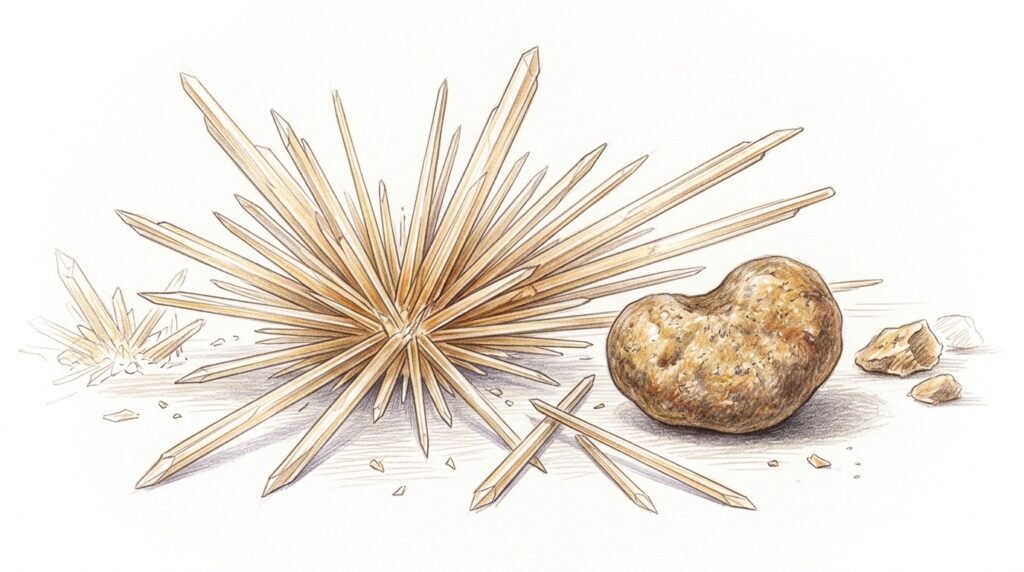
When uric acid builds up in your blood beyond a certain point, it doesn’t just float around harmlessly. It starts to crystallise.
And those crystals are sharp. Needle-shaped, actually. They settle in your joints, your soft tissues, and sometimes your kidneys.
That’s when the trouble really starts.
What high uric acid actually does to your body
Joint pain and gout
The most well-known consequence of high uric acid is gout.
Those needle-shaped crystals lodge themselves in a joint, usually starting with the big toe, and trigger an intense inflammatory response. If you’ve experienced it, you know. The pain is extraordinary. Even a bedsheet touching the joint can be unbearable.
Gout isn’t a one-off event for most people. Without managing your uric acid levels, flares tend to come back. They can become more frequent, last longer, and affect more joints over time.
Kidney problems
Your kidneys are doing the heavy lifting when it comes to processing uric acid.
When levels stay high for extended periods, those same crystals can form in the kidneys. This can lead to kidney stones, which are painful in their own right, and over time can contribute to reduced kidney function.
If you want to understand the connection between uric acid and your kidneys in more detail, we’ve written a full article on uric acid and kidney health.
The silent build-up
Here’s what catches most people off guard: high uric acid often doesn’t cause any symptoms at all. Not at first.
You can walk around with elevated levels for years without knowing it. No pain, no swelling, no warning signs.
Then one night, seemingly out of nowhere, you wake up with a joint on fire.
But the reality is, it wasn’t sudden at all. The uric acid had been building up quietly for a long time.
This is why understanding your uric acid levels matters, even if you feel perfectly fine right now.
Why “Just Avoid Purines” Isn’t Enough
You’ll find no shortage of articles online telling you to cut out red meat, skip the beer, and avoid shellfish. And look, that’s not bad advice. Reducing dietary purines can help.
But remember the 70/30 split.
If 70% of your uric acid comes from internal processes, then diet alone can only address a fraction of the problem.
You could go completely vegetarian and still have uric acid issues. I’ve spoken to plenty of people who did exactly that and were shocked when their levels didn’t drop as much as they expected.
The “just change your diet” approach sets people up for frustration. They make real sacrifices, give up foods they enjoy, and then don’t see the results they were promised. That’s demoralising. And it’s unnecessary.
A smarter approach considers the whole picture: what you eat, how much you drink, how your kidneys are functioning, and what you can do to support your body’s natural ability to process uric acid.
What You Can Actually Do About It
Right. Enough about the problem. Let’s talk solutions.
1. Stay properly hydrated
This one’s simple but powerful.
Water helps your kidneys flush uric acid more efficiently. When you’re dehydrated, your kidneys can’t do their job properly, and uric acid concentrations in your blood go up.
Most people don’t drink enough water. Full stop.
Aim for at least 2 litres a day. More if you’re active, if it’s hot, or if you’re prone to high uric acid. If you want the full picture on how dehydration affects uric acid, read our article on dehydration and uric acid.
2. Be smart about your diet (but don’t obsess)
Yes, reduce high-purine foods where it makes sense. Cut back on organ meats, limit shellfish, go easy on the beer.
But don’t turn your life upside down over it.
Focus on balance. Eat more vegetables, include low-fat dairy (which research suggests may actually help lower uric acid), and be mindful of sugar, particularly fructose.
High fructose intake has been linked to increased uric acid production, and most people don’t realise that.
3. Consider targeted supplementation
This is where things get practical.
Certain natural ingredients have been shown to support healthy uric acid levels. Tart cherry extract, for example, has solid research behind it. Celery seed extract is another one. Vitamin C has been studied for its role in helping the kidneys excrete uric acid more effectively.
The key word here is “targeted.” You don’t need to take handfuls of random supplements. You need the right ingredients, at the right doses, working together.
We created URICAH specifically for this reason. To bring together the ingredients that actually have evidence behind them, in doses that make a real difference. If you’re interested in what the research says about natural support, our guide on natural ways to support uric acid levels is a good place to start.
4. Monitor your levels
You can’t manage what you don’t measure.
Ask your GP for a serum uric acid blood test. It’s quick, it’s cheap, and it gives you a clear baseline. From there, you can track whether what you’re doing is actually working.
Knowing your numbers takes the guesswork out of it. No more hoping. No more assuming. Just data.
For a breakdown of what the numbers actually mean, check out our article on uric acid levels explained.
5. Move your body
Regular exercise helps with weight management, improves kidney function, and supports overall metabolic health. All of which play into uric acid regulation.
You don’t need to train for a marathon. Walk daily. Stay active. Avoid prolonged periods of sitting if you can.
When to See a Doctor
Let’s be clear about this: there are times when you need professional medical advice, not just a supplement or a dietary change.
See your GP if:
- You’re experiencing sudden, severe joint pain (especially in your big toe, ankle, or knee)
- You’ve had multiple gout flares
- You have a family history of gout or kidney disease
- You’re already on medication and your levels aren’t coming down
- You notice changes in your urination, pain in your lower back, or blood in your urine
Uric acid management is something you can absolutely take ownership of. But a good GP is part of that picture.
Get your levels tested. Have a conversation about what the numbers mean. And if medication is recommended, don’t dismiss it out of hand.
Natural support and medical treatment aren’t mutually exclusive. In many cases, they work best together.
The Bottom Line
Uric acid isn’t the enemy. It’s a normal part of how your body works.
The problem arises when there’s too much of it, and your body can’t clear it fast enough.
The good news? You’re not powerless here.
Understanding where uric acid comes from, why it builds up, and what actually works to manage it puts you in a much stronger position than most people who just get told to “eat less meat.”
Hydrate. Eat smart. Support your body with evidence-based ingredients. Monitor your levels. And work with your doctor when you need to.
That’s the practical path forward. No nonsense, no gimmicks. Just a clear plan that actually works.

URICAH! Uric Acid Support
4.85 / 5
read 2,294 customer reviews
$39 NZDTHIS IS YOUR URICAH MOMENT
URICAH provides natural support for healthy uric acid levels.
Our 14 potent, natural ingredients support the body’s normal uric acid levels, supporting joint mobility and function.
URICAH!™ features powerful ingredients used over many years to support healthy uric acid levels such as Tart Cherry, Celery Seed and Chanca Piedra.
LEARN MORE