
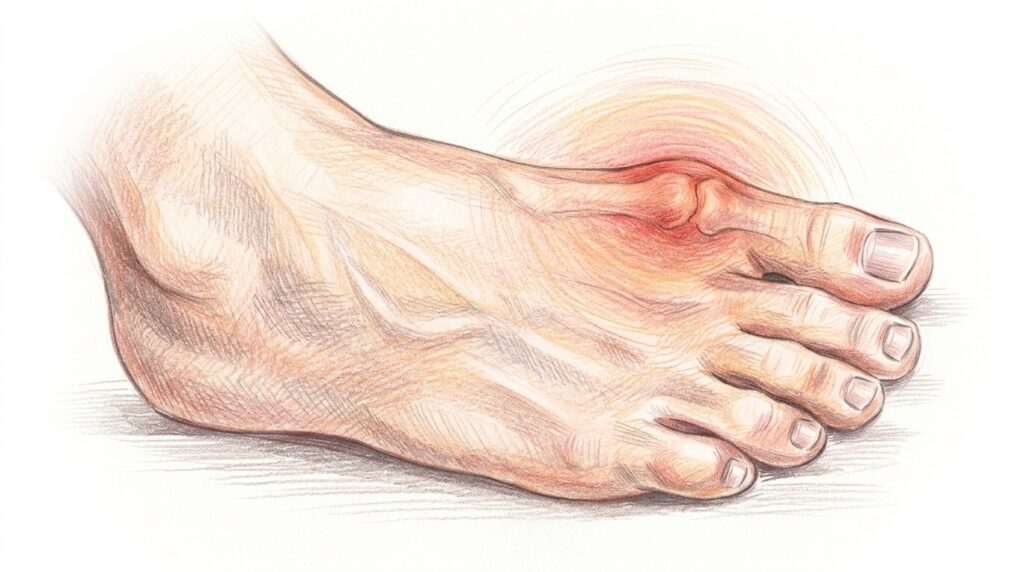
You’re lying in bed at 2am and your big toe feels like someone’s taken to it with a hammer. No warning. No obvious cause. Just sudden, excruciating pain that came out of nowhere.
Sound familiar? You’re not alone.
High uric acid is sneaky. It can build up quietly for months or even years before it makes itself known.
And when it finally does, it tends to announce itself in the most dramatic way possible.
Here’s what to look for, from the obvious to the subtle.
The Classic Signs
The most recognisable symptom of high uric acid is sudden, severe joint pain. It develops fast, sometimes within hours, and often peaks overnight.
The big toe is the most common target. But it doesn’t stop there. Ankles, knees, wrists, and fingers can all be affected.
When a flare-up hits, you’ll typically notice:
- Intense pain that makes even light pressure unbearable (a bedsheet touching the joint can be enough)
- Red or purple discoloration around the joint
- Swelling that makes the skin look shiny and tight
- Warmth radiating from the affected area
- Visible enlargement of the joint
These episodes usually last somewhere between 3 and 10 days. The first few days are the worst. Then the pain gradually eases.
But here’s the catch.
Without managing your uric acid levels, these episodes tend to come back. More frequently. Affecting more joints. Lasting longer.
The Early Warning Signs Most People Miss
Not every uric acid symptom is a screaming flare-up. There are subtler signals that most people brush off or blame on something else.
Morning stiffness
Your joints feel stiff and tight when you wake up, but it fades after you get moving. Easy to write off as “getting older.” Sometimes it is. Sometimes it isn’t.
Fleeting sharp pains
Quick, sharp twinges in a joint that disappear almost as fast as they arrived. They’re easy to ignore. But if they keep coming back in the same spot, pay attention.
Unexplained fatigue
When your body is dealing with elevated uric acid and low-level inflammation, you feel it. Not as pain, but as a general tiredness that doesn’t match your activity level.
Mild swelling
A joint that looks slightly puffier than usual, or shoes that feel tighter on one foot. These subtle changes can signal uric acid levels creeping upward before a full flare-up hits.
If you’re noticing any of these, it’s worth getting a uric acid blood test from your GP. It’s quick, cheap, and takes the guesswork out of it.
What Happens If You Ignore It
Let’s be straight about this. High uric acid doesn’t just cause the occasional bad night. Left unchecked, it can cause real, lasting damage.
Tophi
Over time, uric acid crystals can form hard nodules called tophi under the skin. They usually appear around joints, on the ears, or on the fingers.
They’re not just cosmetic. They can erode cartilage and bone.
Permanent joint changes
Repeated flare-ups can alter the shape of your joints. Reduced flexibility, visible deformity, and chronic discomfort become the new normal.
Kidney problems
Your kidneys are responsible for clearing uric acid from your blood. When levels stay high for long periods, crystals can form in the kidneys too, leading to stones and reduced kidney function. For more on this, read our article on uric acid and kidney health.
None of this is inevitable. But it is the trajectory if you do nothing.
How Flare-Ups Affect Daily Life
It’s worth talking about the practical impact, because this is what the textbooks leave out.
Sleep
Flare-ups often strike at night. The pain wakes you up and keeps you up. Days of disrupted sleep stack up fast and affect everything else.
Mobility
When your big toe, ankle, or knee is flaring, even walking to the bathroom is a mission. Stairs become an obstacle course. Driving can be impossible.
Work
Sitting at a desk with a swollen, throbbing joint is miserable. Standing jobs are even worse. Some people end up taking sick days, which creates its own stress.
Activity
Exercise, sport, gardening, playing with the kids. All of it goes on hold during a flare-up.
Over time, this reluctance to move can lead to weight gain, which ironically makes uric acid levels worse. For practical tips, read our guide on how to get more exercise.
When to See a Doctor Immediately
Most uric acid symptoms can be managed with the right approach. But there are situations where you need to see a healthcare provider urgently.
Get medical attention if you experience:
- Fever combined with joint pain (this could indicate an infection in the joint, which is serious)
- Joint pain so severe you can’t bear weight at all
- Severe pain accompanied by general illness
- Signs of kidney problems, such as pain in your lower back, blood in your urine, or changes in urination
Don’t tough it out with these. They need professional assessment.
What You Can Do Right Now
If you’re experiencing uric acid symptoms, or you want to make sure you never do, here’s where to start:
1. Get tested.
A simple blood test tells you exactly where your uric acid levels sit. No guessing. Just data. Ask your GP for a serum uric acid test.
2. Stay hydrated.
Water helps your kidneys flush uric acid more efficiently. Most people don’t drink nearly enough. Aim for at least 2 litres a day. Read more about dehydration and uric acid.
3. Watch your diet (but don’t obsess).
Reducing high-purine foods helps, but remember that roughly 70% of your body’s uric acid comes from internal processes, not food. Diet is one piece of the puzzle, not the whole picture.
4. Consider targeted supplementation.
Certain natural ingredients, like tart cherry extract, celery seed extract, and vitamin C, have solid research supporting their role in uric acid management. That’s exactly why we created URICAH, to bring together 14 evidence-backed ingredients in transparent doses, with no proprietary blends.
See the full URICAH ingredient list
Try URICAH risk-free with a 90-day money-back guarantee
This article is for informational purposes only and is not intended as medical advice. Consult your healthcare provider before making changes to your health routine.

URICAH! Uric Acid Support
4.85 / 5
read 2,294 customer reviews
$39 NZDTHIS IS YOUR URICAH MOMENT
URICAH provides natural support for healthy uric acid levels.
Our 14 potent, natural ingredients support the body’s normal uric acid levels, supporting joint mobility and function.
URICAH!™ features powerful ingredients used over many years to support healthy uric acid levels such as Tart Cherry, Celery Seed and Chanca Piedra.
LEARN MORE