
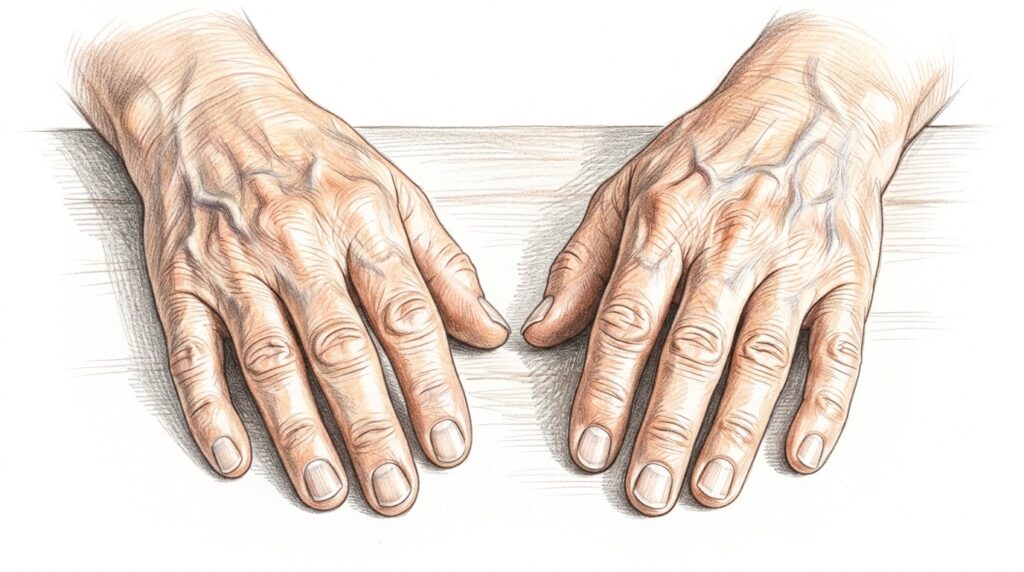
Here’s something most people don’t think about until it’s already a problem: uric acid levels don’t stay the same your whole life.
They tend to creep upward as you age.
Your body actually becomes less efficient at processing uric acid over time. And there are specific milestones where the risk jumps significantly.
Understanding when and why these changes happen gives you a genuine advantage. You can’t stop ageing, but you can stop being blindsided by it.
What Changes in Your Body Over Time
Your Kidneys Slow Down
Your kidneys are responsible for filtering about 70% of the uric acid your body produces. They’re doing this work 24/7. And they’re incredibly good at it, when they’re young.
Around age 30, kidney function starts a gradual decline. Nothing dramatic at first.
But by your 50s and 60s, the difference is measurable. Your kidneys simply can’t clear uric acid as efficiently as they used to.
This means the same diet, the same lifestyle, the same everything can produce higher uric acid levels at 55 than it did at 35. Nothing changed except your kidneys.
For more on this connection, read our guide on uric acid and kidney health.
Hormonal Shifts Make a Real Difference
This is where the picture splits between men and women.
Men
Testosterone naturally contributes to higher uric acid levels. Men tend to have higher baseline levels from puberty onward, which is why uric acid issues are more common in men, particularly after 40.
Women
Oestrogen has a protective effect on uric acid levels. It helps the kidneys excrete uric acid more effectively. This is why pre-menopausal women generally have lower uric acid levels than men the same age.
After menopause, oestrogen drops. That protective effect disappears.
And women’s uric acid levels can rise to match or even exceed men’s levels. This catches a lot of women off guard because they’ve never had to think about uric acid before.
Other Health Conditions Stack Up
As you get older, the likelihood of developing conditions that influence uric acid levels increases:
- High blood pressure and the diuretic medications used to treat it can raise uric acid levels
- Type 2 diabetes and insulin resistance are linked to impaired uric acid excretion
- Metabolic syndrome combines several risk factors that all push levels upward
- Kidney disease directly reduces your body’s ability to clear uric acid
Each of these conditions on its own can affect your levels.
When you’re dealing with two or three of them at once, which becomes more common with age, the combined effect is significant.
Weight Gain Plays a Role
Let’s be honest. Most people put on weight as they get older. Less activity, slower metabolism, more time sitting at a desk or on the couch.
Extra body weight increases uric acid production. It also increases insulin resistance, which impairs uric acid excretion through the kidneys. It’s a double hit.
The good news is that even modest weight loss can make a measurable difference to your levels. You don’t need to become a marathon runner. Just getting back to regular movement and a sensible diet helps.
The Key Age Milestones
Here’s a practical breakdown of when risk tends to increase:
Men after 30
Kidney function begins its gradual decline. If you have a family history of high uric acid, this is when to start paying attention. Get a baseline blood test.
Men after 40
This is when uric acid issues most commonly surface for men. The combination of declining kidney function, dietary habits, and higher baseline levels starts to tip the balance.
Women after menopause (typically 45-55)
The loss of oestrogen’s protective effect is the single biggest change. Women who’ve never had a uric acid problem can suddenly find themselves dealing with one.
Both sexes after 60
Multiple age-related factors converge. Reduced kidney function, more medications, more co-existing health conditions, less physical activity. This is when proactive management matters most.
What You Can Eat to Help
Diet alone won’t solve the problem (remember, roughly 70% of uric acid comes from internal processes). But smart food choices still make a real difference, especially as your body’s processing capacity declines.
Foods to limit:
- Organ meats (liver, kidney, sweetbreads)
- Certain seafood (mussels, scallops, anchovies, sardines)
- Game meats (venison, wild boar)
- Beer and spirits
Foods to enjoy in moderation:
Foods that actively help:
- Dairy products (particularly low-fat milk and yoghurt)
- Complex carbs (kumara, wholegrain bread, oats)
- Most vegetables (especially leafy greens)
- Cherries and kiwifruit
- Lean proteins (chicken, eggs, tofu)
- White fish (tarakihi, hoki)
For a detailed breakdown, check out our high-purine foods guide.
Practical Steps at Any Age
You can’t turn back the clock. But you can make the clock work in your favour.
1. Get your levels tested regularly.
A serum uric acid blood test gives you a clear number to work with. If you’re over 40, or over 50 and female, make it part of your annual check-up. For what the numbers mean, read our guide on uric acid levels explained.
2. Stay hydrated.
Your kidneys need water to do their job. As kidney efficiency declines with age, adequate hydration becomes even more important. At least 2 litres a day. More if you’re active. Read more about hydration and uric acid.
3. Keep moving.
Regular exercise supports kidney function, helps manage weight, and improves overall metabolic health. Walking, swimming, cycling, whatever you enjoy and can do consistently. For practical tips, read our guide on how to get more exercise.
4. Limit alcohol.
Beer is the worst offender because it’s high in purines and reduces uric acid excretion. Spirits aren’t great either. If you’re going to drink, red wine appears to be the least problematic option in moderate amounts.
5. Review your medications.
If you’re on diuretics, low-dose aspirin, or other medications that affect uric acid levels, talk to your doctor. There may be alternatives that are easier on your levels.
6. Support your body with targeted supplementation.
As your body’s natural processing capacity declines, giving it extra support makes sense. Ingredients like tart cherry extract, celery seed extract, and vitamin C have solid research behind them.
We created URICAH with exactly this in mind, 14 clearly labelled natural ingredients, no proprietary blends, and doses based on actual research. Over 2,200 customers have already seen what it can do.
See the full URICAH ingredient list
Try URICAH risk-free with a 90-day money-back guarantee
This article is for informational purposes only and is not intended as medical advice. Consult your healthcare provider before making changes to your health routine.

URICAH! Uric Acid Support
4.85 / 5
read 2,294 customer reviews
$39 NZDTHIS IS YOUR URICAH MOMENT
URICAH provides natural support for healthy uric acid levels.
Our 14 potent, natural ingredients support the body’s normal uric acid levels, supporting joint mobility and function.
URICAH!™ features powerful ingredients used over many years to support healthy uric acid levels such as Tart Cherry, Celery Seed and Chanca Piedra.
LEARN MORE