
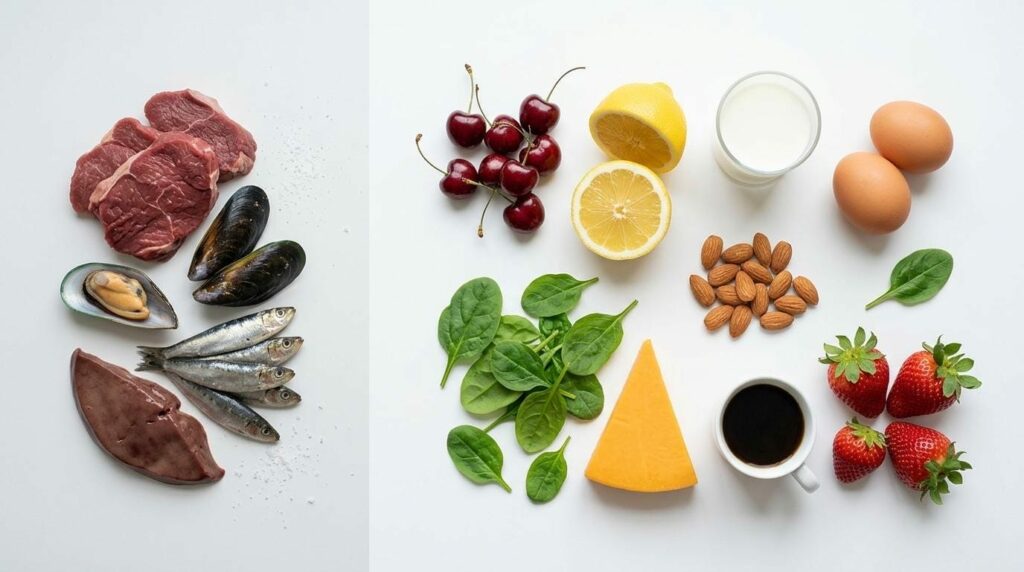
Most people with high uric acid know they should “avoid purines.”
When they look at a purine food chart, it’s confusing. Some lists contradict each other. Some include foods that research has shown aren’t actually a problem. And almost none of them tell you what to eat instead.
Here’s the practical version. What to avoid, what to limit, what’s fine, and what might actually help.
Quick Primer: Why Purines Matter
Purines are natural compounds found in many foods.
Your body breaks them down into uric acid. If you’re producing too much uric acid or not excreting enough, the excess can crystallise in your joints and cause problems.
Here’s what most purine charts miss: not all purines affect uric acid equally.
Animal-based purines (meat, seafood, organ meats) have a much stronger link to elevated uric acid than plant-based purines. Vegetables like spinach, asparagus, and mushrooms contain purines but research consistently shows they don’t increase risk.
Your body also produces purines on its own (endogenous purines), which account for about two-thirds of your total purine load. Diet is only one piece.
It’s the piece you can control.
High Purine Foods (Limit or Avoid)
These have the strongest link to elevated uric acid levels.
Cut back on these first.
Organ meats (worst offenders)
- Liver (beef, chicken, pork)
- Kidneys
- Sweetbreads
- Heart
Certain seafood
- Mussels
- Sardines
- Anchovies
- Herring
- Scallops
- Mackerel
Other high-purine animal proteins
- Game meats (venison, rabbit)
- Gravy and meat extracts (Oxo, Bovril)
- Meat-based broths and stocks
Beverages
- Beer (high in purines and blocks uric acid excretion)
- Spirits (blocks excretion)
- Sugary soft drinks and fruit juices high in fructose
Read more about beer and uric acid →
Moderate Purine Foods (Eat in Moderation)
These contain purines but at lower levels.
You don’t need to avoid them entirely. Just be sensible about portions and frequency.
Red meat
- Beef
- Lamb
- Pork
Poultry
- Chicken
- Turkey
- Duck
Fish
- Salmon
- Snapper
- Tuna
- Trout
Other
- Ham and bacon
- Meat-based sausages
The key with this group is portion size and frequency.
A steak two or three times a week is very different from steak every night. Keep portions to about the size of your palm and you’ll be fine.
Read more about uric acid and meat →
Read more about uric acid and fish →
Low Purine Foods (Eat Freely)
These are safe. Build your meals around this group.
Dairy
- Milk (especially low-fat)
- Yoghurt
- Cheese
- Cream
Low-fat dairy is particularly interesting. Multiple studies associate it with lower uric acid levels. It’s one of the few foods that actively helps.
Eggs
Low in purines and a great protein source.
Most vegetables
- Potatoes
- Kumara (sweet potato)
- Carrots
- Capsicums
- Tomatoes
- Lettuce and salad greens
- Broccoli
- Cauliflower
- Cabbage
- Onions
- Pumpkin
Even higher-purine vegetables are fine:
- Spinach
- Asparagus
- Mushrooms
- Peas
Research consistently shows these don’t increase uric acid levels despite containing moderate purines. The plant-based purine type appears to behave differently in your body.
Grains and starches
- Rice
- Pasta
- Bread
- Oats
- Cereals
Fruit
- Cherries (tart cherries may actively lower uric acid)
- Strawberries
- Blueberries
- Oranges and citrus
- Kiwifruit
- Bananas
- Apples
Nuts and seeds
- Almonds
- Walnuts
- Peanuts
- Sunflower seeds
Foods That May Actively Help
These aren’t just “safe.” They may actually support lower uric acid levels:
| Food | Why It Helps |
|---|---|
| Tart cherries | Anthocyanins may reduce uric acid production and inflammation |
| Low-fat dairy | Associated with lower uric acid levels in multiple studies |
| Coffee | Regular consumption linked to lower uric acid (good news) |
| Vitamin C-rich foods | Oranges, kiwifruit, capsicums, strawberries; may support kidney excretion |
| Water | Helps kidneys flush uric acid. Aim for 2+ litres daily. |
Read more about foods that support healthy uric acid levels →
Practical Tips
You don’t need to be perfect.
The goal is to reduce the biggest offenders and make smarter choices most of the time.
Focus on the worst offenders first.
Cutting out organ meats and reducing beer will make a bigger difference than worrying about whether your salmon portion is 10 grams too large.
Fructose is the hidden enemy.
Most people focus on purines and forget about sugar. Fructose (found in sugary drinks, fruit juice, sweets, and many processed foods) directly increases uric acid production. For some people, this is a bigger factor than purines.
Combine diet with supplementation.
If you’re genetically predisposed to high uric acid, diet alone usually isn’t enough. A targeted supplement can support what your diet can’t fully cover.
Learn about natural ways to support healthy uric acid levels →
This article is for informational purposes only and is not intended as medical advice. Consult your healthcare provider before making changes to your health routine.

URICAH! Uric Acid Support
4.85 / 5
read 2,294 customer reviews
$39 NZDTHIS IS YOUR URICAH MOMENT
URICAH provides natural support for healthy uric acid levels.
Our 14 potent, natural ingredients support the body’s normal uric acid levels, supporting joint mobility and function.
URICAH!™ features powerful ingredients used over many years to support healthy uric acid levels such as Tart Cherry, Celery Seed and Chanca Piedra.
LEARN MORE