

You’ve been told to “watch your diet.” Maybe a doctor said it. Maybe you Googled it at 2am during a flare-up. Either way, you got a vague list of foods to avoid and not much else.
Let’s fix that.
These are the foods to lower uric acid that actually work, backed by evidence and built into meals you can stick with. We’ll cover the best low purine foods, how to reduce uric acid naturally through what you eat, and how to build a plate that makes a real difference. No fad diets. No misery. Just sensible food choices.
Build Your Plate Right
The simplest rule? Make vegetables roughly half your plate.
That’s it. Not a complicated formula. Just fill half the plate with vegetables and work from there.
The other half splits between a lean protein and a whole grain or starchy vegetable. If you get this basic structure right most of the time, you’re ahead of most people.
Vegetables are your best friend
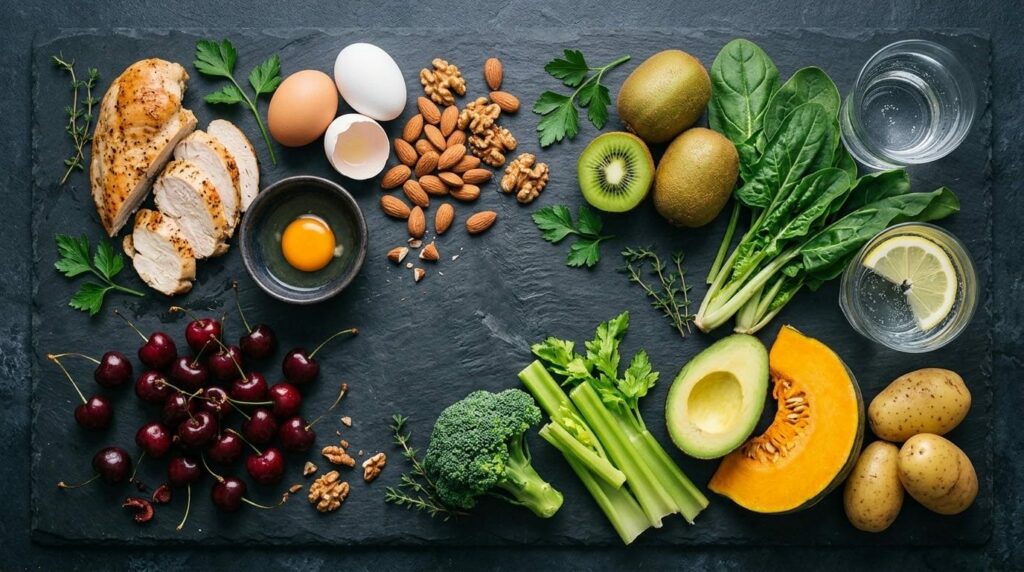
Load up on leafy greens, capsicums, kumara, carrots, broccoli, courgettes. These are all low in purines and packed with the nutrients your body needs to function properly.
Some vegetables like spinach and asparagus are technically moderate in purines, but research suggests vegetable purines don’t affect uric acid levels the same way animal purines do. So don’t stress about your spinach salad.
Protein without the purine hit
You don’t need to give up protein. You just need to choose wisely.
Good options
- Eggs (virtually zero purines, incredibly versatile)
- Skinless chicken breast
- Nuts and seeds
- Low-fat dairy (yoghurt, milk, cheese)
- Tofu and tempeh
Eat in moderation
- Lean red meat (1-2 servings per week, palm-sized portions)
- Turkey
- Lamb
Low-fat dairy deserves a special mention. Research actually suggests it may help support healthy uric acid levels, not just avoid raising them. So that morning yoghurt is doing more for you than you think.
Fruits That Pull Their Weight
Vitamin C-rich fruits support your body’s ability to process uric acid. Cherries get a lot of attention here, and for good reason. Tart cherries in particular have solid research behind them.
Fruits worth including regularly
- Cherries (fresh or frozen)
- Kiwifruit (a NZ classic, and loaded with vitamin C)
- Citrus fruits
- Strawberries
One thing to watch: fruit sugar.
Fructose has been linked to increased uric acid production. So eat whole fruits freely, but go easy on fruit juice and dried fruits where the sugar is concentrated. A couple of pieces of fresh fruit a day is ideal.
Water Is Your Best Tool
This sounds too simple, but proper hydration is one of the most effective things you can do for your uric acid levels. Your kidneys need water to flush uric acid out of your blood. When you’re dehydrated, everything backs up.
The practical test
Drink enough that your urine is consistently light or clear. If it’s dark yellow, you’re not drinking enough. Simple as that.
Aim for at least 2 litres a day. More if you’re active or it’s summer. Keep a water bottle on your desk. Make it easy.
For a deeper look at the hydration connection, read our article on dehydration and uric acid.
What to Limit or Avoid
Here’s the short list. You probably know some of these already.
Avoid or seriously limit
- Organ meats (liver, kidneys, sweetbreads). These are the highest-purine foods you can eat.
- Shellfish (mussels, scallops, prawns in large quantities)
- Anchovies and sardines
- Beer and spirits. Beer is a double hit because it’s high in purines AND alcohol impairs your kidneys’ ability to clear uric acid.
Cut back on
- Red meat. You don’t need to eliminate it, but keep it to 1-2 servings per week.
- Sugary drinks and foods high in fructose. This includes soft drinks, fruit juice, and processed sweets.
- Bread products and refined carbohydrates in excess. These can contribute to weight gain, which is itself a risk factor for elevated uric acid.
A Realistic Approach
Here’s what I want you to take away from this.
You don’t need a perfect diet. You need a consistently decent one.
Make vegetables the foundation. Choose lean proteins most of the time. Stay hydrated. Limit the worst offenders.
That’s it.
You can still enjoy a steak now and then, have a glass of wine, eat out with friends. This isn’t about deprivation. It’s about making smarter choices most of the time.
If you want more specific guidance on individual proteins, we’ve written detailed guides on meat and uric acid, beef and uric acid, and chicken and uric acid.
Support Beyond Diet
Remember, roughly 70% of uric acid comes from your body’s own internal processes. Diet is important, but it’s only part of the picture.
This is exactly why we created URICAH, with 14 clearly labelled natural ingredients at transparent dosages, to support your body’s natural ability to manage uric acid levels. No proprietary blends. No guesswork. Just ingredients backed by evidence, like tart cherry extract, celery seed, and vitamin C.
Over 2,200 customers have reviewed URICAH, and it ships free overnight across New Zealand (order by 3pm weekdays for same-day dispatch). Plus there’s a 90-day money-back guarantee, so there’s no risk in giving it a go.
For more on natural approaches, check out our guide on natural ways to support uric acid levels.
This article is for informational purposes only and is not intended as medical advice. Consult your healthcare provider before making changes to your health routine.

URICAH! Uric Acid Support
4.85 / 5
read 2,294 customer reviews
$39 NZDTHIS IS YOUR URICAH MOMENT
URICAH provides natural support for healthy uric acid levels.
Our 14 potent, natural ingredients support the body’s normal uric acid levels, supporting joint mobility and function.
URICAH!™ features powerful ingredients used over many years to support healthy uric acid levels such as Tart Cherry, Celery Seed and Chanca Piedra.
LEARN MORE