Most people trying to manage uric acid levels focus on purines.
Cut back on red meat. Go easy on the shellfish. Watch the beer.
That’s all valid advice.
But there’s a daily habit that raises uric acid through a completely different mechanism, and most people don’t even think about it.
Fizzy drinks.
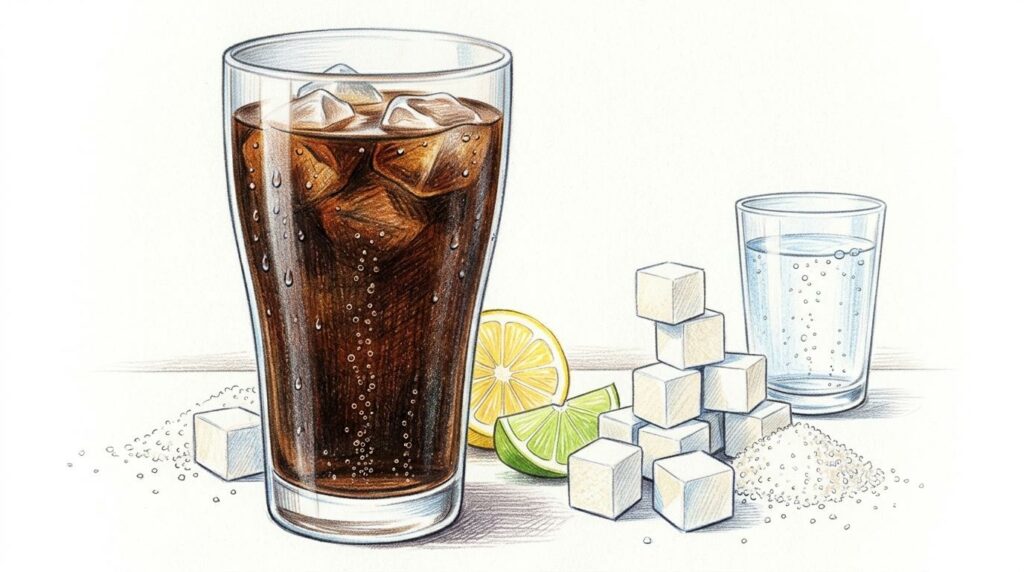
That bottle of Coke, that can of L&P, that Sprite with lunch. They contain zero purines. They still spike your uric acid levels, and the research shows the effect is dramatic.
Fructose Is the Mechanism
This is the part that surprises people.
Soft drinks don’t raise uric acid through purines. They raise it through fructose, and the way fructose raises uric acid is unique among sugars.
When your body metabolises fructose, it uses up a molecule called ATP (adenosine triphosphate). That process generates a compound called AMP, which your body then converts into uric acid.
No other common sugar does this.
Glucose doesn’t trigger this pathway. Lactose in milk doesn’t trigger it. Fructose is the specific problem.
A standard 330ml can of Coke contains around 35 grams of sugar. Roughly half of that is fructose, because the sugar used in soft drinks is sucrose (which splits into glucose and fructose) or high-fructose corn syrup (which is already fructose-heavy).
That’s a significant fructose hit, delivered fast, in liquid form.
Your liver processes it immediately. Uric acid goes up within minutes.
What the Research Actually Shows
The numbers here are striking.
A major study published in the BMJ by Choi and Curhan, drawing on data from over 46,000 men followed across 12 years, found that men who consumed two or more sugary soft drinks per day had an 85% higher risk of elevated uric acid compared to those who rarely drank them.
Even one soft drink per day raised the risk meaningfully.
That’s a massive effect from something that contains no purines at all.
Another study in the Journal of the American Medical Association found similar results in women. Those who drank one sugar-sweetened soft drink per day had a 74% higher risk compared to women who drank less than one per month.
The dose-response relationship is clear. More fizzy drinks, higher uric acid. Every additional daily serving increases the risk further.
New Zealand Research: It Gets Worse
Researchers from the University of Otago and the University of Auckland have taken this a step further.
Their work, published in Annals of the Rheumatic Diseases, found that fructose from sugary drinks doesn’t just create more uric acid. It also interferes with a gene called SLC2A9, which is responsible for how your kidneys remove uric acid from your body.
Think about what that means.
Fructose increases uric acid production and reduces your body’s ability to clear it. It’s a double mechanism, and it’s why the effect of sugary drinks on uric acid is so pronounced.
This is particularly relevant in New Zealand, where the genetic variant of SLC2A9 is more common among Maori and Pacific populations, who already face disproportionately high rates of elevated uric acid.
The combination of genetic susceptibility and high fizzy drink consumption creates a compounding effect.
Which Fizzy Drinks Are the Worst?
Not all soft drinks are equal, but the differences are smaller than you’d think.
Full-sugar cola (Coke, Pepsi)
The biggest offenders. A 600ml bottle of Coca-Cola contains around 63 grams of sugar. That’s roughly 30 grams of fructose in a single bottle. Your liver processes that rapidly, producing a measurable uric acid spike.
Lemon-lime drinks (Sprite, 7Up)
Same problem. Sprite has a similar sugar content to Coke. The lack of colour doesn’t mean it’s healthier for uric acid.
L&P and other NZ favourites
L&P contains similar sugar levels to other mainstream soft drinks. It’s the same fructose mechanism regardless of brand or flavour.
Fruit-flavoured soft drinks (Fanta, Lift)
Often contain even more sugar than cola. Fanta Orange, for example, has slightly more sugar per 100ml than Coke in some formulations. The fruit flavour makes people assume it’s a better choice. It isn’t.
Energy drinks (V, Monster, Red Bull)
These combine high fructose with caffeine. A 500ml can of V contains around 52 grams of sugar. Same fructose problem, different packaging.
Fruit juice
This one catches people off guard. A glass of apple juice contains roughly the same amount of fructose as a glass of Coke. Orange juice is slightly better, but still delivers a significant fructose load. The vitamins don’t cancel out the uric acid effect.
We cover this in more detail in our sugar and uric acid guide.
The Dehydration Factor
There’s a secondary problem with fizzy drinks that doesn’t get enough attention.
Soft drinks are terrible at hydrating you.
The high sugar content actually slows fluid absorption. And dehydration is one of the fastest ways to raise uric acid levels, because your kidneys need adequate water to flush uric acid out effectively.
So you’ve got a drink that directly increases uric acid production, interferes with the gene that clears it, and does a poor job of hydrating you.
That’s three mechanisms working against you at once.
Many people reach for a Coke or L&P specifically because they’re thirsty. Water would have been the better choice in every respect.
How Much Is Too Much?
Based on the research, here’s the honest picture:
- 2+ soft drinks per day: 85% higher risk of elevated uric acid. This is where the damage is most severe.
- 1 soft drink per day: Still a meaningful increase in risk. The studies consistently show a dose-response effect at this level.
- 2-4 per week: Lower risk, but not zero. The fructose still adds up, especially if your uric acid is already borderline.
- Occasional (once a week or less): Unlikely to be a major factor on its own, though it still contributes to your overall fructose intake.
If you’re currently drinking one or more fizzy drinks per day and dealing with elevated uric acid, this is one of the highest-impact changes you can make.
What to Drink Instead
The good news is you’ve got plenty of options that don’t spike your uric acid.
Water
The obvious one, and the best. Proper hydration supports kidney function and helps your body excrete uric acid more efficiently. Aim for at least two litres per day.
Coffee
Research consistently shows that coffee is associated with lower uric acid levels. The chlorogenic acid in coffee may help your kidneys excrete uric acid more effectively. Three to five cups a day is the sweet spot in the research.
Tea
Green tea contains antioxidants that may support uric acid management. A solid swap for an afternoon fizzy drink.
Sparkling water
If it’s the fizz you’re after, sparkling water gives you the carbonation without the fructose. Add a squeeze of lemon or lime for flavour. This is the simplest substitution and it works.
Milk
Low-fat dairy is actively protective. The proteins in trim milk help your kidneys excrete uric acid. One of the few drinks that actually brings your levels down.
Diet soft drinks
Sugar-free soft drinks like Coke Zero and Diet Coke don’t contain fructose and are not associated with increased uric acid in the research. They’re not the healthiest option overall, but from a uric acid perspective, they’re a significant improvement over the full-sugar versions.
Making the Switch
Dropping fizzy drinks is one of those changes that sounds harder than it is.
Most people who cut them out report that the cravings fade within two to three weeks. After a month, the full-sugar versions taste overwhelmingly sweet.
Start with swaps, not willpower.
Replace your lunchtime Coke with sparkling water. Switch your afternoon energy drink for a coffee. Keep cold water in the fridge so it’s the easy option when you’re thirsty.
Watch for hidden fructose.
Fruit juice, sports drinks, iced teas, and flavoured waters can all contain significant fructose. Check the sugar content on the label. If it’s above 5 grams per 100ml, it’s worth reconsidering.
Don’t rely on one change alone.
Cutting fizzy drinks is high-impact, but it works best as part of a broader approach to managing uric acid. Smart eating, proper hydration, and targeted supplementation all contribute.
Supporting Your Levels Long-Term
Removing fructose-heavy drinks is a powerful first step.
For consistent, daily support, ingredients like tart cherry extract, celery seed extract, chanca piedra, and green coffee bean extract have research backing their role in supporting healthy uric acid levels.
I created URICAH with 14 natural ingredients at transparent dosages, specifically designed to support uric acid management. No proprietary blends. Every ingredient and dose is clearly listed on the label.
Learn about natural ways to support healthy uric acid levels
Free overnight shipping in NZ. 90-day money-back guarantee.
The Bottom Line
Fizzy drinks raise uric acid through fructose, not purines.
The effect is significant. Two or more per day creates an 85% higher risk of elevated levels.
New Zealand research has shown that fructose also interferes with the gene responsible for clearing uric acid from your body. It’s a double hit.
The fix is straightforward. Replace sugary drinks with water, coffee, sparkling water, or trim milk. Your uric acid levels will respond.
Of all the dietary changes you can make for uric acid, cutting fizzy drinks is one of the easiest and most effective.
This article is for informational purposes only and is not intended as medical advice. Consult your healthcare provider before making changes to your health routine.

URICAH! Uric Acid Support
4.85 / 5
read 2,294 customer reviews
$39 NZDTHIS IS YOUR URICAH MOMENT
URICAH provides natural support for healthy uric acid levels.
Our 14 potent, natural ingredients support the body’s normal uric acid levels, supporting joint mobility and function.
URICAH!™ features powerful ingredients used over many years to support healthy uric acid levels such as Tart Cherry, Celery Seed and Chanca Piedra.
LEARN MORE