
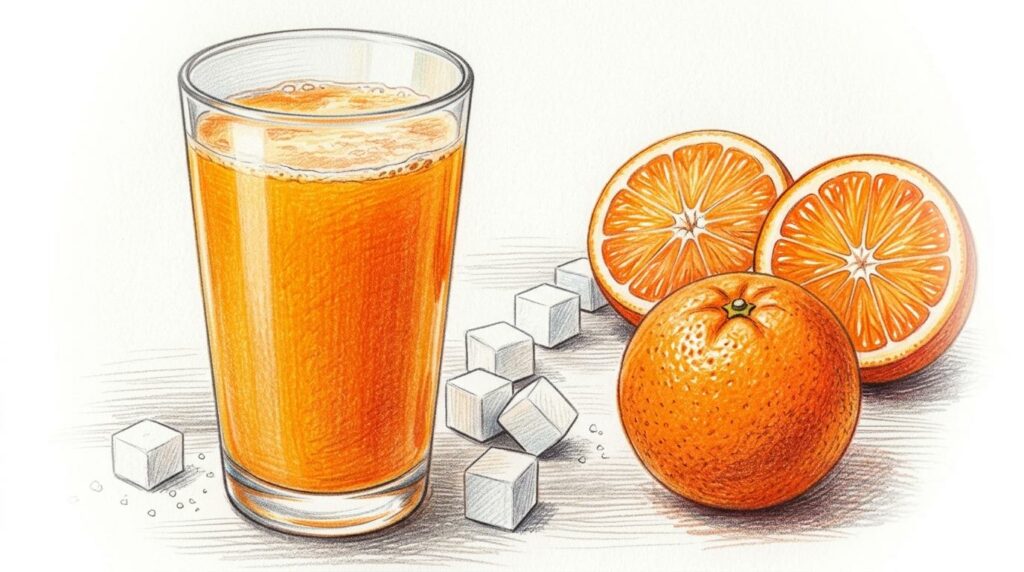
Most people think orange juice is healthy.
It has vitamin C. It comes from fruit. It’s been a breakfast staple for decades.
But when it comes to uric acid, orange juice is working against you. And the reason is a paradox that most people never think about.
The Vitamin C Paradox
Here’s what makes orange juice so deceptive.
Vitamin C genuinely helps lower uric acid. There’s solid research showing that vitamin C supplementation supports uric acid excretion through the kidneys. A meta-analysis of randomised controlled trials found a mean reduction of 0.35 mg/dL with vitamin C supplementation.
Orange juice contains vitamin C. So it should help, right?
Wrong.
Orange juice also contains a significant amount of fructose. And fructose is one of the most potent dietary drivers of uric acid production.
When fructose is metabolised in the liver, it rapidly depletes ATP (adenosine triphosphate). This triggers a cascade that increases purine degradation, which directly produces uric acid. Unlike glucose, fructose bypasses the normal regulatory controls in the liver, meaning it generates uric acid fast and in large amounts.
The fructose effect overwhelms the vitamin C benefit. It’s not even close.
What the Research Shows
The numbers are stark.
A landmark study published in JAMA in 2010 followed over 78,000 women and found that those who consumed two or more servings of orange juice per day had a 2.4 times greater risk of developing elevated uric acid levels compared to those who rarely consumed it.
That’s not a marginal increase. That’s more than double the risk.
Research presented to the American College of Rheumatology found even higher numbers at greater consumption levels: participants who consumed three or more sugar-sweetened beverages daily (including fruit juice) had a 3.93 times greater risk of flare-ups.
And here’s the part that New Zealanders should pay attention to. Researchers at the University of Otago and University of Auckland have studied how fructose interacts with the genes that control uric acid excretion. Their work has shown that fructose can interfere with the SLC2A9 gene, one of the most important genetic regulators of uric acid transport in the kidneys. This means fructose doesn’t just add to the uric acid load; it actively impairs your body’s ability to get rid of it.
Sound familiar? That’s the same double-hit mechanism that makes beer so problematic. Adding uric acid and blocking its removal.
How Much Fructose Is in Orange Juice?
A standard 250ml glass of orange juice contains roughly 21 grams of sugar, of which approximately half is fructose. That’s about 10 to 11 grams of fructose per glass.
For comparison, a 250ml glass of Coca-Cola contains about 27 grams of sugar. Orange juice isn’t far behind.
The key difference between juice and whole fruit is fibre. When you eat an actual orange, the fibre slows fructose absorption dramatically. Your liver processes it gradually rather than being hit with a concentrated dose. Juice removes the fibre entirely and delivers a fructose bolus straight to the liver.
Two glasses of orange juice gives your liver roughly the same fructose load as eating four to five whole oranges, except it arrives in minutes rather than being slowly released over an hour of chewing and digestion.
It’s Not Just Orange Juice
This applies to virtually all fruit juices:
- Apple juice is actually higher in fructose than orange juice. A 250ml glass contains roughly 13 to 15 grams of fructose. Apple juice is one of the worst offenders.
- Grape juice is similarly high in sugar and fructose. Roughly 20 grams of fructose per 250ml serve.
- Fruit smoothies can be even worse because they often combine multiple high-fructose fruits with added juice as a base. A large commercial smoothie can contain 50 to 70 grams of sugar.
- Cranberry juice (cocktail varieties) is typically loaded with added sugar. Pure unsweetened cranberry juice is very tart and lower in fructose, but the versions most people actually drink are sweetened.
The pattern is consistent. Fruit juice in any form delivers concentrated fructose without the fibre that makes whole fruit acceptable.
The Whole Fruit Solution
This doesn’t mean you should avoid fruit entirely. That would be throwing the baby out with the bathwater.
Whole fruits are a different story.
The fibre in whole fruit slows fructose absorption. The water content helps with hydration. Many fruits contain beneficial compounds like anthocyanins (in cherries and berries) that actively support healthy uric acid levels.
The research consistently shows that moderate whole fruit consumption is associated with lower uric acid risk, not higher. It’s the juice and concentrated fructose forms that cause problems.
Fruits that support healthy uric acid levels:
- Cherries (particularly tart cherries, also available as cherry juice in unsweetened form)
- Berries (strawberries, blueberries, blackberries)
- Citrus fruits eaten whole (oranges, mandarins, grapefruit)
- Kiwifruit (high in vitamin C and fibre)
Fruits to moderate:
- Grapes (higher in fructose)
- Mangoes (higher in fructose)
- Dried fruits (concentrated fructose, no water content)
Eat the fruit. Skip the juice.
What About the Vitamin C Argument?
Some people justify drinking orange juice specifically for the vitamin C content.
Here’s why that logic doesn’t hold up.
A single orange contains about 70mg of vitamin C. A glass of orange juice contains roughly the same. The research on vitamin C and uric acid used doses of 500mg or more per day to see significant effects.
You’d need to drink seven glasses of orange juice daily to hit that dose. The fructose load from seven glasses would be catastrophic for your uric acid levels. The vitamin C benefit would be completely obliterated.
If you want the uric acid benefit of vitamin C, get it from a supplement or from whole fruits and vegetables. Capsicums, kiwifruit, broccoli, and strawberries are all excellent sources without the concentrated fructose hit.
This is exactly the kind of thing I had in mind when I created URICAH. We included vitamin C as one of the active ingredients because the research supports it, but in a form that doesn’t come packaged with 11 grams of fructose per serve.
What to Drink Instead
If you’re looking for beverages that actually support healthy uric acid levels, you have good options:
- Water is the foundation. Staying properly hydrated supports kidney function and uric acid excretion.
- Coffee has consistent evidence for supporting lower uric acid levels.
- Green tea provides antioxidants that may support uric acid management.
- Low-fat dairy has strong evidence for promoting uric acid excretion.
- Unsweetened tart cherry juice contains anti-inflammatory compounds and has evidence for supporting healthy uric acid levels.
Notice what’s not on the list. Fruit juice. Soft drinks. Sweetened beverages of any kind.
The Bottom Line
Orange juice raises uric acid levels despite containing vitamin C. The fructose content overwhelms any potential benefit. The research shows a 2.4x increase in risk at just two servings per day.
This applies to apple juice, grape juice, smoothies, and any other source of concentrated fructose.
Here’s what to do:
- Stop drinking fruit juice as a daily habit
- Eat whole fruits instead, particularly cherries, berries, and kiwifruit
- Get your vitamin C from supplements or whole food sources
- Replace juice with water, coffee, green tea, or low-fat dairy
- Read labels on drinks that seem healthy; check the sugar content
Your morning glass of orange juice feels healthy. The research says otherwise. Make the switch to whole fruit and a proper vitamin C source, and your uric acid levels will thank you.
Read about natural ways to support healthy uric acid levels
Learn what to look for in a uric acid supplement
This article is for informational purposes only and is not intended as medical advice. Consult your healthcare provider before making changes to your health routine.

URICAH! Uric Acid Support
4.85 / 5
read 2,294 customer reviews
$39 NZDTHIS IS YOUR URICAH MOMENT
URICAH provides natural support for healthy uric acid levels.
Our 14 potent, natural ingredients support the body’s normal uric acid levels, supporting joint mobility and function.
URICAH!™ features powerful ingredients used over many years to support healthy uric acid levels such as Tart Cherry, Celery Seed and Chanca Piedra.
LEARN MORE