Here’s the short answer: no.
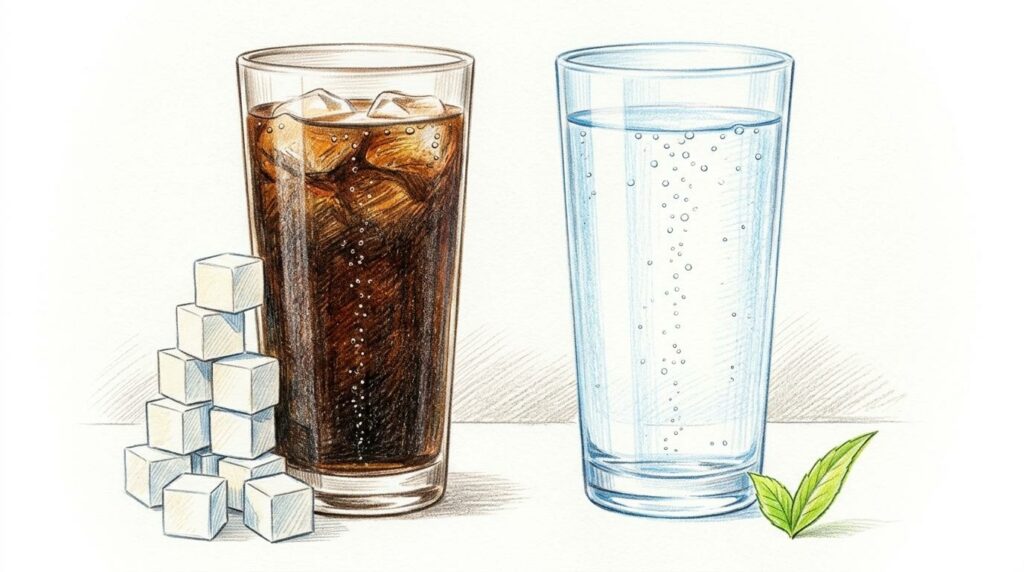
Coke Zero is not associated with higher uric acid levels in the research. Neither is Diet Coke, Pepsi Max, or any other sugar-free soft drink.
That’s genuinely good news if you’re managing uric acid and looking for something with a bit more flavour than water.
The reason is straightforward. The thing in soft drinks that raises uric acid is fructose. Coke Zero doesn’t contain fructose. It doesn’t contain any sugar at all.
No fructose, no uric acid spike.
But there’s more to this story than just “it’s fine.” Let’s go through what the research actually shows, address the concerns people have about artificial sweeteners, and look at what you should really be watching out for.
Why Regular Soft Drinks Are the Problem
To understand why Coke Zero gets a pass, you need to understand why regular Coke doesn’t.
When your body metabolises fructose, it uses up ATP (adenosine triphosphate) and generates AMP, which your body converts into uric acid. This is a unique metabolic pathway. Glucose doesn’t do this. Protein doesn’t do this. Only fructose triggers this specific uric acid production pathway.
A standard 600ml bottle of Coca-Cola contains around 63 grams of sugar. Roughly half of that is fructose.
That’s a significant hit to your uric acid levels, and the effect is measurable within minutes.
We cover this in detail in our soft drinks and uric acid guide.
Coke Zero replaces all that sugar with artificial sweeteners, primarily aspartame and acesulfame potassium. These sweeteners don’t enter the fructose metabolic pathway. They don’t generate AMP. They don’t produce uric acid.
From a uric acid perspective, the mechanism simply isn’t there.
What the Research Shows
The clearest evidence comes from the large NHANES (National Health and Nutrition Examination Survey) datasets.
Researchers analysed the relationship between beverage consumption and serum uric acid levels across thousands of participants. Sugar-sweetened soft drinks were consistently associated with higher uric acid levels. Diet soft drinks were not.
The Choi and Curhan study published in the BMJ, which followed over 46,000 men, found that two or more sugar-sweetened soft drinks per day increased the risk of elevated uric acid by 85%.
Diet soft drinks showed no such association.
A separate analysis in the American Journal of Clinical Nutrition confirmed this pattern. Regular soft drinks raised uric acid. Diet versions did not.
The distinction is consistent across multiple studies and large population samples. This isn’t a single finding from one small trial. It’s a pattern that holds up repeatedly.
The Aspartame Question
This is the concern that comes up most often, especially on health forums and social media.
“What about aspartame? Isn’t that bad for you? Won’t artificial sweeteners raise uric acid?”
The research doesn’t support this.
Multiple studies have looked specifically at aspartame and uric acid levels. No association has been found. Aspartame is broken down into aspartic acid, phenylalanine, and methanol in very small amounts. None of these metabolites enter the purine degradation pathway that produces uric acid.
The European Food Safety Authority, Food Standards Australia New Zealand, and the US FDA have all reviewed aspartame extensively. None have identified a link between aspartame and uric acid.
Acesulfame potassium (the other sweetener in Coke Zero) has an even simpler story. Your body doesn’t metabolise it at all. It passes through largely unchanged.
There are legitimate debates about artificial sweeteners and other aspects of health, such as gut microbiome effects and appetite signalling. From a uric acid perspective specifically, the evidence is clear. They don’t raise it.
What About the Forum Reports?
Search any gout or uric acid forum and you’ll find people claiming that diet soft drinks triggered a flare-up or raised their levels.
These reports deserve acknowledgement, but they also need context.
Correlation isn’t causation.
Someone might switch from regular Coke to Coke Zero while making other dietary changes. If their uric acid fluctuates, they might attribute it to the diet drink rather than the actual cause.
The substitution effect.
When people switch to diet drinks, they sometimes compensate elsewhere. They might eat more, snack on high-purine foods, or reduce their water intake because they feel the diet drink “counts” as hydration.
Caffeine and dehydration.
Coke Zero contains caffeine, which is a mild diuretic. If someone is drinking multiple cans of Coke Zero and not enough water, mild dehydration could contribute to higher uric acid levels. That’s a hydration issue, not a sweetener issue.
Individual variation.
Human biology is complex. Some people may be sensitive to specific compounds in ways that don’t show up in population-level research. If you consistently notice a pattern with diet drinks and your uric acid levels, that’s worth paying attention to, even if the broad research doesn’t support a general connection.
The key point is this: the controlled research consistently shows no association between diet soft drinks and uric acid. Anecdotal reports exist, but they don’t override the larger evidence base.
The Real Culprit: Regular Soft Drinks
If you’re choosing between regular Coke and Coke Zero, the choice is simple from a uric acid perspective.
Regular Coke delivers a large dose of fructose that directly raises uric acid through a well-understood metabolic pathway. Two or more daily servings increase your risk of elevated levels by 85%.
New Zealand research from Otago and Auckland has shown that fructose also interferes with SLC2A9, a gene that helps your kidneys clear uric acid. So regular soft drinks increase production and reduce clearance simultaneously.
Coke Zero skips that entire mechanism.
The fructose in regular soft drinks is also covered in our sugar and uric acid guide, which goes deeper into how fructose from all sources affects your levels.
What About Other Diet Drinks?
The same principle applies across the board.
Diet Coke
Same story as Coke Zero. Different flavour profile, same lack of fructose. Not associated with higher uric acid in the research.
Pepsi Max
Also sugar-free. Also not associated with increased uric acid.
Sugar-free energy drinks (Monster Zero, Red Bull Sugar Free)
No fructose, so no uric acid spike from the sweetener side. They do contain caffeine, which can contribute to dehydration if you’re not drinking enough water alongside them.
Sugar-free cordial and flavoured water
Check the label. If it’s sweetened with artificial sweeteners or stevia rather than sugar, it won’t trigger the fructose pathway.
Stevia-sweetened drinks
Stevia is a natural sweetener that doesn’t contain fructose. No evidence of a uric acid effect. Some people prefer it over artificial sweeteners, and from a uric acid perspective, it’s equally fine.
What Should You Actually Drink?
Coke Zero gets a pass on uric acid. That doesn’t mean it should be your primary drink.
Water is still the best thing you can drink for uric acid management. Your kidneys need adequate hydration to flush uric acid efficiently.
Here’s a practical ranking:
Best choices
Water, coffee (associated with lower uric acid), trim milk (actively helps reduce levels), and green tea.
Fine choices
Coke Zero, Diet Coke, Pepsi Max, sparkling water, sugar-free cordial.
Limit or avoid
Regular Coke, Sprite, Fanta, L&P, energy drinks with sugar, fruit juice in large amounts.
The practical approach is to make water your default, enjoy coffee as a positive contributor, use diet drinks when you want something flavoured, and keep full-sugar soft drinks as an occasional treat rather than a daily habit.
Supporting Healthy Levels Long-Term
Getting your drink choices right is one piece of the puzzle.
For consistent, daily support, ingredients like tart cherry extract, celery seed extract, chanca piedra, and green coffee bean extract have research backing their role in supporting healthy uric acid levels.
I created URICAH with 14 natural ingredients at transparent dosages. No proprietary blends. Every ingredient and dose is clearly listed on the label.
Learn about natural ways to support healthy uric acid levels
Free overnight shipping in NZ. 90-day money-back guarantee.
The Bottom Line
Coke Zero does not raise uric acid levels.
The research is consistent. Diet soft drinks are not associated with higher uric acid because they don’t contain fructose, which is the specific compound that triggers uric acid production.
Artificial sweeteners like aspartame and acesulfame potassium don’t enter the metabolic pathway that creates uric acid. The concern is understandable, but the evidence doesn’t support it.
The real problem is regular soft drinks. If you’re currently drinking full-sugar Coke, Sprite, or other sugary drinks daily, switching to their sugar-free versions is one of the simplest changes you can make for your uric acid levels.
And if you want to go a step further, swap some of those diet drinks for water or coffee. Your kidneys will thank you.
This article is for informational purposes only and is not intended as medical advice. Consult your healthcare provider before making changes to your health routine.

URICAH! Uric Acid Support
4.85 / 5
read 2,294 customer reviews
$39 NZDTHIS IS YOUR URICAH MOMENT
URICAH provides natural support for healthy uric acid levels.
Our 14 potent, natural ingredients support the body’s normal uric acid levels, supporting joint mobility and function.
URICAH!™ features powerful ingredients used over many years to support healthy uric acid levels such as Tart Cherry, Celery Seed and Chanca Piedra.
LEARN MORE