
They start as small, painless lumps under the skin.
Most people ignore them at first. They assume it is nothing. A cyst maybe. Or just part of getting older.
But those lumps could be tophi. And if they are, they are telling you something critical about your uric acid levels.
Tophi are deposits of uric acid crystals that form in and around your joints and soft tissues. They are a visible, physical sign that uric acid has been too high for too long.
They are not a cosmetic issue. They are a warning.
What exactly are tophi?
The word “tophus” (plural: tophi) comes from the Latin word for porous stone. It is an apt description.
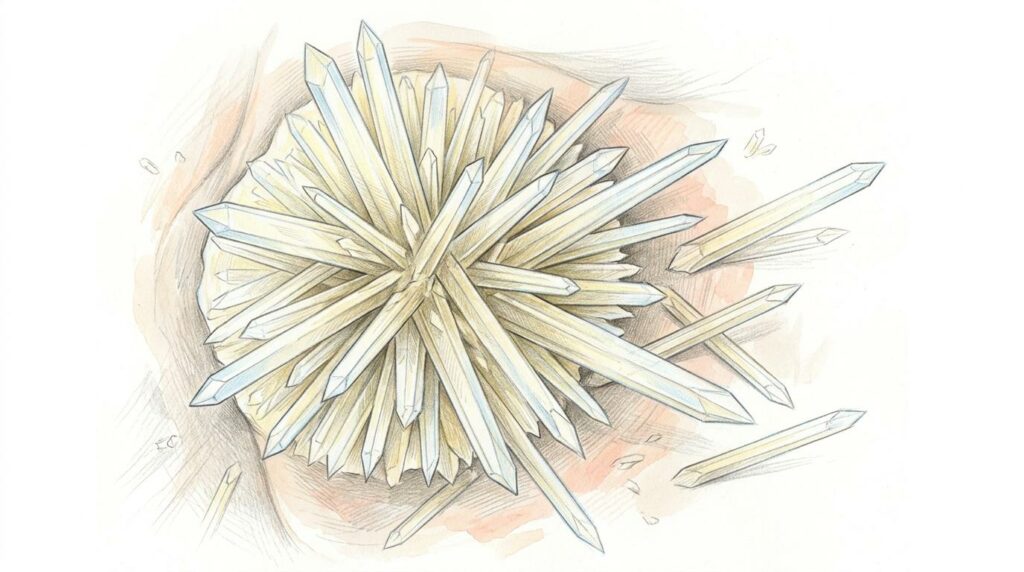
Tophi are collections of monosodium urate crystals. These are the same needle-shaped crystals that cause the intense pain of a uric acid flare. But while flares come and go, tophi represent a chronic accumulation.
When uric acid levels stay above the saturation point (approximately 6.8 mg/dL) for extended periods, your blood literally cannot hold all the uric acid in solution. The excess crystallises out and deposits in tissues.
Over months and years, these deposits grow. They can start as tiny nodules invisible to the naked eye and eventually become large, visible lumps.
Tophi are composed of a chalky, white substance. If you have ever seen one that has broken through the skin, the material inside looks like white chalk or toothpaste. That is crystallised uric acid.
Where do tophi form?
Tophi tend to form in areas with lower body temperature and less blood flow. Crystals are more likely to precipitate in cooler tissues.
Common locations include:
- The big toe joint (the classic location)
- Fingers and finger joints
- Wrists and hands
- Elbows, particularly the olecranon bursa (the bony point of your elbow)
- The Achilles tendon
- The outer edge of the ear (the helix)
- Knees
- Forearms
The ear is a particularly telling location. Ears have minimal blood flow and are one of the coolest parts of your body. Small tophi on the ears are sometimes the first visible sign that uric acid has been chronically elevated.
What do tophi look, feel, and act like?
In their early stages, tophi feel like firm nodules under the skin. They may be painless. They may even be mistaken for something else entirely.
As they grow, they become more noticeable.
Appearance
Small tophi look like firm, rounded bumps under the skin. The overlying skin may appear normal.
Larger tophi can stretch the skin and give it a yellowish or whitish colour as the crystal deposit becomes visible through the tissue.
In advanced cases, tophi can become quite large, sometimes reaching the size of a golf ball or larger.
Feel
Tophi have a characteristic firm, gritty texture. They are not soft like a cyst. If you press on one, it feels hard or chalky.
Pain
Small, early tophi are often painless. As they grow, they can cause chronic pain in the surrounding joint. They can also compress nerves or tendons, creating pain in areas adjacent to the deposit.
During a flare, the inflammation around a tophus can cause intense pain.
Skin breakdown
In advanced cases, tophi can erode through the skin. This creates an open wound that leaks a white, chalky material. These wounds are prone to infection and are difficult to heal while the tophus remains.
How long does it take for tophi to develop?
Tophi typically take years to form.
They are a sign of chronic, sustained hyperuricaemia, meaning uric acid has been above the saturation point for a long time. Most people who develop tophi have had elevated uric acid for at least five to ten years, often longer.
However, the timeline varies. People with very high uric acid levels or impaired kidney function may develop tophi faster.
Some people have elevated uric acid for years without ever developing tophi. Others develop them relatively quickly. Individual factors like genetics, kidney function, and body temperature play a role.
For a full understanding of what different uric acid levels mean, see our guide on uric acid levels explained.
Why tophi matter beyond appearance
Tophi are not just lumps. They cause real damage.
Joint destruction
Tophi grow within and around joints. As they expand, they erode cartilage and bone.
X-rays of joints with tophi often show characteristic “punched out” lesions in the bone. These are areas where crystal deposits have literally eaten into the bone structure.
This damage is structural and, in advanced cases, irreversible. It leads to chronic pain, reduced range of motion, and disability.
Tendon and nerve damage
Tophi in or near tendons can weaken them and even cause rupture. Deposits near nerves can cause compression syndromes similar to carpal tunnel.
Infection risk
When tophi break through the skin, they create a direct pathway for bacteria. These wounds can become infected, and infected tophi can be serious, sometimes requiring surgical intervention.
Functional impairment
Large tophi on the hands and feet can make basic tasks difficult. Gripping, walking, wearing shoes, all become challenging when crystal deposits deform the joints.
What causes tophi to form?
The root cause is straightforward: sustained elevated uric acid.
Your body produces uric acid as a byproduct of purine metabolism. Normally, your kidneys excrete enough to keep levels in a safe range.
When this balance is disrupted, either through overproduction, underexcretion, or both, uric acid levels rise. Once they exceed the saturation point of approximately 6.8 mg/dL, crystallisation becomes possible.
The longer levels stay above this threshold, the more crystals accumulate.
Several factors increase the risk of tophi development.
- Chronically elevated uric acid levels left untreated
- Impaired kidney function (kidneys excrete less uric acid)
- Certain medications, including diuretics (see our guide on medications that raise uric acid)
- Dehydration (concentrates uric acid and promotes crystallisation)
- High purine diet
- Excessive alcohol intake, particularly beer
For more on the symptoms that precede or accompany tophi, see our guide on uric acid symptoms.
Can tophi be reversed?
Yes. This is one of the most important things to know.
Tophi can be dissolved. But it requires sustained lowering of uric acid levels below the saturation point.
The standard medical target for dissolving tophi is a serum uric acid level below 5 mg/dL. Some guidelines recommend below 6 mg/dL, but the lower target dissolves deposits faster.
At these lower levels, the crystallised uric acid gradually redissolves back into the blood and is excreted by the kidneys. Over time, tophi shrink and can disappear entirely.
How long does dissolution take?
Patience is required.
Small tophi may dissolve within months of achieving target uric acid levels. Large tophi can take one to two years or longer.
The key is consistency. Your uric acid needs to stay below target for an extended period. Intermittent spikes in uric acid allow recrystallisation and slow the process.
Medical treatment
If you have tophi, you need medical management of your uric acid levels.
Urate-lowering therapy (ULT) is the cornerstone of tophi treatment. Medications like allopurinol and febuxostat reduce uric acid production. Probenecid increases excretion.
Your doctor will set a target level based on the severity of your deposits and monitor progress over time.
In severe cases where tophi are causing joint destruction, nerve compression, or skin breakdown, surgical removal may be necessary. But surgery addresses the deposits, not the underlying cause. Without uric acid management, tophi will return.
What you can do alongside medical treatment
Medical therapy is usually necessary for tophi, but lifestyle strategies support and enhance it.
Stay well hydrated
Hydration keeps uric acid in solution and supports kidney excretion. Aim for at least 2 litres of water daily.
Read more in our guide on dehydration and uric acid.
Manage your weight
Excess weight increases uric acid production and contributes to insulin resistance, which impairs excretion.
Our guide on obesity, weight loss, and uric acid covers the right approach.
Reduce dietary triggers
Limiting high-purine foods, excess sugar, and alcohol supports lower uric acid levels.
Support with natural compounds
Certain supplements may complement medical treatment. Tart cherry, quercetin, and vitamin C have evidence for supporting healthy uric acid levels.
See our guide on natural ways to support uric acid levels.
Manage stress
Chronic stress raises cortisol, which increases uric acid through tissue breakdown and reduced kidney function.
Our guide on stress and uric acid covers practical strategies.
The bottom line on tophi
Tophi are a visible sign of a serious metabolic problem.
They tell you that uric acid has been too high for too long. They are not a cosmetic nuisance. They cause joint destruction, tendon damage, and functional impairment.
But they are reversible. With sustained uric acid management, keeping levels below the saturation point, tophi dissolve over time. Joints can be preserved. Function can be maintained.
The earlier you act, the better the outcome. If you have lumps around your joints, fingers, elbows, or ears, do not ignore them. Get your uric acid tested. Talk to your doctor. Start treatment.
Tophi are your body speaking clearly. The question is whether you listen.
This article is for informational purposes only and is not intended as medical advice. Consult your healthcare provider before making changes to your health routine.


URICAH! Uric Acid Support
4.85 / 5
read 2,294 customer reviews
$39 NZDTHIS IS YOUR URICAH MOMENT
URICAH provides natural support for healthy uric acid levels.
Our 14 potent, natural ingredients support the body’s normal uric acid levels, supporting joint mobility and function.
URICAH!™ features powerful ingredients used over many years to support healthy uric acid levels such as Tart Cherry, Celery Seed and Chanca Piedra.
LEARN MORE