
If you’re Maori, Samoan, Tongan, or from any Pacific Island background, you’re more likely to have elevated uric acid levels than someone of European descent. That’s well-documented.
Maori men, for example, show uric acid levels roughly 15-20% higher than European Kiwi men on average. Across Pacific Islander communities, the numbers are similarly elevated.
This matters because understanding why you’re at higher risk changes what you do about it.
And here in Aotearoa, where Pacific communities make up a significant part of the population, this isn’t a niche topic. It’s something a lot of families are dealing with right now.
Why the Difference Exists
There isn’t one single cause. It’s a combination of genetics, historical diet shifts, and modern lifestyle factors.
Genetics Play a Real Role
Two genes in particular have a major influence on uric acid levels: SLC2A9 and ABCG2. Both are involved in how your kidneys transport and excrete uric acid.
Variations in these genes are more common in Pacific Islander and Maori populations. These variations reduce the kidneys’ ability to clear uric acid efficiently.
You could be doing everything right, eating well, staying hydrated, exercising, and still have higher levels than someone with different genetic variants.
This is a difference you need to know about so you can account for it.
For more on how genetics influence uric acid, read our detailed guide on uric acid and genetics.
The Dietary Shift That Changed Everything
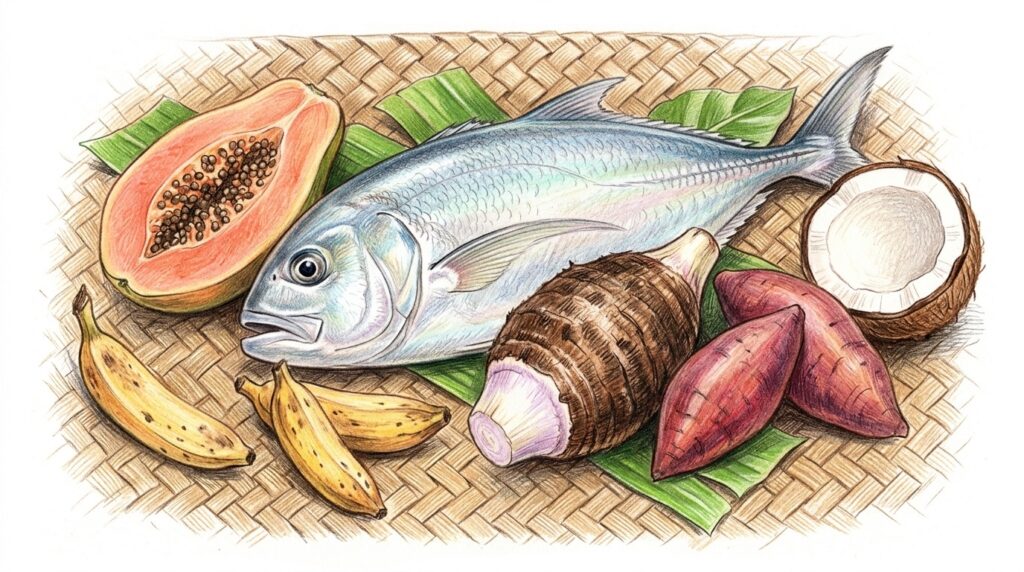
Traditional Pacific diets were built around whole foods. Taro, kumara, fresh fish, tropical fruits, coconut, leafy greens, and rice. These foods are naturally low in purines and high in the nutrients your body needs to function well.
Over the past few generations, there’s been a significant shift toward processed, Western-style foods. More sugar. More refined carbohydrates. More processed meats. Less of the traditional staples.
This matters for two reasons:
- Processed foods and sugary drinks (especially those high in fructose) directly increase uric acid production.
- The whole foods they replaced were actively helping to keep levels in check.
The modern food environment is particularly problematic for people whose genetics already predispose them to higher levels.
Urbanisation and Lifestyle Changes
Beyond diet, the shift from physically active rural lifestyles to more sedentary urban ones has played a part. Less physical activity means less efficient kidney function and more weight gain, both of which push uric acid levels upward.
What the Research Tells Us
Studies conducted in New Zealand have consistently shown:
- Maori and Pacific Islander populations have higher average serum uric acid levels than European New Zealanders
- The prevalence of uric acid-related joint issues is 2-3 times higher in Pacific communities
- These disparities persist even when controlling for factors like diet and body weight, pointing to the genetic component
This isn’t something that gets enough attention in mainstream health messaging.
Most of the dietary advice you’ll find online is based on research conducted primarily on European populations. It doesn’t always account for the specific genetic and cultural factors at play in Pacific communities.
Traditional Foods That Support Healthy Levels
One of the most practical things you can do is lean back into traditional foods. They’re genuinely good for your uric acid levels.
Low-risk foods (eat freely):
- Taro and kumara
- Fresh fish (especially white fish like tarakihi and snapper)
- Tropical fruits (banana, pineapple, papaya, coconut)
- Leafy greens (puha, watercress, silverbeet)
- Rice
- Kiwifruit (high in vitamin C, which supports uric acid excretion)
Moderate-risk foods (enjoy in reasonable amounts):
High-risk foods (limit these):
- Organ meats (liver, kidney)
- Aged or preserved fish
- Beer and spirits
- Sugary drinks and fruit juices (the fructose is a real problem)
The shift doesn’t have to be extreme. Even bringing more traditional foods back into your regular rotation while cutting back on the worst offenders makes a measurable difference.
For a complete food guide, check out our article on high-purine foods to avoid.
What Matters for Pacific Families
If elevated uric acid runs in your whanau, here are the most important things to focus on:
1. Get everyone tested.
A simple blood test tells you exactly where you stand. If your parents or siblings have high uric acid, your risk is significantly higher. Don’t wait for symptoms. Get a baseline. For what the numbers mean, read uric acid levels explained.
2. Talk about it openly.
In many Pacific families, uric acid issues are incredibly common but not always discussed openly. The more your family talks about it, the more likely younger members are to take early action.
3. Stay hydrated.
Water helps your kidneys do their job. At least 2 litres a day. This is especially important if your genetic makeup means your kidneys are already working harder to clear uric acid. Read more about hydration and uric acid.
4. Find a culturally aware healthcare provider.
Working with a GP who understands the specific risk profile of Pacific populations makes a real difference. They can tailor advice and monitoring to your actual risk level, rather than applying generic guidelines.
5. Consider targeted supplementation.
When your genetics mean your body needs extra support clearing uric acid, evidence-based supplementation makes practical sense. Ingredients like tart cherry extract, celery seed extract, and vitamin C have research behind them.
We created URICAH to bring together 14 clearly labelled natural ingredients at transparent doses. No proprietary blends. No guessing. Over 2,200 customers across New Zealand are already using it as part of their approach. Free overnight shipping means you can order by 3pm on a weekday and have it the next day.
See the full URICAH ingredient list
Try URICAH risk-free with a 90-day money-back guarantee
This article is for informational purposes only and is not intended as medical advice. Consult your healthcare provider before making changes to your health routine.

URICAH! Uric Acid Support
4.85 / 5
read 2,294 customer reviews
$39 NZDTHIS IS YOUR URICAH MOMENT
URICAH provides natural support for healthy uric acid levels.
Our 14 potent, natural ingredients support the body’s normal uric acid levels, supporting joint mobility and function.
URICAH!™ features powerful ingredients used over many years to support healthy uric acid levels such as Tart Cherry, Celery Seed and Chanca Piedra.
LEARN MORE