

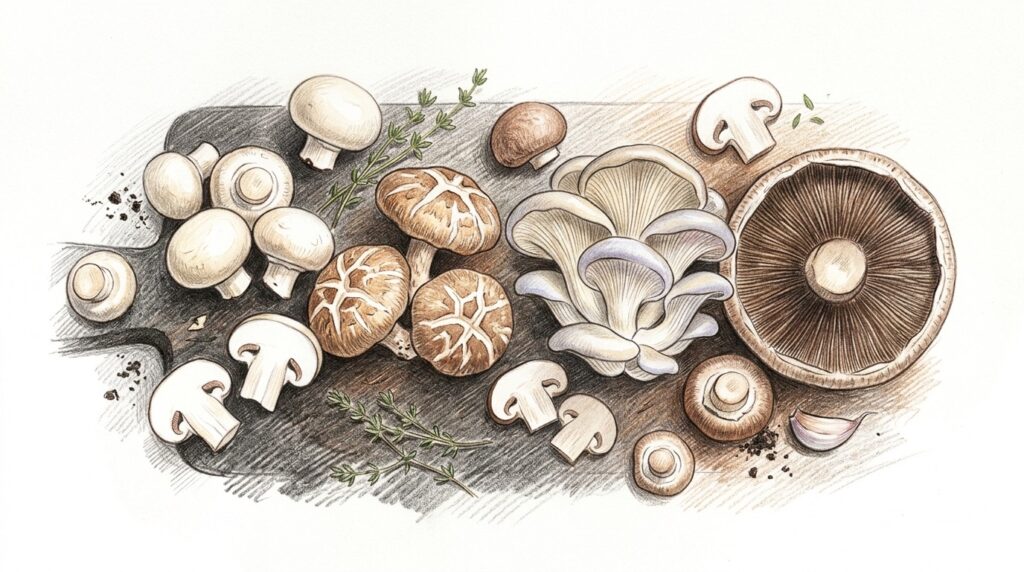
Mushrooms and uric acid have a reputation problem.
You’ve probably seen mushrooms lumped in with high-purine foods to avoid, sitting on the same list as organ meats and shellfish. That’s misleading, and the research tells a different story.
Yes, mushrooms contain moderate levels of purines.
But study after study shows that mushroom consumption is not associated with an increased risk of elevated uric acid or flare-ups. In fact, some research suggests mushrooms may actually have a protective effect.
If you’ve been skipping mushrooms in your stir-fries and salads because you thought they were risky, you can put them back on the menu.
The Purine Numbers
Mushrooms do contain purines. There’s no point pretending otherwise.
But the numbers are moderate, not extreme.
Approximate purine content per 100g (cooked)
- Button mushrooms: 40-60mg
- Portobello mushrooms: 70-90mg
- Shiitake mushrooms: 90-120mg
- Oyster mushrooms: 50-70mg
For comparison, beef liver contains 300+ mg per 100g, and even a regular steak sits around 100-130mg. Mushrooms aren’t in the same league as the foods that genuinely cause problems.
Why Mushrooms Don’t Cause Flare-Ups
This is the critical piece. Purine content alone doesn’t tell the whole story.
Plant purines behave differently
Just like beans and lentils, mushrooms contain plant-based purines that your body handles differently to animal purines. The purines in animal foods are more bioavailable, meaning your body converts them into uric acid more efficiently.
Plant purines don’t have the same impact.
Multiple large-scale studies, including data from the Health Professionals Follow-Up Study and the National Health and Nutrition Examination Survey (NHANES), found no association between mushroom consumption and elevated uric acid levels.
Mushrooms may actually help
Here’s the interesting part.
Research published in the Nutrition Journal (2023) found that mushroom consumption was associated with lower rates of hyperuricemia. The proposed mechanism? Mushrooms contain natural xanthine oxidase inhibitors, compounds that may help reduce the production of uric acid in your body.
That’s the same pathway that pharmaceutical uric acid medications target.
Mushrooms aren’t a replacement for medication, but it’s a genuinely interesting finding.
Which Mushrooms Are Safest?
If you want to be conservative, stick to the lower-purine varieties.
Best choices (lowest purines)
- Button mushrooms (white or brown)
- Oyster mushrooms
- Flat mushrooms
Fine in moderation
- Portobello mushrooms
- Swiss brown mushrooms
Eat less frequently
- Shiitake mushrooms (highest purine content among common varieties)
- Dried mushrooms (concentrated, so the purine content per weight is higher)
That said, even shiitake mushrooms in a normal serving size aren’t going to cause issues for most people managing uric acid.
Practical NZ Cooking Advice
Mushrooms are a staple in New Zealand kitchens. Button mushrooms are in every supermarket, and you’ll find portobellos and specialty varieties at farmers’ markets and good produce shops.
Simple ways to use them
Breakfast
Sauteed mushrooms with eggs on toast. Two of the safest foods for uric acid in one meal. Add some spinach and tomatoes and you’ve got a genuinely nutritious start to the day.
Lunch
Mushroom soup. Blend cooked mushrooms with onion, garlic, vegetable stock, and a splash of cream. Cheap, filling, and low-purine.
Dinner
Stuffed portobellos with rice, capsicum, and herbs. Or throw sliced mushrooms into a stir-fry with chicken breast and vegetables.
As a meat substitute
Large portobello caps make a surprisingly good burger patty replacement. Grill them, add your usual toppings, and you’ve swapped out a high-purine protein for a moderate-purine plant food that won’t affect your uric acid.
Cooking tips
- Sauteing, grilling, and roasting are all fine
- Don’t drown them in butter; a small amount of olive oil works well
- Mushrooms absorb liquid, so they’re perfect in soups, stews, and sauces
- Fresh mushrooms are better than dried for purine management (dried are more concentrated)
How Much Is OK?
For most people managing uric acid, a normal serving of mushrooms (around 100-150g) a few times per week is perfectly fine.
There’s no research suggesting you need to limit intake further than that.
The only scenario where you might want to be careful is if you’re eating large quantities of dried shiitake mushrooms regularly. The concentration effect of drying means you’re getting more purines per gram. But in normal cooking quantities, even dried mushrooms aren’t a concern.
The Bottom Line
Mushrooms are safe for uric acid management.
The moderate purine content is offset by the fact that plant purines don’t trigger flare-ups the way animal purines do. Some evidence even suggests mushrooms may help protect against elevated uric acid levels.
Don’t cut them out of your diet based on outdated advice. Enjoy them as part of a balanced approach to eating, alongside other uric acid-friendly foods like eggs, dairy, and fruit.
For more on how plant foods affect uric acid, read our guide on vegetables and purines. And for the full picture on eating well, check out foods to support healthy uric acid levels.
Looking for support beyond what’s on your plate? URICAH combines 14 natural ingredients at transparent dosages to help maintain healthy uric acid levels. No proprietary blends. Over 2,200 customer reviews. Free overnight shipping across NZ, and a 90-day money-back guarantee.
This article is for informational purposes only and is not intended as medical advice. Consult your healthcare provider before making changes to your health routine.

URICAH! Uric Acid Support
4.8 / 5
read 2,408 customer reviews
$39 NZDTHIS IS YOUR URICAH MOMENT
URICAH provides natural support for healthy uric acid levels.
Our 14 potent, natural ingredients support the body’s normal uric acid levels, supporting joint mobility and function.
URICAH!™ features powerful ingredients used over many years to support healthy uric acid levels such as Tart Cherry, Celery Seed and Chanca Piedra.
LEARN MORE