
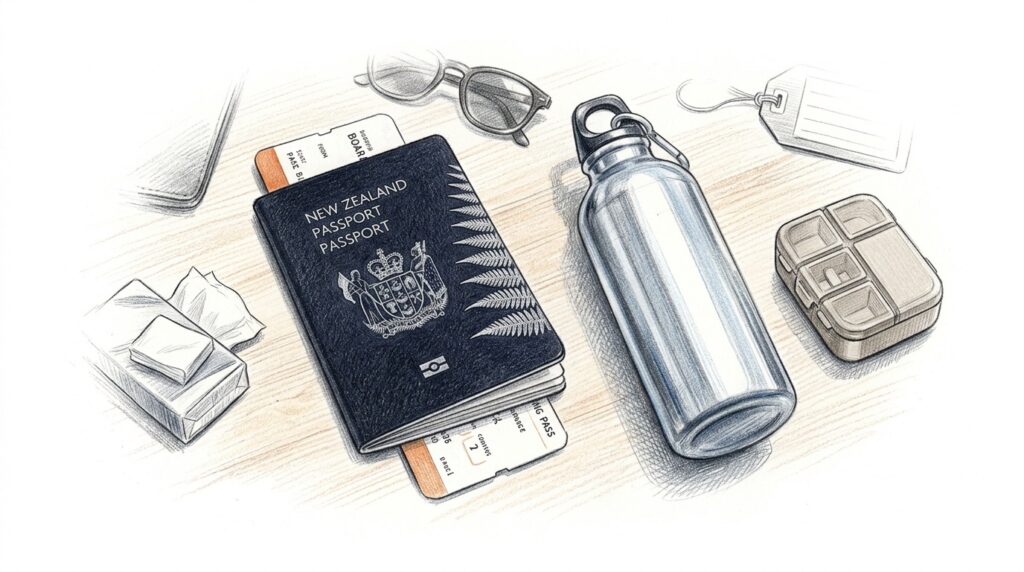
If you’ve ever landed after a long flight and felt a familiar ache building in your joints, you’re not alone. And you’re not imagining the connection.
Flying, particularly long-haul flying, creates almost perfect conditions for a uric acid flare-up. For anyone living in New Zealand, where most international flights are 3-12+ hours, this is a real and recurring problem.
Understanding why flights trigger flares helps you prevent them. And prevention is far better than dealing with a flare-up in an airport or hotel room 10,000 kilometres from home.
Why Flying Is a Problem for Uric Acid
It’s not one thing. It’s everything happening at once.
Dehydration
Cabin air humidity sits at around 10-20%. That’s drier than most deserts. You lose moisture rapidly through breathing and skin evaporation, often without realising it.
A long-haul flight from Auckland to London (roughly 24 hours of travel) can leave you significantly dehydrated. Dehydrated blood is more concentrated, which means higher uric acid concentration. Your kidneys also work less efficiently when you’re dehydrated, so less uric acid gets flushed out.
Airlines offer drinks, but the small cups of water at meal times barely scratch the surface. And if you’re drinking alcohol or coffee on the flight, you’re losing more fluid than you’re taking in.
Immobility
You’re sitting in a cramped seat for hours. Blood pools in your lower legs and feet. Circulation slows.
Reduced blood flow means your kidneys receive less blood to filter. Less filtration means less uric acid excretion.
At the same time, fluid oedema builds in your legs and feet, and everyone’s feet and ankles swell on long flights.
Poor circulation combined with swelling creates an environment where uric acid crystals are more likely to form, particularly in the joints of your feet and toes.
Cold Cabin Temperature
Aircraft cabins are typically maintained between 18-24 degrees Celsius. Your feet, furthest from your core, get colder still, especially if you take your shoes off.
As with night-time flares, lower temperatures reduce uric acid solubility. Cooler joints are more likely to experience crystal formation.
Combine cold feet with reduced circulation and dehydration, and your toes are in trouble.
Cabin Pressure and Altitude
Commercial aircraft are pressurised to the equivalent of approximately 1,800-2,400 metres altitude. This lower pressure causes tissue swelling and can affect how your body handles fluids.
The reduced oxygen at altitude also matters. Lower blood oxygen levels can increase uric acid production through the same mechanism that links sleep apnoea to elevated uric acid: your body breaks down ATP when oxygen is scarce, producing uric acid as a byproduct.
Disrupted Routine
Travel disrupts everything. Your eating schedule shifts. Your water intake drops. You skip exercise. You might eat airport food that’s higher in purines and sugar than your normal diet.
If you’re crossing time zones, your medication or supplement timing gets thrown off. Missing doses during the exact period when your body needs the most support is a recipe for problems.
Pre-Flight Preparation
The best time to prevent a travel-related flare-up is before you get on the plane.
Hydrate heavily the day before.
Start your trip well hydrated. Drink 3+ litres of water the day before you fly. Front-loading hydration gives your body a buffer for the fluid loss that’s coming.
Eat clean the day before and day of travel.
Don’t celebrate the start of your holiday with a high-purine meal and beer at the airport bar. Save that for when you’re settled at your destination and well hydrated.
Keep your pre-flight meals moderate in purines, low in sugar, and accompanied by plenty of water.
Pack your supplements in your carry-on.
Not in your checked luggage. In your carry-on bag, where you can access them.
If your checked bag gets delayed (and it will, eventually), you don’t want to be without your supplements for days.
Take your normal dose before the flight and have another dose ready for during or after travel.
Wear compression socks.
Compression socks improve circulation in your lower legs and reduce swelling. They’re widely available, inexpensive, and make a genuine difference on flights over four hours.
You don’t need medical-grade compression. Standard flight socks from a pharmacy work fine.
During the Flight
Drink Water Constantly
Aim for at least 250ml per hour of flight time. On a 12-hour flight, that’s 3 litres. Sounds like a lot, but the cabin environment is actively dehydrating you the entire time.
Practical tips:
- Bring an empty water bottle through security and fill it at a fountain before boarding
- Ask the cabin crew for water every time they walk past
- Don’t rely on meal service alone; those small cups are nowhere near enough
- Avoid or severely limit alcohol and coffee during the flight
Yes, you’ll need to use the bathroom more. That’s actually a benefit, because it forces you to get up and move.
Move Every Hour
Set a reminder on your phone. Every hour, get up and walk to the back of the plane and back. Do some calf raises. Stretch your ankles. Flex and point your feet while seated.
This isn’t about fitness. It’s about keeping blood flowing through your kidneys and reducing the fluid pooling in your legs that contributes to crystal formation.
Keep Your Feet Warm
Wear your compression socks. Keep shoes on (or bring warm socks if you prefer to remove shoes). Don’t let your feet get cold.
If the cabin is cool, use the airline blanket to cover your feet and lower legs. Warm feet are less likely to experience crystal formation.
Watch What You Eat
Airport food and airline meals tend to be heavy on processed ingredients, high in sodium, and often include high-purine foods. If you have a choice, opt for lower-purine options. Bring your own snacks if possible: nuts, fruit, cheese.
After Landing
The risk doesn’t end when you step off the plane. The first 24-48 hours after a long flight are a high-risk window.
Rehydrate aggressively.
Your first priority after landing. Drink water steadily for the rest of the day. Don’t compensate with alcohol or coffee, even if you’re celebrating arrival.
Move your body.
Go for a walk. Stretch. Get your circulation moving again after hours of immobility. Even 20-30 minutes of walking helps your kidneys start clearing the backlog.
Get back on your supplement schedule.
If time zones have shifted your routine, reset it to local time as quickly as possible. Don’t skip doses during the adjustment period.
Be cautious with food and drink for the first couple of days.
You’re already at elevated risk from the flight. Don’t stack dietary triggers on top of travel triggers. Ease into holiday eating rather than going straight for the high-purine feast.
NZ-Specific Travel Considerations
Living in New Zealand means almost every international trip involves a long-haul flight. Auckland to Sydney is 3 hours. Auckland to Los Angeles is 12 hours. Auckland to London is 24+ hours with a stopover.
These distances mean the dehydration, immobility, and cabin pressure effects are more prolonged and more impactful than a short domestic flight.
Plan accordingly. The longer the flight, the more aggressive you need to be with hydration, movement, and preparation.
Supporting Your Body While Travelling
URICAH contains 14 natural ingredients that support healthy uric acid levels and kidney function. Packing it in your carry-on and maintaining your routine before, during, and after travel helps support your body when it’s under extra stress from flying.
No proprietary blends. Every dosage on the label. 90-day money-back guarantee. 2,200+ customer reviews. Free overnight shipping in NZ when you order by 3pm on weekdays.
Read about dehydration and uric acid
Learn what to do during a flare-up
The Bottom Line
Flying creates a perfect storm for uric acid flares: dehydration, immobility, cold temperatures, reduced cabin pressure, and disrupted routines all hit at once.
The good news is that every one of those factors is manageable. Hydrate before, during, and after the flight. Wear compression socks. Move every hour. Keep your feet warm. Pack your supplements in your carry-on. Don’t stack dietary triggers on top of travel triggers.
A bit of preparation is the difference between arriving ready to enjoy your trip and arriving in pain.
This article is for informational purposes only and is not intended as medical advice. Consult your healthcare provider before making changes to your health routine.

URICAH! Uric Acid Support
4.85 / 5
read 2,294 customer reviews
$39 NZDTHIS IS YOUR URICAH MOMENT
URICAH provides natural support for healthy uric acid levels.
Our 14 potent, natural ingredients support the body’s normal uric acid levels, supporting joint mobility and function.
URICAH!™ features powerful ingredients used over many years to support healthy uric acid levels such as Tart Cherry, Celery Seed and Chanca Piedra.
LEARN MORE