
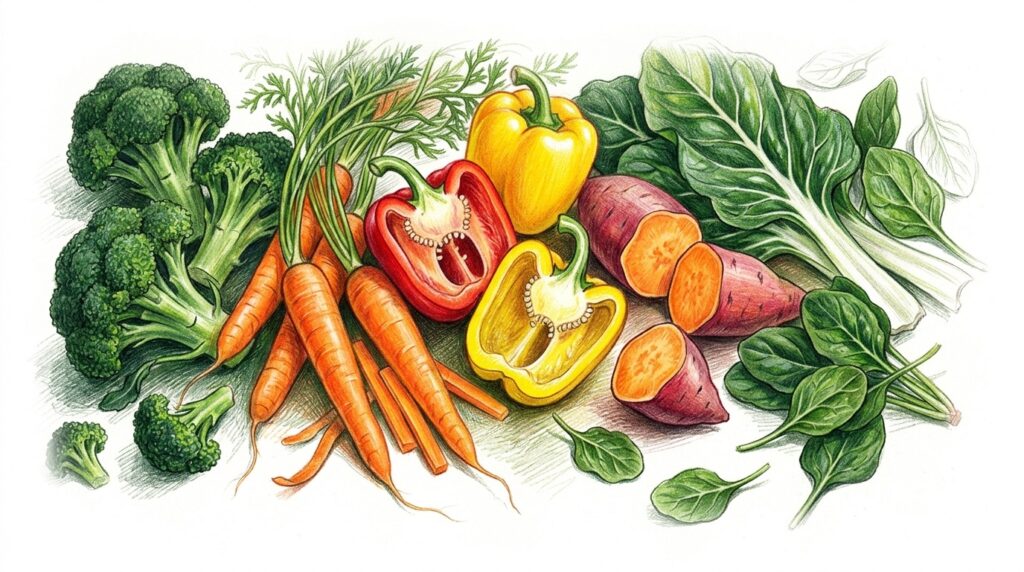
Are vegetables high in purines? If you’re managing uric acid levels, vegetables are the closest thing you’ve got to a cheat code.
The vast majority are very low purine vegetables, high in fibre, loaded with vitamins, and help your body maintain a more alkaline environment that supports uric acid excretion.
But there are a few surprises in the vegetable world. A handful of high purine vegetables deserve a closer look, even though they’re still far lower risk than meat or seafood.
Here’s the practical guide to eating vegetables when uric acid is on your radar.
Why Vegetables Are Essential
Let’s be direct about this. You cannot effectively manage uric acid levels without vegetables playing a significant role in your diet.
Here’s why.
Extremely low in purines.
The vast majority of vegetables contain minimal purines. Compared to red meat, organ meats, and certain seafood, the purine load from vegetables is negligible. Even the “moderate” vegetable options are far lower than a standard serving of steak.
Alkalising effect.
Your body’s pH balance influences how efficiently your kidneys excrete uric acid. An acidic internal environment makes it harder to flush uric acid out. Vegetables, particularly green and root vegetables, have an alkalising effect that supports better excretion.
High in fibre.
Fibre supports healthy digestion, helps regulate blood sugar, and contributes to a balanced diet overall. All of that indirectly supports uric acid management.
Rich in vitamin C.
Several vegetables are excellent sources of vitamin C, which research suggests may help your kidneys process and excrete uric acid more effectively.
Hydrating.
Many vegetables have high water content, which supports the hydration your kidneys need to do their job properly.
The bottom line: more vegetables, fewer problems. It’s one of the simplest dietary changes you can make.
Low-Risk Vegetables: Eat These Freely
These vegetables are your daily staples. Virtually no purine content, packed with nutrients, and supportive of healthy uric acid levels.
Carrots
Versatile, cheap, available everywhere. Raw, roasted, in soups, grated in salads. Carrots are a reliable low-purine option you can eat without any concern.
Cabbage
Red or green, raw or cooked. Cabbage is low in purines and high in vitamin C. Coleslaw, stir-fries, steamed as a side. It’s an underrated vegetable that deserves a regular spot on your plate.
Lettuce and salad greens
Cos, iceberg, mesclun, rocket, watercress. All excellent. Build a salad base with these and you’ve got a low-purine meal foundation.
Capsicum
Red, green, or yellow. Virtually no purines. Great raw in salads, roasted, or stuffed. They add colour and crunch to any meal.
Tomatoes
Despite occasional internet myths, tomatoes are low in purines and fine for most people managing uric acid. Use them in salads, sauces, and as a base for soups.
Broccoli
One of the best choices you can make. Low in purines, high in vitamin C, and research suggests it may have compounds that support healthy uric acid metabolism. Steam it, roast it, or eat it raw with hummus.
Kumara
A New Zealand staple and a genuinely excellent option. Low purine, filling, and incredibly versatile. Roasted kumara wedges are a far better side than chips and actively support your uric acid management.
Onions, garlic, courgette, pumpkin, celery
All low-purine, all safe for regular consumption. Build your meals around these.
Moderate-Risk Vegetables: A Closer Look
A small number of vegetables have moderate purine content. This doesn’t mean you should avoid them. It means knowing about them helps you make smarter choices.
Spinach
Spinach often gets flagged in uric acid discussions, and it’s true that it contains more purines than most vegetables. However, research has consistently shown that vegetable purines don’t raise uric acid levels the same way animal purines do. The effect is significantly smaller.
Here’s a practical tip worth knowing: boiling vegetables like spinach and silverbeet can lower their purine content, as some purines leach into the cooking water. So if you’re concerned, boil your spinach rather than eating it raw, and discard the water. Problem solved.
A few servings of spinach per week is absolutely fine for most people.
Asparagus
Another vegetable that occasionally appears on “avoid” lists, but the purine content is moderate at most. A serve of asparagus with your dinner is not going to cause problems. Enjoy it in season.
Mushrooms
Slightly higher in purines than most vegetables, but still significantly lower than meat or seafood. Button, portobello, shiitake, they’re all fine in normal portions. Don’t base every meal around them, but a few times a week is no issue.
Higher-Risk Vegetables: Worth Knowing About
Very few vegetables fall into a genuinely higher-risk category, but these two are worth mentioning.
Seaweed
Not a common feature of most New Zealand diets, but if you’re eating sushi regularly or adding seaweed to soups, be aware it’s higher in purines than most plant foods. Occasional consumption is fine. Daily large servings, probably not ideal.
Bean sprouts
Higher in purines than you’d expect. A handful in a stir-fry is no drama. Eating them by the bowlful regularly could add up.
Neither of these is likely to be a major contributor to your uric acid levels unless you’re consuming them in large quantities. Just worth being aware of.
The Boiling Trick for Higher-Purine Vegetables
This deserves its own section because it’s a genuinely useful technique.
Boiling vegetables like spinach, silverbeet, and asparagus causes some of their purine content to leach into the cooking water. When you drain the water, you’re removing some of those purines.
Steaming retains more purines in the vegetable. Raw, of course, retains all of them.
If you’re being extra careful with your purine intake, boiling your moderate-purine vegetables and discarding the water is a smart, simple habit. It doesn’t change the taste significantly, and it gives you peace of mind.
Legumes: A Special Category
Legumes, including lentils, chickpeas, kidney beans, and black beans, sit in an interesting space. They’re plant-based proteins with moderate purine content, but similar to vegetables, the purines in legumes don’t appear to raise uric acid as aggressively as animal purines.
A few times a week is fine. They’re an excellent protein source that helps you reduce reliance on red meat and high-purine seafood. Lentil soup, chickpea curry, bean salads. These are all supportive meals for uric acid management.
Just don’t go overboard. If every meal is built around legumes, the cumulative purine intake could add up. Balance them with other protein sources like eggs, chicken, and low-purine fish.
Smart Swaps: From High to Low Purine
Making small swaps in your meals can reduce your overall purine intake without changing what you eat dramatically.
- Swap fries for roasted kumara wedges. Lower purine, more nutrients, just as satisfying
- Swap a steak side with steamed broccoli and carrots. Adds volume and nutrition without adding purines
- Swap a creamy pasta sauce for a tomato-based vegetable sauce. Capsicum, onions, garlic, tomatoes, all low-purine
- Swap white rice for a mixed vegetable side. Roasted pumpkin, courgette, and capsicum make a filling, nutrient-dense alternative
- Swap a meat-heavy stir-fry for a vegetable-heavy one. Use chicken or tofu as the protein, and let the vegetables take centre stage
These aren’t dramatic changes. They’re practical shifts that add up over time.
The Bottom Line
Vegetables are the foundation of any smart approach to managing uric acid.
Most are extremely low in purines, they support kidney function, they provide essential vitamins and minerals, and they help create the right internal environment for your body to process uric acid efficiently.
Eat a wide variety. Prioritise broccoli, carrots, cabbage, kumara, capsicum, and leafy greens. Don’t stress about spinach or mushrooms in normal amounts. Boil your greens if you want to reduce purines further. Include legumes a few times a week.
It’s not complicated. It’s just good eating.
For additional support, URICAH brings together 14 natural ingredients at clearly labelled dosages to help maintain healthy uric acid levels. No proprietary blends. Over 2,200 customer reviews, a 90-day money-back guarantee, and free overnight shipping across NZ when you order by 3pm on weekdays.
This article is for informational purposes only and is not intended as medical advice. Consult your healthcare provider before making changes to your health routine.

URICAH! Uric Acid Support
4.85 / 5
read 2,294 customer reviews
$39 NZDTHIS IS YOUR URICAH MOMENT
URICAH provides natural support for healthy uric acid levels.
Our 14 potent, natural ingredients support the body’s normal uric acid levels, supporting joint mobility and function.
URICAH!™ features powerful ingredients used over many years to support healthy uric acid levels such as Tart Cherry, Celery Seed and Chanca Piedra.
LEARN MORE