
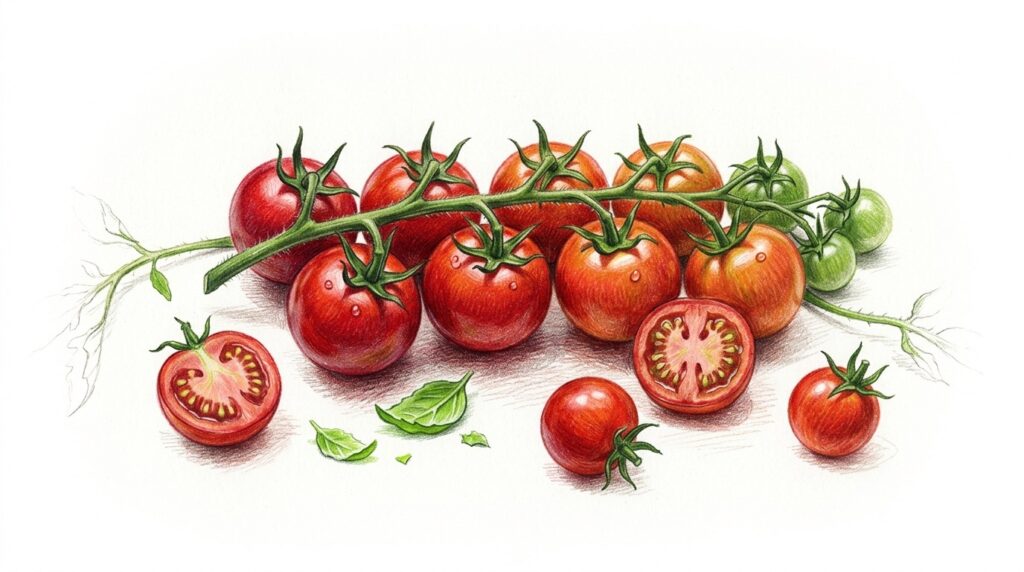
Tomatoes and uric acid. This is one of the most confusing topics in the whole uric acid conversation, and it catches a lot of people off guard.
Tomatoes are very low in purines, about 11 mg per 100g. By any standard measurement, they should be completely safe.
And yet, roughly 20% of people managing uric acid report that tomatoes seem to trigger their symptoms.
So what’s going on? Let’s look at the evidence and give you something practical to work with.
The Purine Content: Very Low
Let’s start with the facts.
A 100g serving of tomatoes contains approximately 11 mg of purines. That’s well under the 100 mg threshold for low-purine foods.
For comparison, chicken breast has around 150 mg, and organ meats can exceed 500 mg.
On purine content alone, tomatoes are one of the safest foods you can eat. They sit alongside most vegetables in the very low category.
The Research That Complicates Things
In 2015, researchers at the University of Otago in New Zealand published a study that found a positive association between tomato consumption and serum urate levels. The effect was comparable in magnitude to consuming seafood, red meat, alcohol, or sugary drinks.
That’s a surprising finding for a low-purine vegetable.
The study analysed data from over 12,000 participants and found the association was statistically significant. It also confirmed what many people had been saying anecdotally for years: tomatoes seem to be a trigger, even though the purine content doesn’t explain why.
Why Might Tomatoes Affect Uric Acid?
Researchers have proposed several mechanisms, none of which are fully confirmed.
Glutamate
Tomatoes are high in glutamate, an amino acid commonly found in high-purine foods. Some scientists believe glutamate may stimulate uric acid production through similar metabolic pathways, even though it isn’t a purine itself.
Phenolic acids
Tomatoes contain compounds like p-coumaric acid, ferulic acid, and vanillic acid. These phenolic acids can interact with organic anion transporters in the kidneys, the same transporters responsible for clearing uric acid from the blood.
The theory is that these compounds may interfere with uric acid excretion.
Individual variation
This is the most important point.
The effect isn’t universal. Tomatoes may raise uric acid slightly in some people and have no effect at all in others. Your genetics, gut microbiome, kidney function, and overall diet all play a role.
The Benefits You’d Be Missing
Before you cross tomatoes off your list, consider what they bring to the table.
Vitamin C
Tomatoes are a solid source of vitamin C, which research consistently links to lower uric acid levels. Vitamin C supports kidney excretion of uric acid. Removing a vitamin C source from your diet could actually work against you.
Lycopene
Tomatoes are one of the richest sources of lycopene, a powerful antioxidant with anti-inflammatory properties. Cooked tomatoes, tomato paste, and tomato sauce contain even more lycopene than raw tomatoes.
Low calorie, high nutrient
Tomatoes are low in calories, high in potassium, and a good source of folate and vitamin K. They’re a nutrient-dense food that supports overall health.
Cutting them out entirely means losing all of these benefits based on evidence that isn’t strong enough to justify it for most people.
So Should You Avoid Tomatoes?
For most people, no.
The purine content is genuinely very low. The association with higher uric acid levels exists in some studies, but it’s not strong enough for any major health organisation to recommend avoiding tomatoes.
Here’s the practical approach.
If you’ve never noticed a problem with tomatoes
Keep eating them. They’re a nutritious, low-purine food that belongs in a healthy diet. Use them in salads, sauces, soups, and sandwiches without overthinking it.
If you suspect tomatoes might be a trigger for you
Keep a food diary.
Track what you eat for two to four weeks, along with any symptoms or flare-ups. If tomatoes consistently appear before a bad day, that’s useful information. If they don’t, you’ve answered the question.
A food diary is the single most useful tool for figuring out your personal triggers. Everyone’s body responds differently, and the only way to know for certain is to track your own experience.
If you’ve confirmed tomatoes are a trigger
Reduce your intake rather than eliminating them completely.
Try smaller portions. Try cooked tomatoes instead of raw. Try spacing them out rather than eating them daily. Complete elimination is usually unnecessary.
Practical Tips
- Fresh tomatoes, tinned tomatoes, pasta sauce, and tomato paste are all in the same category. The purine content stays very low across all forms.
- Cooked tomatoes actually deliver more lycopene than raw, so tomato-based sauces and soups are a good option.
- Pair tomatoes with other foods that support healthy uric acid levels, like leafy greens, low-fat dairy, and whole grains.
- Don’t confuse tomato-based meals with the other ingredients in them. A pizza covered in processed meat isn’t a tomato problem; it’s a processed meat problem.
The Bottom Line
Tomatoes are very low in purines.
Some research suggests a mild link to slightly higher uric acid levels in some people, but the evidence isn’t strong enough to classify them as a trigger for everyone.
The nutritional benefits, including vitamin C and lycopene, are real and relevant.
Don’t cut tomatoes out of your diet based on fear. If you’re unsure, keep a food diary and let your own data guide you. That’s always better than guessing.
For more on which vegetables are safe, read our guide on vegetables and purines. And for the full picture on fruits that support healthy uric acid levels, we’ve got you covered there too.
Looking for support beyond diet? URICAH combines 14 natural ingredients at transparent dosages to help maintain healthy uric acid levels. No proprietary blends. Over 2,200 customer reviews. Free overnight shipping across NZ, and a 90-day money-back guarantee.
This article is for informational purposes only and is not intended as medical advice. Consult your healthcare provider before making changes to your health routine.

URICAH! Uric Acid Support
4.85 / 5
read 2,294 customer reviews
$39 NZDTHIS IS YOUR URICAH MOMENT
URICAH provides natural support for healthy uric acid levels.
Our 14 potent, natural ingredients support the body’s normal uric acid levels, supporting joint mobility and function.
URICAH!™ features powerful ingredients used over many years to support healthy uric acid levels such as Tart Cherry, Celery Seed and Chanca Piedra.
LEARN MORE