
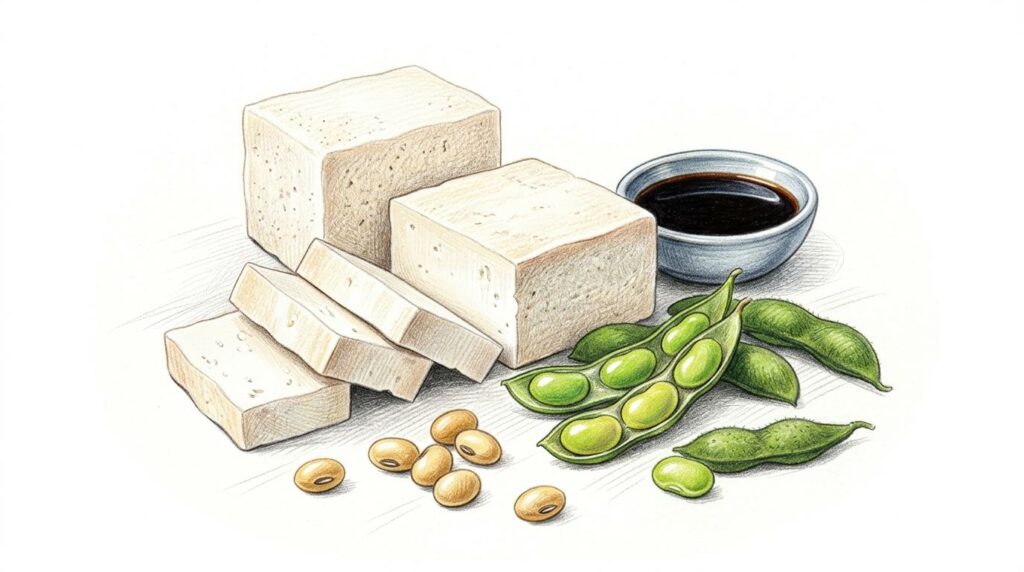
Soy foods have an unfair reputation when it comes to uric acid.
You’ll find tofu on plenty of “foods to avoid” lists, often with no explanation beyond “it contains purines.” That advice is outdated, and it contradicts what the research actually shows.
Here’s the short version. Tofu is low in purines, high in protein, and long-term soy consumption is associated with a decreased risk of elevated uric acid. It’s one of the best meat substitutes you can choose.
Let’s go through the evidence.
The Purine Numbers
Tofu’s purine content is genuinely low.
Approximate purine content per 100g
- Firm tofu: 20-40mg
- Silken tofu: 15-30mg
- Tempeh: 40-70mg
- Edamame: 45-70mg
- Soy milk: 10-20mg
For comparison, red meat typically contains 100-150mg per 100g, and organ meats can exceed 300mg. Even chicken breast sits around 100-130mg.
Tofu contains a fraction of the purines found in the animal proteins it replaces.
The Short-Term vs Long-Term Confusion
This is where the outdated advice comes from, and it’s worth understanding why.
Some short-term studies have shown a slight, temporary increase in uric acid levels after consuming soy protein in concentrated form. These studies typically used soy protein isolate, not whole soy foods, and measured levels over hours or days.
That created the headline: “soy raises uric acid.”
But population-level research, the kind that tracks real people eating real food over months and years, tells a completely different story.
The long-term evidence
A comprehensive meta-analysis published in Frontiers in Nutrition (2022) examined the relationship between soy consumption and gout risk across multiple large studies. The finding was clear: habitual soy consumption was associated with a decreased risk of hyperuricaemia and gout.
The Shanghai Women’s Health Study, which followed over 51,000 women, found that higher soy food intake was linked to lower serum uric acid levels.
Data from the Singapore Chinese Health Study showed similar results. Regular soy consumers had lower uric acid than those who ate little or no soy.
The pattern is consistent. Short-term, concentrated soy protein isolate may cause a small spike. Long-term, whole soy food consumption appears protective.
Why the difference?
Researchers believe whole soy foods contain compounds beyond just protein that support healthy uric acid metabolism. Soy isoflavones, particularly genistein and daidzein, may help reduce uric acid production by inhibiting xanthine oxidase, the enzyme responsible for converting purines into uric acid.
That’s the same pathway targeted by pharmaceutical uric acid medications.
Soy also tends to replace animal protein in the diet. Every meal where tofu takes the place of steak or lamb is a meal with significantly fewer purines and less of the type that causes problems.
Plant Purines Are Different
This is a principle that comes up again and again.
The purines in plant foods don’t behave the same way as animal purines in your body. Plant purines are less bioavailable, meaning your body converts a smaller proportion of them into uric acid.
A landmark study published in the BMJ found that purine-rich vegetable intake was not associated with an increased risk of gout. This held true across all plant foods studied.
We see the same pattern with beans and lentils, mushrooms, and other vegetables that contain moderate purines. The plant-based context changes how your body handles them.
Tofu benefits from this same protective effect, plus its purine content is low to begin with.
Tofu as a Meat Substitute
This is where tofu becomes genuinely useful for uric acid management.
Most New Zealanders get the bulk of their protein from animal sources. That’s fine in moderation, but if your uric acid is elevated, reducing animal protein is one of the most effective dietary changes you can make.
The challenge is replacing that protein with something satisfying and nutritious.
Tofu fits perfectly.
Nutritional comparison per 100g
- Firm tofu: 17g protein, 20-40mg purines
- Chicken breast: 31g protein, 100-130mg purines
- Beef mince: 26g protein, 110-150mg purines
- Lamb chop: 25g protein, 120-150mg purines
Yes, tofu has less protein per gram than meat. But a generous serving of 200g gives you 34g of protein with only 40-80mg of purines. That’s competitive with meat on protein and vastly lower on purines.
Different Soy Foods Explained
Not all soy products are equal. Here’s what you need to know about each one.
Firm and extra-firm tofu
The most versatile option. Works in stir-fries, curries, scrambles, and on the barbecue. Low in purines. High in protein and calcium, especially if made with calcium sulphate (check the label).
Silken tofu
Softer texture. Best in smoothies, desserts, sauces, and soups. Even lower in purines than firm tofu. A good option if you want to add protein without changing the texture of a dish.
Tempeh
Fermented whole soybeans. Higher in purines than tofu but still moderate. The fermentation process adds beneficial bacteria and may improve nutrient absorption. Firmer, nuttier flavour than tofu. Excellent sliced and pan-fried.
Edamame
Whole young soybeans. Moderate purine content. A great snack on their own or added to salads and rice bowls. Available frozen in most NZ supermarkets.
Soy milk
Very low in purines. A practical swap for dairy if you’re looking to increase soy intake. Choose calcium-fortified varieties.
Soy protein isolate
This is the one to be cautious with. It’s the concentrated form used in some protein powders and processed foods. The short-term studies that showed uric acid increases used this form. Whole soy foods are a better choice.
Practical Meal Ideas for New Zealand
You don’t need to eat tofu every day. But incorporating it a few times a week gives you a low-purine protein source and the potential long-term benefits of regular soy consumption.
Breakfast
Tofu scramble with vegetables. Crumble firm tofu into a pan with turmeric, nutritional yeast, capsicum, and spinach. Serve on toast. Pair it with eggs if you want extra protein.
Lunch
Cold soba noodle salad with cubed tofu, edamame, cucumber, and a sesame dressing. Light, satisfying, and almost no purines to speak of.
Dinner
Tofu stir-fry with whatever vegetables you have on hand. Press the tofu, cube it, and pan-fry until golden before adding to the stir-fry. The texture improves dramatically when you get a good sear on it.
Tofu curry is another excellent option. Coconut milk, curry paste, vegetables, and cubed tofu. Serve over rice.
Snacks
Edamame with sea salt. Buy them frozen, boil for five minutes, drain, and sprinkle with flaky salt. One of the simplest and most satisfying snacks going.
How Much Is Safe?
There’s no strict upper limit established for soy and uric acid. The long-term studies showing benefit involved regular consumption, roughly one to two servings per day.
A practical target for most people is three to five servings of whole soy foods per week. A serving is roughly 100g of tofu, 80g of tempeh, or 250ml of soy milk.
That’s enough to get the potential protective benefits without overdoing any single food group.
The one thing to avoid is relying heavily on soy protein isolate supplements. Stick to whole soy foods.
The Bottom Line
Tofu is one of the safest protein sources for uric acid management.
The purine content is low. The long-term research shows soy consumption may actually support healthy uric acid levels. And every meal where tofu replaces animal protein is a meal with significantly fewer problematic purines.
Don’t let outdated advice based on short-term soy isolate studies keep you from a genuinely useful food.
For more on plant-based proteins and uric acid, read our guide on beans, lentils, and uric acid. And for the complete picture on eating well, check out foods to support healthy uric acid levels.
Looking for support beyond what’s on your plate? URICAH combines 14 natural ingredients at transparent dosages to help maintain healthy uric acid levels. No proprietary blends. Over 2,200 customer reviews. Free overnight shipping across NZ, and a 90-day money-back guarantee.
This article is for informational purposes only and is not intended as medical advice. Consult your healthcare provider before making changes to your health routine.

URICAH! Uric Acid Support
4.85 / 5
read 2,294 customer reviews
$39 NZDTHIS IS YOUR URICAH MOMENT
URICAH provides natural support for healthy uric acid levels.
Our 14 potent, natural ingredients support the body’s normal uric acid levels, supporting joint mobility and function.
URICAH!™ features powerful ingredients used over many years to support healthy uric acid levels such as Tart Cherry, Celery Seed and Chanca Piedra.
LEARN MORE