

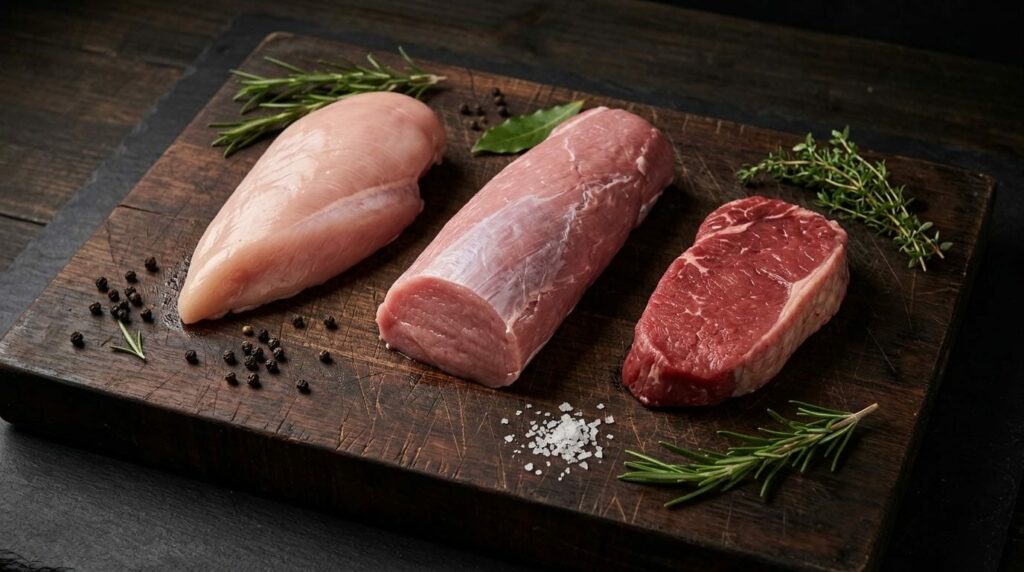
Is red meat bad for uric acid? It depends on the red meat.
Beef, lamb, venison, and organ meats all contain purines, but the levels vary hugely. Some red meats are manageable in sensible portions. Others are genuinely worth avoiding.
The blanket advice to “cut out red meat” is lazy. Here’s the practical version.
Why Red Meat Is Higher in Purines Than White Meat
All meat contains purines. But red meat consistently lands higher on the scale than white meat like chicken or pork.
The reason comes down to muscle composition. Red meat has more myoglobin, the oxygen-carrying protein that gives it its colour. Myoglobin-rich tissue tends to have a higher concentration of cell nuclei and DNA, which is where purines live. More purines in the meat means more uric acid produced during digestion.
Organ meats take this even further. Livers and kidneys are packed with cellular material, which is why their purine content dwarfs anything you’ll find in a regular steak.
This doesn’t mean you can’t eat red meat. It means you need to know where on the spectrum each type sits.
Red Meats Ranked by Purine Risk
Organ meats: avoid or seriously limit
Liver, kidneys, sweetbreads, and heart. These are the highest-purine foods in any category, not just red meat.
If you’re managing your uric acid levels, organ meats should be rare or off the menu entirely. One serving of liver can contain two to three times the purines of a regular cut of beef.
Venison and game meats: higher risk
New Zealand produces some of the world’s best farmed venison, and it’s lean, which people assume means it’s fine.
But venison is actually higher in purines than beef or lamb. Game meats in general, including wild boar and goat, tend to sit at the upper end of the purine scale for muscle meats. Treat venison as an occasional choice, not a regular swap.
Lamb: moderate to higher risk
Lamb is a staple on NZ dinner tables, and for good reason. It’s flavourful, versatile, and locally sourced.
But lamb is moderately high in purines, particularly fattier cuts like shoulder chops or leg with the fat on. Lean lamb, trimmed and portioned well, is fine once or twice a week. Just don’t make it the centrepiece every night.
Beef: moderate risk
Lean beef cuts like trimmed sirloin and eye fillet are moderate in purines and perfectly manageable.
The problems start with fatty cuts, oversized portions, and frequency. We’ve written a detailed cut-by-cut breakdown in our beef purine content guide, and a specific portion guide for steak lovers.
NZ and Red Meat: A Practical Reality
Let’s be honest. New Zealand runs on red meat. Lamb roasts, beef steaks on the barbecue, venison from the farm down the road. Telling a Kiwi to “avoid red meat” is about as useful as telling them to stop watching rugby.
The goal isn’t elimination. It’s moderation and smarter choices.
You can absolutely enjoy a Sunday roast or a Friday night steak. You just need to be deliberate about portion sizes, how often you’re having red meat, and which cuts you’re choosing.
How Much Red Meat Is Reasonable?
Portion size
About 100g of cooked meat per serving. That’s roughly palm-sized. Most people eat double or triple this without thinking about it.
Frequency
2-3 red meat meals per week is a sensible target. Fill the remaining nights with chicken, fish, eggs, or plant-based proteins.
Variety
Don’t eat the same red meat every time. Rotating between beef, lamb, and other proteins spreads your purine intake more evenly across the week.
Preparation Tips That Actually Help
Trim the fat
Visible fat should come off before cooking. Fattier cuts carry a higher purine load and are harder for your body to process.
Choose your cooking method
Grill, roast, or pan-sear. Avoid deep frying. A hot barbecue and some salt is all good meat needs.
Build the plate around vegetables
Red meat should take up about a quarter of the plate. The rest should be vegetables, salad, kumara, or other plant-based sides. This isn’t just about balance; the fibre and nutrients actively support your body’s ability to process purines.
Stay hydrated
Water with every meal. Your kidneys need it to clear uric acid efficiently.
When to Choose Something Else
If you’ve had a flare-up recently or your levels are running high, consider pulling back on red meat for a few weeks.
Lean chicken breast, white fish, eggs, and tofu are all excellent protein sources with significantly lower purine loads. You’re not giving up red meat forever. You’re giving your body a break when it needs one.
The Bottom Line
Red meat isn’t the enemy. But not all red meats are equal.
Organ meats are genuinely problematic. Venison is higher than most people realise. Lamb and beef are fine in moderation if you trim the fat, control portions, and don’t overdo the frequency.
Know what you’re eating. Portion it properly. And stop pretending a 300g lamb shank every night counts as “moderation.”
If you’re looking for broader support alongside a smart diet, URICAH delivers 14 natural ingredients at transparent dosages to help support healthy uric acid levels. No proprietary blends. Over 2,200 customer reviews. Free overnight shipping across New Zealand, and a 90-day money-back guarantee.
This article is for informational purposes only and is not intended as medical advice. Consult your healthcare provider before making changes to your health routine.

URICAH! Uric Acid Support
4.85 / 5
read 2,294 customer reviews
$39 NZDTHIS IS YOUR URICAH MOMENT
URICAH provides natural support for healthy uric acid levels.
Our 14 potent, natural ingredients support the body’s normal uric acid levels, supporting joint mobility and function.
URICAH!™ features powerful ingredients used over many years to support healthy uric acid levels such as Tart Cherry, Celery Seed and Chanca Piedra.
LEARN MORE