

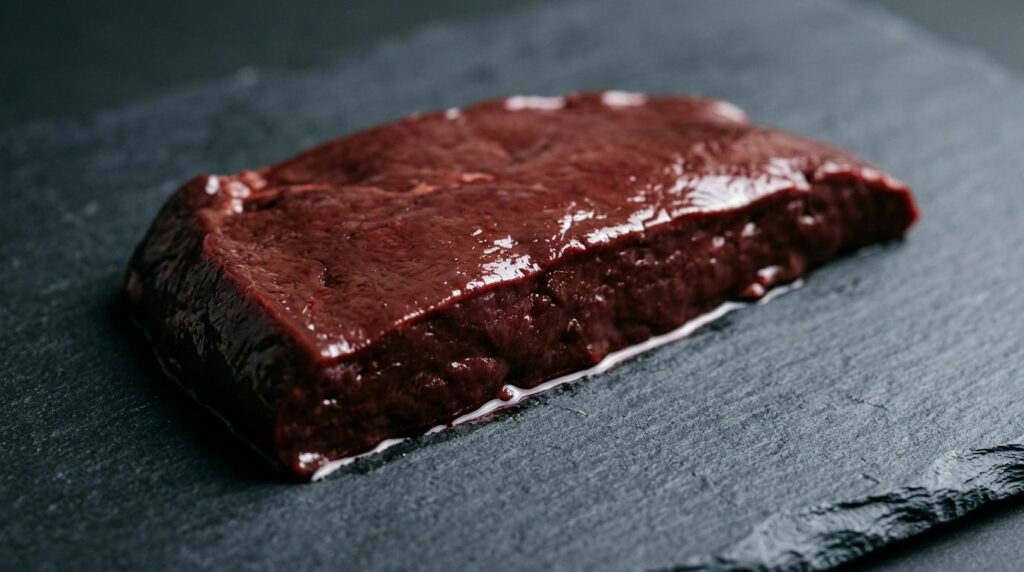
If there’s one category of food that everyone managing uric acid levels should avoid completely, it’s organ meats.
Liver, kidneys, sweetbreads, brain, heart, tripe. These are the highest purine foods you can eat, and it’s not even close. Organ meats and uric acid are a combination that simply doesn’t work.
We’re not talking about moderate risk here. We’re talking about purine levels that can be five to ten times higher than regular cuts of meat.
If you’re serious about keeping your uric acid in check, this is the one food group where there’s no grey area.
How High Are the Purines? Very.
Here’s what the numbers look like per 100g of organ meat.
Sweetbreads (thymus/pancreas)
Approximately 1,000-1,260 mg of purines per 100g. This is the single highest purine food commonly consumed. One serving can deliver more purines than most people should consume in an entire day.
Beef liver
Approximately 554 mg per 100g. Liver is extremely popular in some cuisines and often promoted as a superfood for its nutrient density. But for anyone managing uric acid, the purine load is simply too high.
Pig’s liver
Approximately 515 mg per 100g. Same story. Whether it’s pork, beef, lamb, or chicken liver, it’s all in the danger zone.
Heart
Approximately 530 mg per 100g (pig’s heart). Heart meat is leaner than liver but just as problematic for purines.
Kidneys
Approximately 300-450 mg per 100g depending on the animal. Steak and kidney pie is a classic, but it’s one of the worst possible meals for uric acid.
Brain
Approximately 200-300 mg per 100g. Less commonly eaten in New Zealand, but still worth noting.
Spleen
Approximately 444-773 mg per 100g depending on the animal.
For context, regular beef sits at around 100-150 mg per 100g. Pork tenderloin is roughly similar. Organ meats are in an entirely different league.
Why Organ Meats Are So Much Worse Than Regular Meat
The reason is biological.
Organs like the liver, kidneys, and brain are metabolically active tissues. They process and concentrate purines as part of their normal function. The liver filters blood and processes waste. The kidneys excrete uric acid. These organs are, quite literally, where purines accumulate in the body.
When you eat organ meats, you’re consuming concentrated purine stores that were part of the animal’s own metabolic processes. That’s why a piece of liver can have four or five times the purine content of a piece of steak from the same animal.
Regular muscle meat has purines too, but at far lower concentrations because muscle tissue isn’t involved in purine metabolism the same way.
There’s No Safe Amount During Flare-Ups
If you’re currently experiencing elevated uric acid levels or dealing with active symptoms, organ meats should be completely off the table.
Even a small portion delivers a significant purine load.
During a flare-up, your body is already struggling to process and excrete uric acid efficiently. Adding a concentrated purine source on top of that is like pouring petrol on a fire. It makes everything worse, faster.
What About Nutrient Density?
This is the argument you’ll hear from the nose-to-tail eating crowd. Liver is incredibly nutrient-dense. It’s packed with iron, vitamin A, B12, folate, and copper.
That’s all true.
But here’s the thing. You can get every one of those nutrients from other foods that won’t spike your uric acid.
- Iron: lean red meat (in moderation), spinach, lentils, fortified cereals
- Vitamin A: kumara, carrots, pumpkin, dark leafy greens
- B12: eggs, dairy, fish, fortified foods
- Folate: leafy greens, legumes, avocado
You don’t need organ meats to hit your nutritional targets. The risks simply outweigh the benefits when you’re managing uric acid.
Common Organ Meat Products to Watch For
It’s not just obvious organ meats. Some processed foods contain organ meat without making it obvious.
Pate and liverwurst
Liver-based spreads. These are concentrated sources of purines. Even a thin layer on toast is problematic.
Haggis
Made from sheep’s liver, heart, and lungs. Very high in purines.
Steak and kidney pie
A traditional favourite, but a double hit of higher-purine steak combined with very high-purine kidneys.
Offal in sausages and mince
Some cheaper sausages and processed meat products include organ meat as filler. Check the ingredients list. If it mentions “offal,” “liver,” or “organs,” put it back.
Bone broth
While not organ meat, long-simmered bone broth can extract purines from bones and connective tissue. Use it sparingly if you use it at all.
The Recommendation: Complete Avoidance for Most People
This isn’t a “eat less” situation.
For anyone managing uric acid levels, the recommendation is straightforward: avoid organ meats entirely.
The purine content is too high. The risk during flare-ups is too significant. And there are too many alternative sources for the nutrients organ meats provide.
If you’re going to be strict about one single food category, make it this one.
The Bottom Line
Organ meats are the highest purine foods commonly consumed.
Sweetbreads, liver, kidneys, heart, and brain all contain purine levels that are multiple times higher than regular muscle meat. There’s no safe amount during active symptoms, and complete avoidance is the most practical approach for anyone serious about managing their uric acid.
For a full list of high-purine foods to avoid, check our comprehensive guide. And for practical guidance on what you can eat, see foods to support healthy uric acid levels.
Looking for daily support? URICAH combines 14 natural ingredients at transparent dosages to help maintain healthy uric acid levels. No proprietary blends. Over 2,200 customer reviews. Free overnight shipping across NZ, and a 90-day money-back guarantee.
This article is for informational purposes only and is not intended as medical advice. Consult your healthcare provider before making changes to your health routine.

URICAH! Uric Acid Support
4.85 / 5
read 2,294 customer reviews
$39 NZDTHIS IS YOUR URICAH MOMENT
URICAH provides natural support for healthy uric acid levels.
Our 14 potent, natural ingredients support the body’s normal uric acid levels, supporting joint mobility and function.
URICAH!™ features powerful ingredients used over many years to support healthy uric acid levels such as Tart Cherry, Celery Seed and Chanca Piedra.
LEARN MORE