
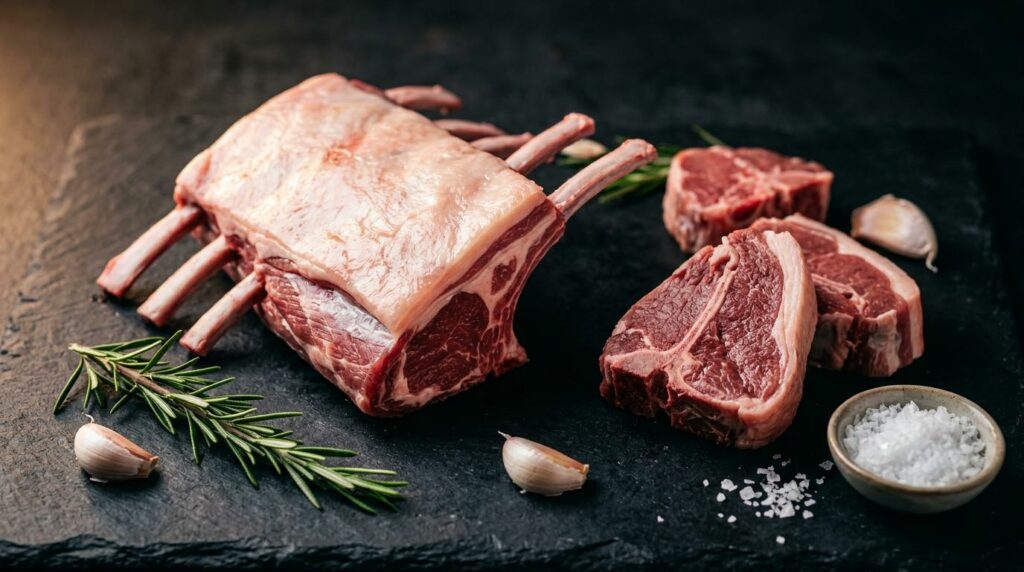
Lamb is a staple on New Zealand tables, and for good reason. It’s local, it’s affordable, and a good roast leg of lamb on Sunday is practically a national tradition. But if you’re managing your uric acid levels, you need to understand the lamb purine content before loading up your plate every week.
The short answer: lamb is moderately high in purines, sitting around 100-150mg per 100g depending on the cut. That puts it in the same ballpark as beef, but some lamb cuts are riskier than others. The difference between a trimmed lamb leg steak and a fatty shoulder chop is significant.
You don’t need to give up lamb. You need to know which cuts to choose, how much to eat, and how to prepare it properly.
Why Lamb Affects Your Uric Acid Levels
Like all red meat, lamb contains purines. Your body breaks those purines down into uric acid during digestion. The more purines in the cut, the more uric acid your body has to deal with.
Lamb is a red meat with higher myoglobin content than white meats like chicken. More myoglobin means more cellular material, more DNA, and more purines. Fattier cuts compound the problem because your body has to work harder to process them.
The good news is that lamb sits below organ meats and venison on the purine scale. With the right cuts and portions, it’s absolutely manageable.
Lamb Cuts Ranked by Purine Risk
Not all lamb is created equal. Here’s how the common cuts stack up.
Lower risk: lean leg cuts
Trimmed lamb leg steak
This is your best option. Lamb leg is naturally leaner, and once you trim the visible fat, it’s one of the lowest-purine lamb cuts available. Around 100-110mg of purines per 100g. Perfect for a weeknight dinner.
Butterflied leg of lamb
Great for the barbecue or the oven. Because it’s a large, lean cut, you can trim it well and control your portion size easily. Ideal for feeding the family while keeping your own serving sensible.
Moderate risk: chops and rack
Lamb loin chops
Leaner than shoulder chops and a solid mid-range option. Keep to one or two chops per serving and trim any visible fat.
Rack of lamb
Tasty for a special occasion, but the fat content between the ribs adds up. Not an everyday cut. Save it for when you’re treating yourself and keep the portion modest.
Higher risk: fattier cuts
Lamb shoulder
Shoulder is flavourful but fattier. Slow-cooked lamb shoulder is a Kiwi favourite, but the fat content means a higher purine load. If you’re doing a shoulder roast, keep your portion small and load up on the vegetables instead.
Lamb shanks
Similar story. Shanks are delicious braised, but they’re a fattier cut with more connective tissue. The braising liquid concentrates purines too, so go easy on the gravy. One shank is plenty.
Lamb neck chops
The fattiest common cut. Higher purine load, harder for your body to process. If you’re actively managing your uric acid levels, this is the cut to skip.
Lamb vs Beef: How Do They Compare?
People often ask whether lamb or beef is worse for uric acid. The truth is they’re close. Both sit in the moderate range for purines, roughly 100-150mg per 100g for lean cuts.
The main difference is fat distribution. Lamb tends to carry more external fat that you can trim off, which is actually an advantage. Beef marbling runs through the meat and is harder to remove.
If you’re rotating your red meat through the week, alternating between lean lamb and lean beef is a smart approach. Just don’t double up on both in the same day.
How Much Lamb Can You Eat?
Portion size
About 100g of cooked lamb per serving. That’s roughly palm-sized. For context, a typical lamb chop is around 80-100g of meat, so one or two chops is your limit.
Frequency
Once or twice a week is reasonable. If you’re having lamb twice, make sure you’re not also having beef or other red meat on top of that. Your total red meat intake should sit at 2-3 servings per week, spread across different days.
The Sunday roast rule
You can absolutely enjoy a Sunday roast. Just keep your lamb portion to about two slices (100g), pile on the roast kumara, pumpkin, and greens, and drink plenty of water with the meal. The roast isn’t the problem. The portion is.
Preparation Tips That Make a Difference
Trim the fat before cooking
This is the single biggest thing you can do. Visible fat on lamb carries a higher purine load and makes the meat harder for your body to process. Get it off before it hits the pan or the oven.
Choose your cooking method wisely
Roasting and grilling are your best options. Research suggests dry heat cooking methods like roasting may reduce purine content slightly more than other methods. A simple roast or a quick grill with salt and pepper is all good lamb needs.
Watch the gravy
Braising liquids and gravies made from lamb drippings concentrate purines. If you’re making a slow-cooked lamb dish, go easy on the sauce. Or make a fresh gravy with vegetable stock instead.
Build around vegetables
Lamb should be a quarter of the plate, not half. Fill the rest with roast veges, salad, or steamed greens. The fibre and nutrients help your body process purines more efficiently.
When to Choose Something Else
If you’ve had a recent flare-up or your levels are running high, pull back on lamb for a couple of weeks. Swap to chicken breast, white fish like hoki or tarakihi, eggs, or tofu. Give your body a break, then reintroduce lamb in small, lean portions.
The Bottom Line
Lamb isn’t the enemy. It’s a moderately high-purine meat that’s perfectly fine in sensible amounts. Stick to lean cuts, trim the fat, keep portions to 100g, and don’t eat it every night. That Sunday roast is still on the menu. Just be smart about it.
If you’re looking for broader support alongside a smart diet, URICAH delivers 14 natural ingredients at transparent dosages to help support healthy uric acid levels. No proprietary blends. Over 2,200 customer reviews. Free overnight shipping across New Zealand, and a 90-day money-back guarantee.
This article is for informational purposes only and is not intended as medical advice. Consult your healthcare provider before making changes to your health routine.

URICAH! Uric Acid Support
4.85 / 5
read 2,294 customer reviews
$39 NZDTHIS IS YOUR URICAH MOMENT
URICAH provides natural support for healthy uric acid levels.
Our 14 potent, natural ingredients support the body’s normal uric acid levels, supporting joint mobility and function.
URICAH!™ features powerful ingredients used over many years to support healthy uric acid levels such as Tart Cherry, Celery Seed and Chanca Piedra.
LEARN MORE