
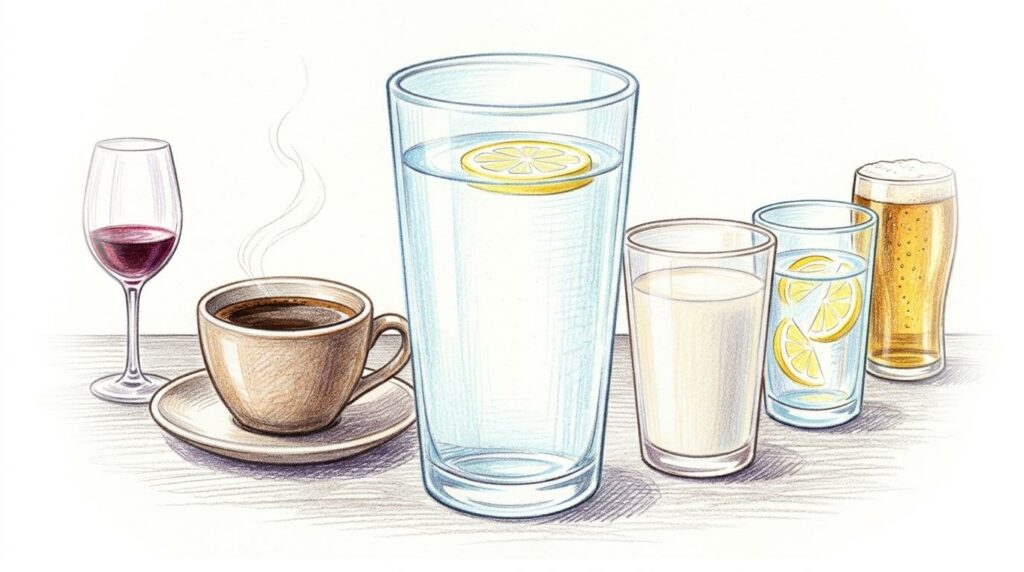
Most people managing uric acid focus on food. That makes sense. But what you drink matters just as much, and in some cases more.
A single beer can spike uric acid levels within hours. A can of fizzy drink delivers a fructose hit that directly increases uric acid production. Meanwhile, coffee and low-fat milk are associated with lower uric acid levels across multiple studies.
Your drink choices create a constant background effect on your uric acid. Get them right and you’re supporting your body around the clock. Get them wrong and you’re undermining everything else you’re doing.
Here’s a practical breakdown, from best to worst.
The Best Drinks for Uric Acid
These are the drinks that either actively support healthy uric acid levels or have zero negative impact.
Water
Water is the single most important drink for uric acid management.
Your kidneys excrete uric acid through urine. The more hydrated you are, the more efficiently they can do their job. Dehydration concentrates uric acid in your blood and reduces your kidneys’ ability to clear it.
Studies have shown that higher water intake is associated with lower serum uric acid levels and a reduced risk of flare-ups. One study found that participants who drank five to eight glasses of water per day had a 40% lower risk of recurrent flares compared to those who drank one glass or fewer.
How much?
Aim for at least two litres per day. More if you’re active, in hot weather, or if you sweat heavily. Keep a water bottle with you. Sip consistently rather than trying to catch up later.
Plain water is best. Sparkling water is fine too.
Coffee
Good news for coffee drinkers.
Multiple large studies have found that coffee consumption is associated with lower uric acid levels. The effect is dose-dependent: the more coffee, the lower the uric acid, up to about four to five cups per day.
A study in Arthritis & Rheumatism following over 45,000 men found that those who drank four or more cups of coffee daily had significantly lower uric acid than non-drinkers.
Both caffeinated and decaffeinated coffee show benefits, suggesting the effect comes from compounds other than caffeine, likely chlorogenic acid and other polyphenols.
Practical note
Drink it black or with a splash of milk. Loading coffee with sugar or flavoured syrups adds fructose, which works against you.
Low-Fat Milk and Dairy Drinks
Dairy is one of the most consistently protective food groups for uric acid.
Milk proteins, specifically casein and lactalbumin, have been shown to increase uric acid excretion through the kidneys. A study published in the Annals of the Rheumatic Diseases found that low-fat dairy intake was associated with a significant reduction in gout risk.
Low-fat milk and yoghurt drinks are your best options. The protective effect appears stronger with low-fat versions.
Practical note
A glass of milk with breakfast or a yoghurt drink as a snack gives you consistent, evidence-based support.
Lemon Water
Lemon water has a mild alkalising effect on urine pH, which may help your kidneys excrete uric acid more efficiently.
The citric acid in lemons is metabolised into bicarbonate, which raises urine pH. Higher urine pH increases uric acid solubility, making it easier for your kidneys to clear.
The effect is modest compared to medication, but it’s a simple habit with no downside.
Practical note
Squeeze half a lemon into a glass of water, first thing in the morning or throughout the day. Fresh lemon is better than bottled lemon juice, which often contains preservatives.
Cherry Juice
Cherry juice, particularly tart cherry juice, has specific research supporting its use for uric acid management.
A study published in Arthritis & Rheumatism found that cherry intake was associated with a 35% lower risk of gout flares. Cherries contain anthocyanins, which have anti-inflammatory properties, and they may also help reduce uric acid production.
Practical note
Go for tart cherry juice concentrate diluted in water, not sweetened cherry juice drinks. The sugar in sweetened versions can work against you. A tablespoon of concentrate in water daily is a common approach.
Fine in Moderation
These drinks aren’t harmful in reasonable amounts but warrant some awareness.
Wine
Wine sits in a middle ground. Some studies suggest moderate wine consumption (one to two glasses) does not significantly increase uric acid levels, unlike beer and spirits.
A study from the Health Professionals Follow-Up Study found that wine consumption was not associated with an increased risk of gout at moderate levels.
That said, alcohol in any form can increase uric acid production and reduce kidney excretion. The effect with wine appears smaller than with beer, but it’s not zero.
Practical note
One glass with dinner occasionally is unlikely to cause problems. Regular heavy consumption is a different story.
Green Tea
Green tea contains antioxidants that may have anti-inflammatory benefits, but the evidence on uric acid specifically is mixed.
Some studies suggest green tea catechins may help inhibit xanthine oxidase, the enzyme that produces uric acid. Other studies show no significant effect.
Practical note
Green tea is a fine choice. Don’t expect it to lower your uric acid meaningfully, but it won’t raise it either. A reasonable swap for sugary drinks.
Limit These
These drinks can contribute to elevated uric acid when consumed regularly.
Spirits
All alcohol increases uric acid through multiple mechanisms. It increases purine metabolism, increases uric acid production, and reduces kidney excretion.
Spirits don’t contain purines like beer does, so they’re a step down in risk. But they still affect uric acid metabolism through the alcohol itself.
Practical note
Occasional spirits with a non-sugary mixer are a better choice than beer if you’re going to drink. But regular consumption adds up.
Fruit Juice
This catches people off guard. Fruit juice seems healthy, but it delivers a concentrated fructose hit without the fibre that whole fruit provides.
Fructose is the only sugar that directly increases uric acid production. Your body metabolises fructose through a pathway that generates uric acid as a byproduct.
A glass of orange juice contains roughly the same amount of fructose as a can of soft drink.
Practical note
Eat whole fruit instead. The fibre slows fructose absorption and the overall fructose load is lower. Check out our guide on the best fruits for uric acid.
Avoid These
These drinks have the strongest negative impact on uric acid levels.
Beer
Beer is the worst drink for uric acid. It hits you from multiple angles.
Beer contains significant purines, particularly guanosine, which is highly bioavailable. It also contains alcohol, which increases uric acid production and reduces kidney clearance. And it’s often consumed in large volumes.
The Health Professionals Follow-Up Study found that two or more beers per day doubled the risk of gout compared to non-drinkers. Even one beer per day showed a meaningful increase in risk.
Practical note
This is the single most impactful drink to reduce or eliminate. Low-alcohol and non-alcoholic beers are better but still contain purines.
Soft Drinks and Sugary Drinks
Soft drinks sweetened with high-fructose corn syrup or sugar are strongly associated with elevated uric acid.
A study in the BMJ found that men who consumed two or more sugary soft drinks per day had an 85% higher risk of gout compared to those who consumed less than one per month.
The mechanism is direct. Fructose metabolism generates uric acid as a byproduct. It’s not about purines; it’s about how your body processes the sugar.
Diet soft drinks don’t have this effect, but they come with their own health questions.
Practical note
Switch to water, sparkling water with lemon, or any of the drinks in the “best” category above. This swap alone can make a measurable difference.
What to Order at the Pub
This is where practical advice meets real life.
You’re out with mates. You’re at a barbecue. You’re at a work function. What do you actually order?
Best options
- Sparkling water with lemon or lime
- Coffee (flat white, long black)
- A glass of wine
Reasonable options
- A spirit with soda water and lime (gin and soda, whisky and soda)
- Low-alcohol beer (still contains purines, but less alcohol impact)
Avoid
- Multiple pints of beer
- Rum and Coke or any spirit with sugary mixers
- Rounds of shots
You don’t need to explain yourself. Order a soda water with lime and most people won’t even notice. If someone asks, “I’m driving” works every time.
The Hydration Priority
Above everything else on this list, hydration is the priority.
Every drink recommendation is secondary to consistently drinking enough water. Dehydration is one of the most common and easily preventable triggers for uric acid problems.
Keep water front and centre. Add coffee, milk, and cherry juice as bonuses. Minimise beer, soft drinks, and fruit juice.
Your drink choices are a lever you pull multiple times every day. Small improvements add up fast.
For detailed guides on specific drinks, explore our individual articles on coffee, beer, wine, green tea, dairy, cherry juice, soft drinks, and alcohol.
Looking for support beyond what’s in your glass? URICAH combines 14 natural ingredients at transparent dosages to help maintain healthy uric acid levels. No proprietary blends. Over 2,200 customer reviews. Free overnight shipping across NZ, and a 90-day money-back guarantee.
This article is for informational purposes only and is not intended as medical advice. Consult your healthcare provider before making changes to your health routine.

URICAH! Uric Acid Support
4.85 / 5
read 2,294 customer reviews
$39 NZDTHIS IS YOUR URICAH MOMENT
URICAH provides natural support for healthy uric acid levels.
Our 14 potent, natural ingredients support the body’s normal uric acid levels, supporting joint mobility and function.
URICAH!™ features powerful ingredients used over many years to support healthy uric acid levels such as Tart Cherry, Celery Seed and Chanca Piedra.
LEARN MORE