You’re doing everything right. Watching your diet, staying hydrated, exercising regularly.
But your uric acid levels aren’t budging, or they’re climbing.
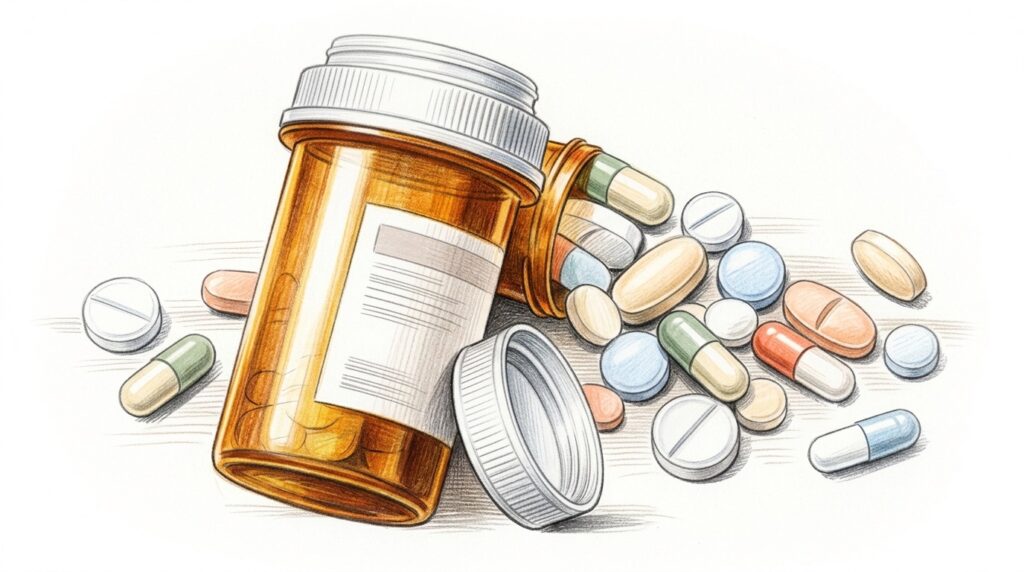
If that sounds familiar, it’s worth looking at your medicine cabinet.
Several common medications that raise uric acid are prescribed to millions of people. They work by either increasing uric acid production, reducing your kidneys’ ability to excrete it, or both.
This isn’t about scaring you into stopping your medication. Never do that without talking to your doctor.
This is about awareness. If you know which medications can affect your levels, you can have a better conversation with your healthcare provider about managing the balance.
Diuretics (Water Pills)
Diuretics are one of the most common causes of medication-induced high uric acid. They’re prescribed for high blood pressure, heart failure, and fluid retention, so millions of people take them.
Thiazide diuretics
These include hydrochlorothiazide (HCTZ) and chlorthalidone. They’re among the most widely prescribed blood pressure medications in New Zealand.
Thiazide diuretics reduce the kidneys’ ability to excrete uric acid. They increase uric acid reabsorption in the proximal tubule, meaning more uric acid gets pulled back into your bloodstream instead of leaving through urine.
Research shows diuretics increase the risk of uric acid issues by approximately 20%.
Loop diuretics
Furosemide (Lasix) and bumetanide fall into this category. They’re typically prescribed for heart failure and more severe fluid retention.
Loop diuretics affect uric acid through a similar mechanism to thiazides, reducing renal excretion. They also cause volume depletion (dehydration), which concentrates uric acid in the blood.
If you’re on a loop diuretic and not drinking enough water, that’s a double hit.
Low-Dose Aspirin
This one surprises people.
Aspirin has a dose-dependent effect on uric acid that works in opposite directions.
At low doses (75-325 mg daily, the typical cardioprotective dose), aspirin reduces the kidneys’ ability to excrete uric acid. It competes for the same renal transport pathways, meaning uric acid gets backed up in your bloodstream.
At very high doses (over 3,000 mg daily), aspirin actually increases uric acid excretion. But nobody takes aspirin at those doses anymore.
The practical reality: if you’re on low-dose aspirin for heart health, it could be contributing to elevated uric acid levels. Given that many people with high uric acid also have cardiovascular risk factors that warrant aspirin therapy, this creates an awkward overlap.
Don’t stop your aspirin without medical guidance. The cardiovascular benefits usually outweigh the uric acid impact. But it’s worth knowing about so you can discuss the full picture with your doctor.
Immunosuppressants
Cyclosporine
Cyclosporine is used after organ transplants and for certain autoimmune conditions. It’s well documented as a significant cause of drug-induced high uric acid.
Cyclosporine reduces renal uric acid clearance substantially. Studies show that a large proportion of transplant patients on cyclosporine develop elevated uric acid levels, often within the first year of treatment.
Tacrolimus
Similar to cyclosporine, tacrolimus (used in transplant medicine) can raise uric acid, though typically to a lesser degree.
If you’re on immunosuppressant therapy, your doctor should be monitoring your uric acid as part of routine blood work. If they’re not, ask.
Some Blood Pressure Medications
Not all blood pressure drugs raise uric acid. Some are neutral, and one (losartan) actually helps lower it.
But certain classes deserve mention.
Beta-blockers
Atenolol, metoprolol, and propranolol can modestly increase uric acid levels. The mechanism isn’t fully understood, but it may relate to reduced renal blood flow.
ACE inhibitors
Some ACE inhibitors can raise uric acid slightly, though the effect is generally smaller than with diuretics or beta-blockers.
The irony here is that high uric acid is itself a risk factor for high blood pressure and heart disease. So a medication prescribed to manage blood pressure could be contributing to elevated uric acid, which in turn drives blood pressure up.
If your uric acid is elevated and you’re on blood pressure medication, it’s worth discussing alternatives like losartan with your doctor.
Chemotherapy Drugs
Cancer chemotherapy, particularly for blood cancers like leukaemia and lymphoma, can cause dramatic spikes in uric acid. This is called tumour lysis syndrome.
When chemotherapy destroys large numbers of cancer cells rapidly, those cells release their contents, including massive amounts of purines, into the bloodstream. Your body converts those purines into uric acid, and the sudden flood can overwhelm your kidneys’ ability to excrete it.
Oncologists are well aware of this risk and typically monitor uric acid closely during treatment. Some patients receive preventive medication (like rasburicase or allopurinol) before chemotherapy begins.
If you’re undergoing cancer treatment, uric acid management is part of your clinical care. Talk to your oncology team about what to expect.
Niacin (Vitamin B3)
Niacin, sometimes prescribed in high doses to manage cholesterol, can raise uric acid levels.
At therapeutic doses of 1,000 mg or more daily, niacin competes with uric acid for excretion through the kidneys.
This is primarily a concern with prescription-strength niacin, not the small amounts found in multivitamins or food. But if you’re taking high-dose niacin for cholesterol management and your uric acid is elevated, it’s a connection worth flagging with your doctor.
Other Medications Worth Knowing About
A few other drugs can affect uric acid levels:
- Pyrazinamide (used to treat tuberculosis) significantly reduces uric acid excretion
- Ethambutol (also for tuberculosis) can raise levels
- Levodopa (used for Parkinson’s disease) has been associated with elevated uric acid
These are less commonly prescribed, but if you’re on any of them and your uric acid is elevated, the connection is worth discussing.
What to Do If Your Medication Raises Uric Acid
The most important thing: do not stop taking your medication without talking to your doctor first.
These medications are prescribed for serious conditions, and the risks of stopping them without medical guidance can be far greater than the uric acid impact.
Instead, take these steps:
1. Know your levels
Get a serum uric acid test. In New Zealand, the target is below 0.36 mmol/L. If you don’t know your number, you can’t manage it.
2. Talk to your doctor
Bring this article with you if it helps. Ask specifically whether any of your medications could be affecting your uric acid. Discuss whether alternatives exist that are uric acid-neutral or even beneficial.
3. Maximise lifestyle factors
If you’re on a medication that raises uric acid, everything else matters more. Diet, hydration, exercise, and maintaining a healthy weight all help offset the medication effect.
4. Consider targeted supplementation
Supporting your body’s natural uric acid management can help compensate for the effect of medications.
URICAH was created to support healthy uric acid levels with 14 clearly labelled natural ingredients, no proprietary blends, and transparent dosages. If a medication is working against your uric acid levels, supporting your body from the other side makes practical sense.
Over 2,200 customers have reviewed URICAH. Free overnight shipping across New Zealand, order by 3pm weekdays for same-day dispatch. And there’s a 90-day money-back guarantee, so there’s zero risk in giving it a go.
This article is for informational purposes only and is not intended as medical advice. Consult your healthcare provider before making changes to your health routine.

URICAH! Uric Acid Support
4.85 / 5
read 2,294 customer reviews
$39 NZDTHIS IS YOUR URICAH MOMENT
URICAH provides natural support for healthy uric acid levels.
Our 14 potent, natural ingredients support the body’s normal uric acid levels, supporting joint mobility and function.
URICAH!™ features powerful ingredients used over many years to support healthy uric acid levels such as Tart Cherry, Celery Seed and Chanca Piedra.
LEARN MORE