Are nuts high in purines? No. Not even close.
If you’re managing uric acid levels and looking for a snack that won’t cause problems, nuts are one of the safest, most practical options you’ve got. Most nuts contain less than 50 mg of purines per 100 grams, which puts them firmly in the “very low” category.
That’s good news, because nuts also happen to be one of the best alternative protein and fat sources when you’re cutting back on red meat and high-purine seafood.
Here’s what you need to know.
Why Nuts Are a Smart Choice for Uric Acid
Nuts are nutrient-dense. They’re packed with healthy fats, protein, fibre, magnesium, and vitamin E. They fill you up without spiking your blood sugar.
And their purine content is low enough that they don’t meaningfully contribute to uric acid production.
A 2023 study using data from the US National Health and Nutrition Examination Survey found that regular nut consumption was linked to a lower risk of high uric acid levels. The fibre in nuts may help absorb purines in the gut and support faster elimination through the digestive system.
In practical terms, a handful of almonds or walnuts is one of the smartest things you can reach for between meals.
The Best Nuts for Uric Acid
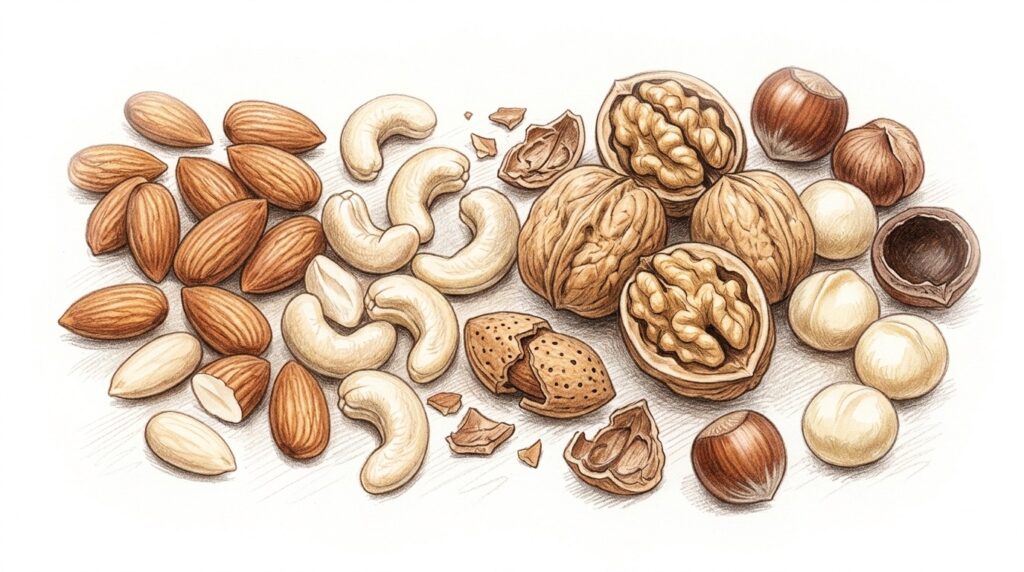
Almonds
Purine content: approximately 10 mg per 100g
Almonds are about as low-purine as food gets. They’re also high in magnesium, which supports kidney function. A small handful (about 30g) makes a perfect mid-afternoon snack.
Walnuts
Purine content: approximately 25 mg per 100g
Walnuts are rich in omega-3 fatty acids, which have anti-inflammatory properties. If you’re reducing your intake of high-purine fish like sardines or anchovies, walnuts are a useful way to keep your omega-3 intake up.
Macadamias
Purine content: approximately 19 mg per 100g
New Zealand grows some excellent macadamias. They’re higher in fat than most nuts, but it’s mostly monounsaturated fat, the same kind found in olive oil. Rich, filling, and very low in purines.
Cashews
Purine content: approximately 25 mg per 100g
Cashews are versatile. Eat them raw, roast them, or blend them into sauces. They’re slightly higher in carbohydrates than other nuts, but their purine content is still well within the safe range.
Pecans
Purine content: approximately 10 mg per 100g
Another very low-purine option. Pecans are high in antioxidants and make a great addition to salads or baking.
What About Peanuts?
Peanuts are technically legumes, not tree nuts. Their purine content is a bit higher, around 79 mg per 100g, but that’s still classified as low.
You can eat peanuts without worrying about a significant impact on uric acid levels.
Peanut butter is fine too, as long as you’re choosing varieties without added sugar. Check the label. The ingredient list should be short: peanuts, maybe a bit of salt. That’s it.
The One Thing to Watch: Flavoured and Salted Varieties
Here’s where people trip up. The nuts themselves aren’t the problem. It’s what gets added to them.
Heavily salted nuts
Excess sodium can affect kidney function, and your kidneys are responsible for clearing uric acid from your blood. A lightly salted handful is fine. A whole bag of salt-crusted cashews every day is not.
Honey-roasted or flavoured nuts
These are loaded with added sugar. Fructose in particular drives uric acid production. Honey-roasted almonds might taste great, but the sugar coating defeats the purpose of choosing a low-purine snack.
Coated or chocolate-covered nuts
Same issue. You’re adding sugar and processed ingredients to an otherwise clean food.
The rule is simple: buy them raw or dry-roasted. Keep the ingredients list short.
How Much Should You Eat?
A standard serving is about 30g, which is roughly a small handful. That gives you around 170-200 calories depending on the nut, plus a solid dose of protein, healthy fats, and fibre.
One to two handfuls a day is a good target.
Nuts are calorie-dense, so if you’re watching your weight, portion control matters. But in terms of purine content, even two or three servings a day won’t cause problems.
Nuts as a Meat Replacement
If you’re cutting back on high-purine meats, you need to replace that protein somewhere.
Nuts won’t give you as much protein gram-for-gram as chicken or fish, but they contribute meaningfully when combined with other low-purine sources like dairy, eggs, and tofu.
A stir-fry with cashews and tofu. A salad topped with walnuts and feta. Almond butter on whole grain toast. These are practical, everyday meals that keep your protein up and your purines down.
The Bottom Line
Nuts are one of the easiest wins in a uric acid-friendly diet.
They’re low in purines, high in nutrients, and incredibly versatile. Stick to raw or dry-roasted varieties, watch the added sugar and salt, and enjoy them daily.
For more on building a diet that supports healthy uric acid levels, check out our guide on foods to support healthy uric acid levels. And for a full list of what to avoid, see high-purine foods to avoid.
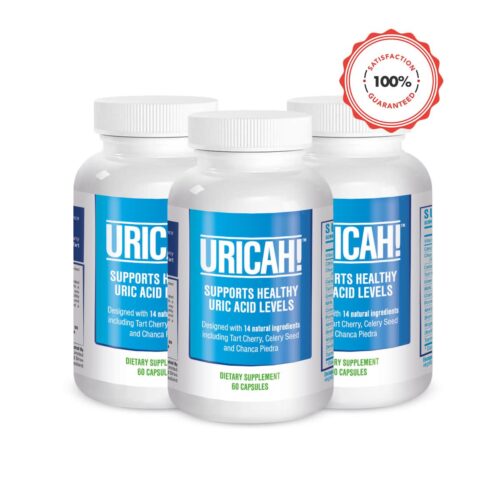
Looking for support beyond diet? URICAH combines 14 natural ingredients at transparent dosages to help maintain healthy uric acid levels. No proprietary blends. Over 2,200 customer reviews. Free overnight shipping across NZ, and a 90-day money-back guarantee.
This article is for informational purposes only and is not intended as medical advice. Consult your healthcare provider before making changes to your health routine.

URICAH! Uric Acid Support
4.8 / 5
read 2,448 customer reviews
$39 NZDTHIS IS YOUR URICAH MOMENT
URICAH provides natural support for healthy uric acid levels.
Our 14 potent, natural ingredients support the body’s normal uric acid levels, supporting joint mobility and function.
URICAH!™ features powerful ingredients used over many years to support healthy uric acid levels such as Tart Cherry, Celery Seed and Chanca Piedra.
LEARN MORE