

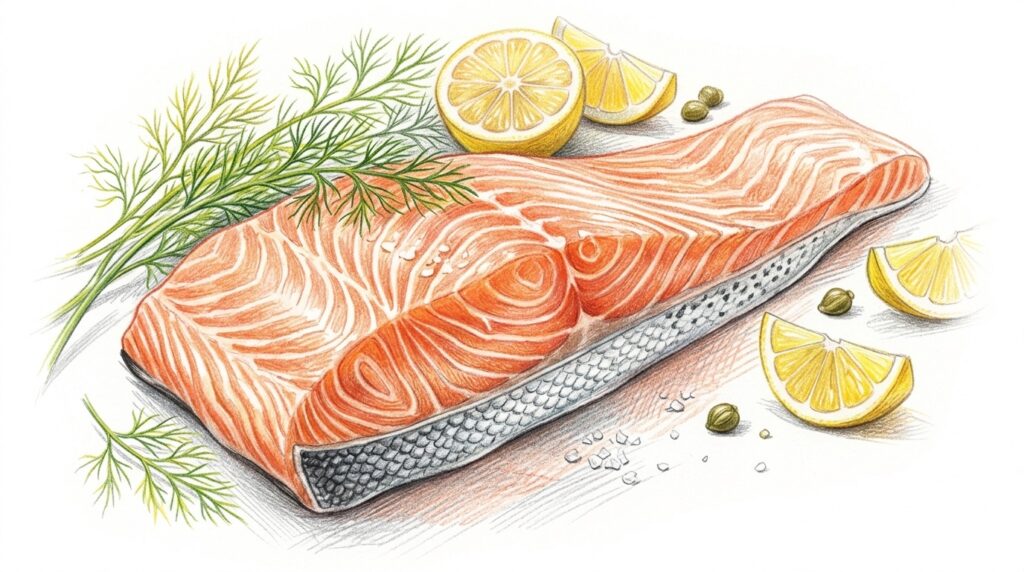
Is salmon bad for uric acid? Salmon is one of those foods that gets celebrated as a health food by everyone, then quietly flagged as a concern when you start managing uric acid levels.
So which is it?
The honest answer: it’s both. And that’s what makes it tricky.
The salmon purines are higher than white fish, which means it produces more uric acid when your body breaks it down. But it’s also rich in omega-3 fatty acids, which have genuine anti-inflammatory properties and support joint comfort.
It’s a trade-off. And understanding that trade-off is what lets you make a smart decision instead of just cutting it out entirely.
Why Salmon Is Moderate-Risk
Salmon is an oily fish. That’s actually what gives it those beneficial omega-3s. But oily fish tend to carry more purines than their white-fleshed counterparts.
When you eat salmon, your body breaks down those purines and produces uric acid as a byproduct. More purines in, more uric acid produced. That’s the basic maths.
There’s another factor worth knowing about. The fat content in oily fish may slow your kidneys’ ability to excrete uric acid efficiently. So you’re potentially getting a double hit: more uric acid being produced, and a slight slowdown in how quickly your body clears it.
Compare that to a piece of hoki or tarakihi, which is lean, lower in purines, and easier for your body to process. The difference is real.
That said, salmon isn’t in the same league as sardines, anchovies, or mackerel. Those are genuinely high-risk. Salmon sits in the middle, which is why blanket advice to “avoid all oily fish” misses the point.
The Omega-3 Argument
Here’s where it gets interesting.
Omega-3 fatty acids are among the most well-studied anti-inflammatory compounds in nutrition. They support joint health, reduce inflammation throughout the body, and have been linked to improved cardiovascular function.
If you’re dealing with uric acid issues, inflammation is a core part of the problem. When uric acid crystals form in your joints, your immune system mounts an inflammatory response. That’s what causes the pain, swelling, and redness during a flare-up.
Omega-3s won’t stop that process on their own, but they contribute to a less inflammatory environment overall. That’s a meaningful benefit.
So the question isn’t simply “does salmon raise uric acid?” It’s “does the benefit of the omega-3s outweigh the cost of the extra purines?”
For most people, the answer is yes, as long as you’re sensible about how much and how often.
How Often Should You Eat Salmon?
Once a week or less.
That’s the practical recommendation. A palm-sized portion of salmon once a week gives you a good dose of omega-3s without significantly impacting your uric acid levels.
If you’re eating salmon alongside other moderate-or-high-purine foods in the same week, like red meat, shellfish, or organ meats, you might want to dial it back to fortnightly.
During a flare-up?
Limit or avoid salmon entirely. When your uric acid levels are already elevated and your body is actively inflamed, you don’t want to add any unnecessary purine load. Stick to white fish, eggs, and plant-based proteins until things settle down. For tips on managing a flare-up, see our guide.
How to Prepare Salmon the Smart Way
The way you prepare salmon matters. Some methods are better than others when you’re managing uric acid.
Grill or bake it.
Simple, clean, and lets the fish speak for itself. A hot grill or a 200-degree oven for 12-15 minutes is all you need.
Keep portions palm-sized.
About 100-120g per serve. That’s enough to get the omega-3 benefits without overdoing the purine intake. Resist the temptation to cook a 200g+ fillet just because it looks good.
Use simple seasonings.
Lemon, dill, garlic, a little olive oil, salt, and pepper. You don’t need teriyaki glaze, creamy sauces, or heavy marinades. Keep it light.
Avoid smoked salmon where possible.
The smoking process concentrates purines, making smoked salmon a higher-risk option than fresh. If you love it, save it for an occasional treat rather than a weekly habit.
Pair with alkaline vegetables.
Broccoli, asparagus, kumara, and leafy greens all make excellent sides. They help balance the meal and support your body’s uric acid management. For more on the best vegetable choices, see our guide on vegetables and uric acid.
Lower-Purine Alternatives to Salmon
If you decide salmon isn’t worth the trade-off for you, or if you want to rotate your protein sources more widely, here are excellent alternatives.
White fish options:
- Hoki, tarakihi, gurnard, and snapper are all lower in purines and widely available in New Zealand
- You can eat these two to three times a week comfortably
- For the full breakdown, check out our guide on fish and uric acid
Other omega-3 sources (without the purine hit):
- Walnuts
- Flaxseed and chia seeds
- Omega-3 enriched eggs
- High-quality fish oil supplements (purified, so the purines are removed)
You don’t have to choose between omega-3s and managing your uric acid. You just need to be strategic about where those omega-3s come from.
Salmon vs Other Oily Fish
To put things in perspective, here’s where salmon sits compared to other oily fish:
- Salmon – Moderate purine content. Reasonable in moderation.
- Sardines – Very high purines. Limit significantly.
- Anchovies – Extremely high purines. Avoid or eat very rarely.
- Mackerel – High purines. Best avoided if your levels are elevated.
- Tuna – Moderate, similar to salmon but without the same omega-3 punch.
Salmon is the best option among the oily fish if you’re managing uric acid. It gives you the most benefit for the least purine cost.
The Bottom Line
Salmon isn’t something you need to fear. It’s a moderate-risk food with genuine health benefits, and for most people, eating it once a week in a palm-sized portion is perfectly reasonable.
The key is context. If the rest of your diet is balanced, your hydration is good, and you’re not piling other high-purine foods on top, salmon fits into a smart eating plan.
Just don’t treat it like a free pass. Respect the purine content, control your portions, avoid it during flare-ups, and lean on white fish for the majority of your seafood meals.
For comprehensive support alongside a sensible diet, URICAH combines 14 natural ingredients at transparent dosages to help maintain healthy uric acid levels. No proprietary blends. Over 2,200 customer reviews and a 90-day money-back guarantee. Free overnight shipping across NZ when you order by 3pm on weekdays.
This article is for informational purposes only and is not intended as medical advice. Consult your healthcare provider before making changes to your health routine.

URICAH! Uric Acid Support
4.8 / 5
read 2,448 customer reviews
$39 NZDTHIS IS YOUR URICAH MOMENT
URICAH provides natural support for healthy uric acid levels.
Our 14 potent, natural ingredients support the body’s normal uric acid levels, supporting joint mobility and function.
URICAH!™ features powerful ingredients used over many years to support healthy uric acid levels such as Tart Cherry, Celery Seed and Chanca Piedra.
LEARN MORE